Bathroom electrical zones, sockets and pull cords
Bathroom electrical zones are three areas around the bath or shower, numbered 0 to 2, where the equipment must meet higher water-protection ratings the closer it is to the water1. Sockets are not allowed unless at least 2.5 m from the bath or shower tray, shaver units apart2. Wiring work is for a registered electrician.
Updated , by Bathroom Safety in Pictures
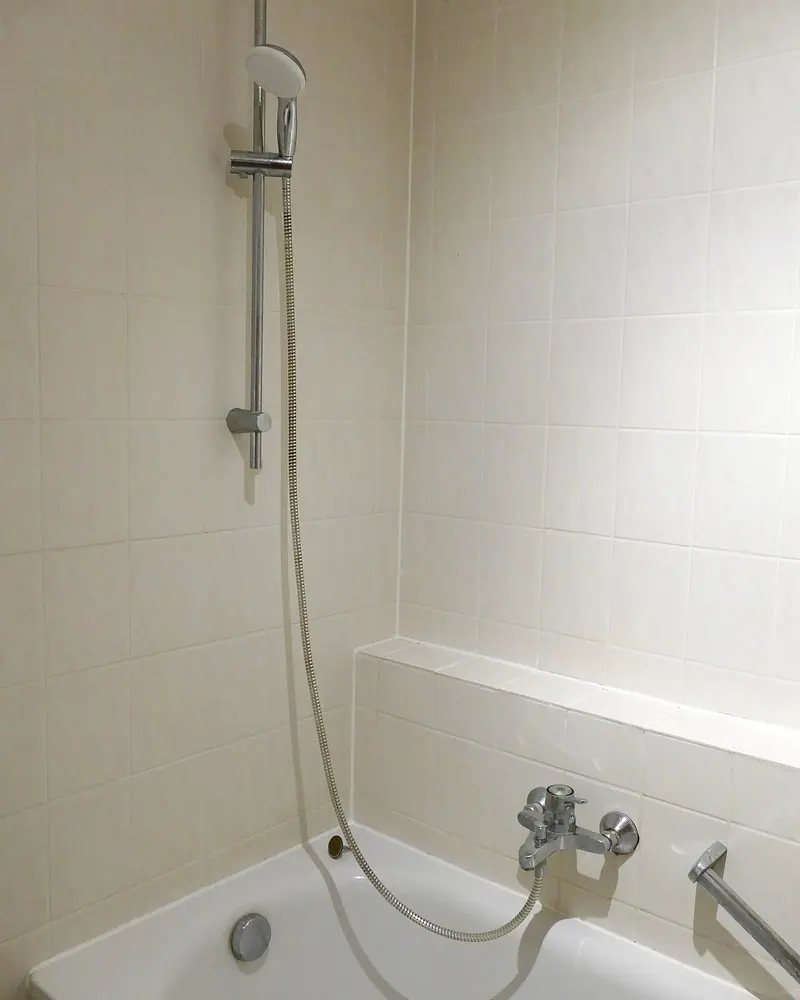
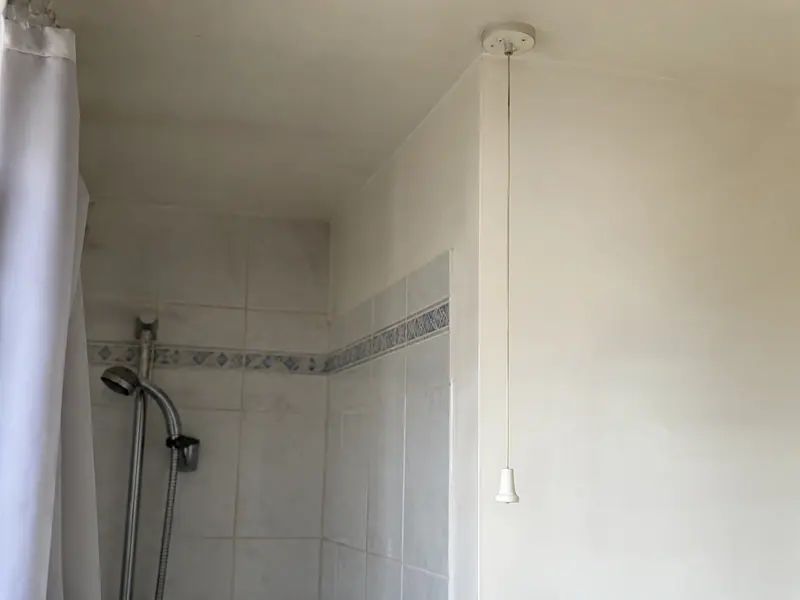
Why a pull cord rather than a wall switch?
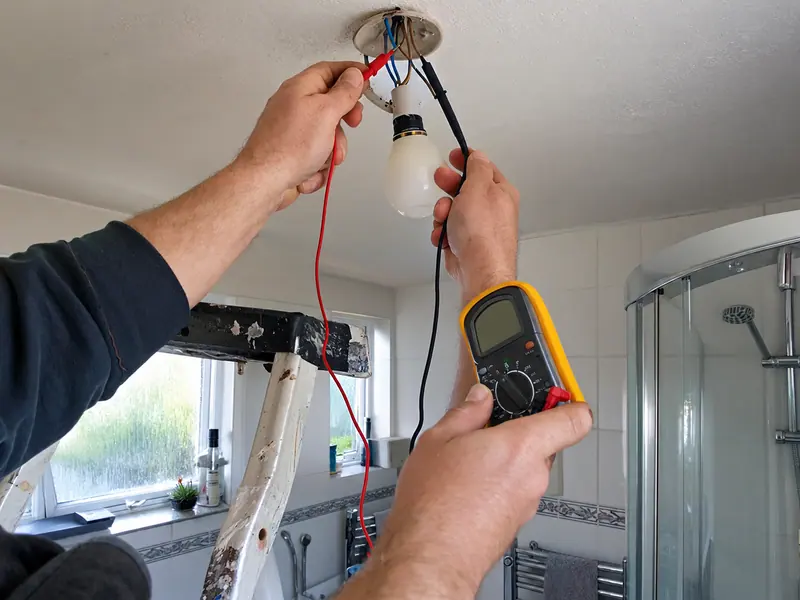
Electrical Safety First says a ceiling pull-cord is better than a wall switch in a bathroom2. The reasoning is easy to see: a cord keeps wet hands away from a switch plate. Check the cord on your own ceiling. Can the person who uses the room reach it, and can a weak or arthritic hand grip the end? A cord that is too short or too thin gets left alone, and the light stays off. Replacing a pull-cord switch is an alteration to a circuit, so leave it to a registered electrician.
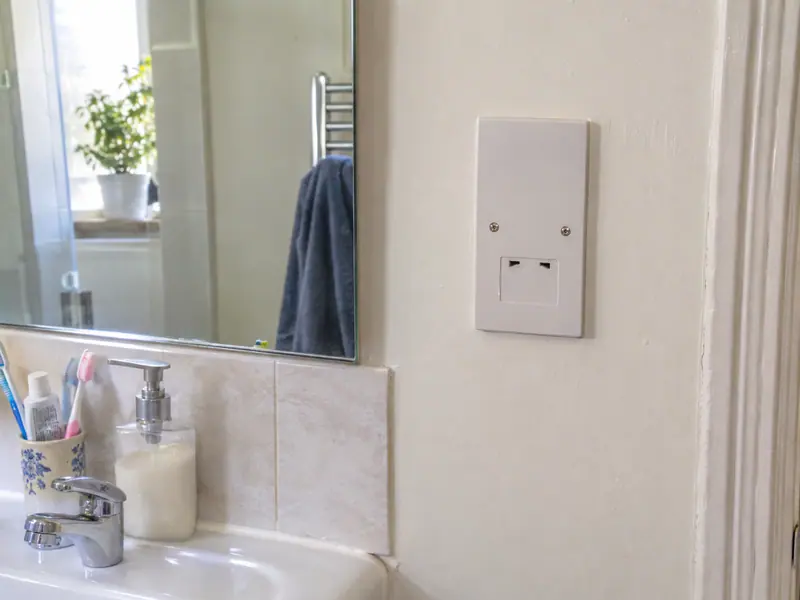
Is this a shaver unit or an ordinary socket?
Shaver units are the exception to the no-sockets rule. They are allowed within 2.5 m of the bath or shower if they are SELV or meet BS EN IEC 61558-2-52. A shaver unit is a purpose-made fitting, usually fixed beside the mirror, not a general three-pin socket. Go by the markings on your own unit, or ask an electrician. Treat it as for a shaver and nothing else. A three-pin socket inside that 2.5 m is the one to question, and so is an extension lead brought in to reach one2. Neither is for you to fix; both are for an electrician.
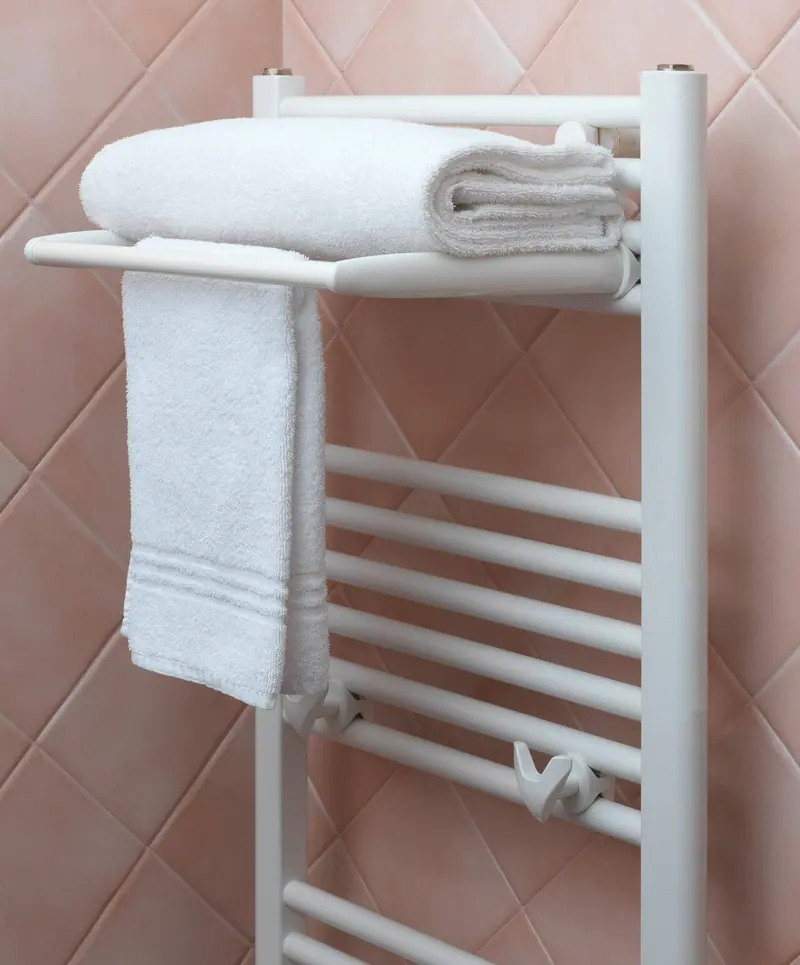
Is that towel rail plumbed or electric?
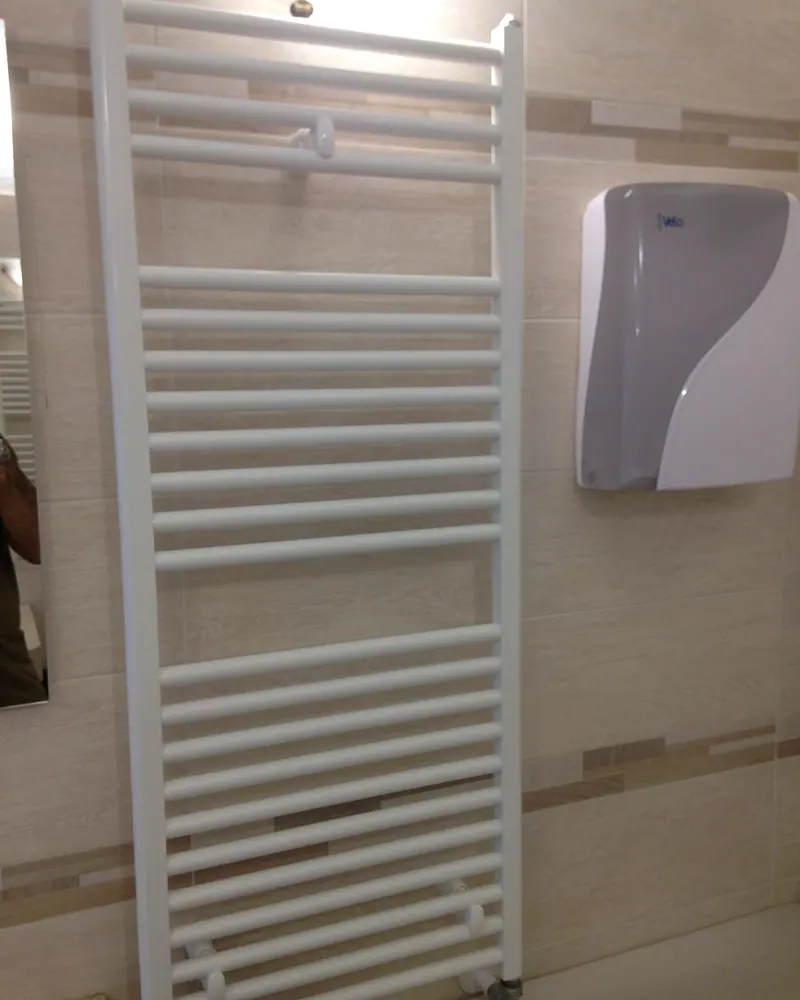
A rail like this may be heated by the central heating pipes or by its own electric element, and the picture can't tell you which. It matters. An electric rail is fed by a cable, and adding or changing one is work on a circuit in a special location, which Approved Document P treats as notifiable in England3. Look for two pipes at the bottom, or a cable and a switch or fused spur nearby. Even a swap of one electric rail for another is not DIY: NICEIC says you shouldn't be doing DIY electrics anywhere in your house1.
What does a registered electrician add?
Approved Document P makes a new circuit, a replaced consumer unit and any addition or alteration to existing circuits in a special location notifiable in England; the space round a bath tap or shower head, up to 2.25 m, is one3. NICEIC says work in zones 0, 1 or 2 is notifiable in England and Wales1. Bathroom wiring also has to meet BS 7671 Part 701, as NICEIC summarises it. Before work starts, ask the electrician how it will be notified to building control, and keep whatever paperwork you are given.
How close to the bath is too close?
Zone 2 stretches 600 mm outside zone 11, so a rail beside the bath can sit in a zone even when it is well away from the shower. Electrical equipment in zones 1 and 2 needs a water-protection rating of IPX4/5, and in zone 0 IPX71. No bath shows in this picture, so try it at home: stand beside the bath and judge where your rail sits against the bath edge and the shower head. If it is electric and you are unsure, an electrician measures and decides. Portable heaters are different again: Alzheimer's Society says never take them into the bathroom4.
The most a householder does is check that a switch is off or a breaker has tripped before calling someone. Do not open fittings, move sockets, change a pull-cord or wire in a heater. The rules quoted here are for England; NICEIC says Wales is similar for Part P, and Scotland and Northern Ireland have their own rules, so check locally.
| Zone | Where it is | Minimum water protection |
|---|---|---|
| 0 | Inside the bath or shower tray itself | IPX7 |
| 1 | Above the bath or tray, up to the highest fixed shower head or 2.25 m, whichever is higher | IPX4/5 |
| 2 | The space stretching 600 mm outside zone 1 | IPX4/5 |
| Wet room without a tray | Zone 1 extends 1.2 m around the fixed shower head | As zone 1 |
Check, don't touch
Look, don't touch
- Note what is on the walls and ceiling, and whether a towel rail is plumbed or electric.
- Check the pull cord is within reach and the end is easy to grip.
- Take portable heaters, extension leads and plug-in gadgets out of the room.
- Check a switch or breaker only to see whether something has tripped.
Who does the work
- A registered electrician: any new or moved socket, light, fan, heater, electric towel rail or pull-cord.
- The council's occupational therapist, if the question is where a cord or switch is easiest to reach.
Also asked
Can you have a socket in a bathroom?
Not an ordinary one near the water. Sockets are not allowed in bathrooms or shower rooms unless at least 2.5 m from the edge of the bath or shower tray; shaver units are the exception2. Extension leads do not belong in there either2. Moving or adding a socket is a job for a registered electrician.
What are the electrical zones in a bathroom?
Think of them as rings round the water: zone 0 inside the bath or tray, zone 1 above it, zone 2 beyond. The nearer the ring, the higher the water protection the equipment needs, from IPX4/5 up to IPX71. Which ring a fitting sits in decides what may go there, so an electrician measures; the table above has the distances.