Hot water and taps
A thermostatic mixing valve blends hot and cold water to help limit scalding at a tap or shower, if chosen, set and maintained correctly. It lets the stored hot water stay hot. Approved Document G describes valves that fail safe, and fitting is a job for a competent plumber.1
Updated , by Bathroom Safety in Pictures
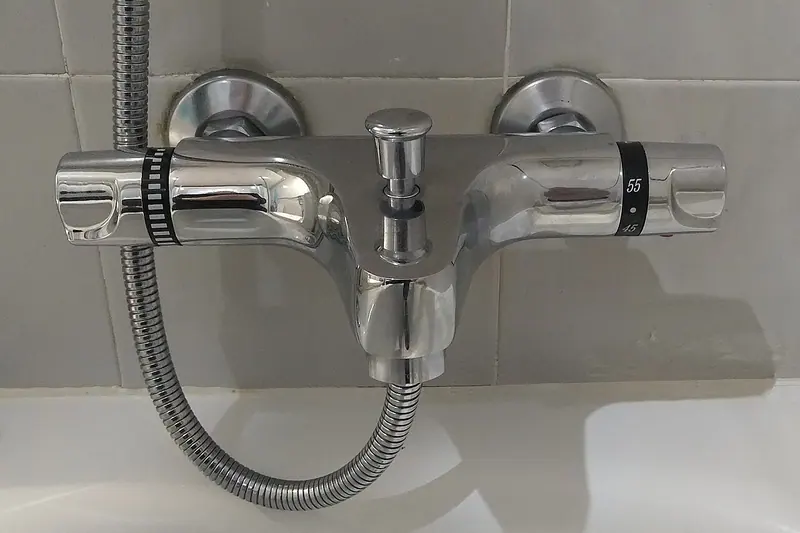
Pictures of valves, taps and heaters
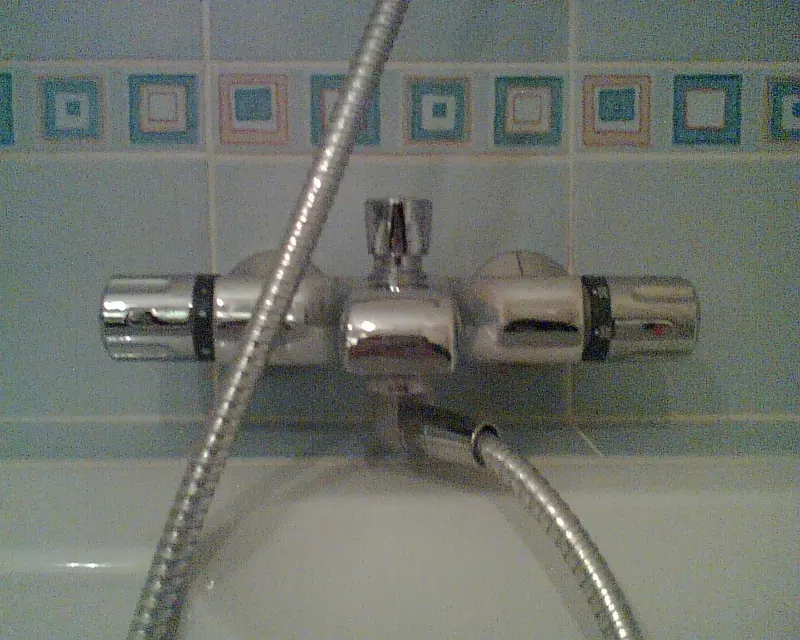 Scalds and temperaturesWhat 44, 48, 50 and 60 mean
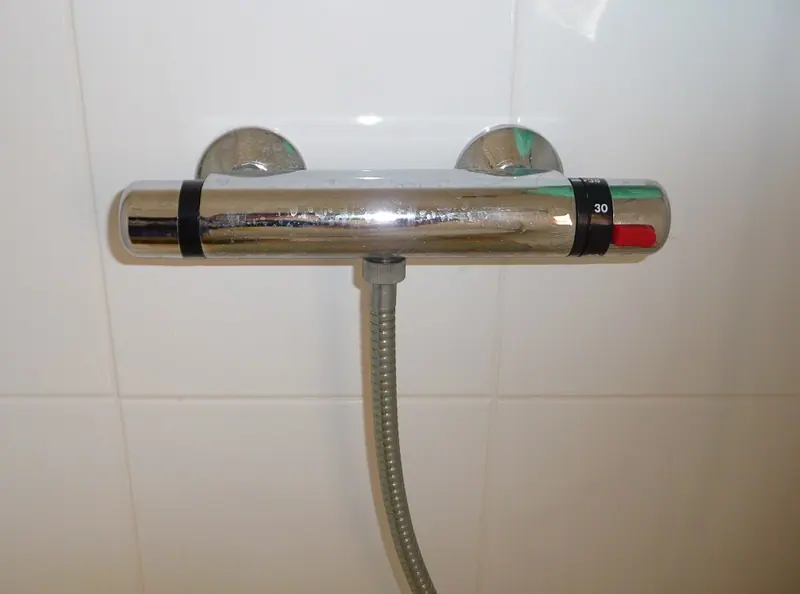 Mixing valvesWhat they do, wear and limescale
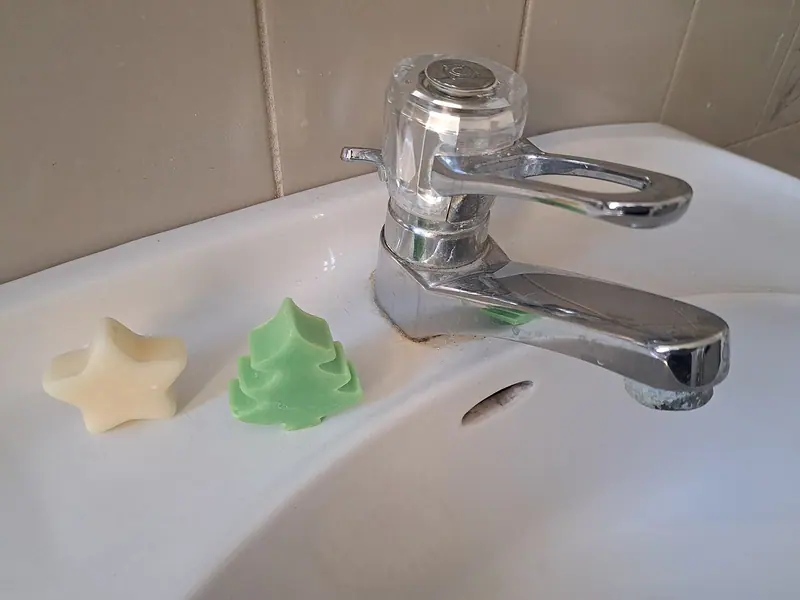 Lever tapsTaps that work with a palm or wrist
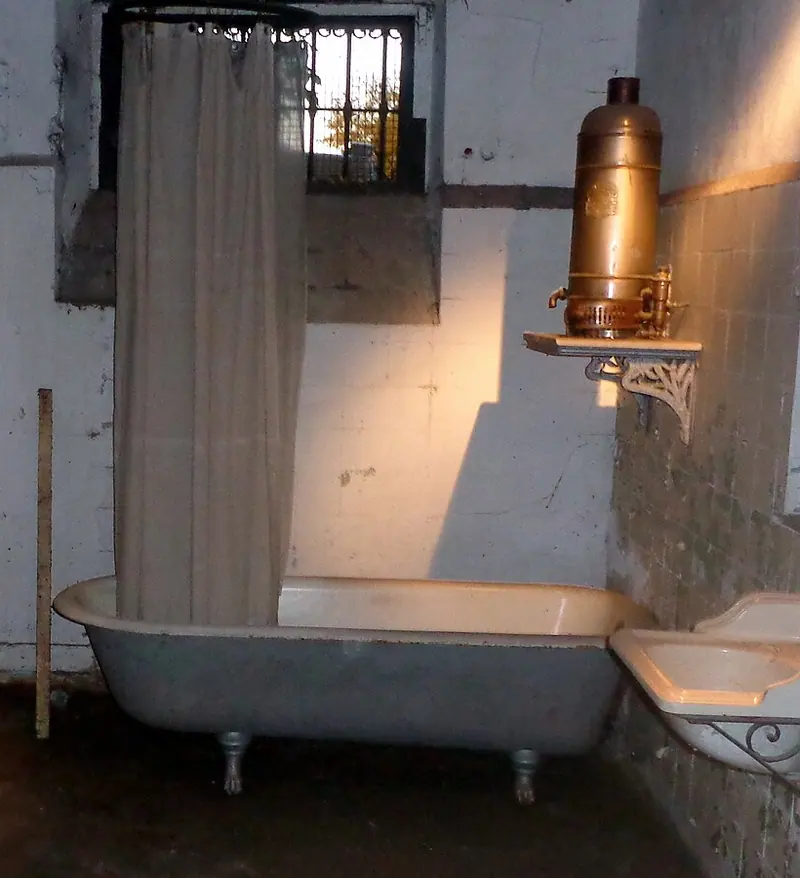 Gas heatersOld heaters, boilers and CO alarms
Why the cylinder stays hot
Stored hot water is kept hot on purpose. HSE's legionella guidance for health and social care settings puts hot water stored above 60°C and distributed above 50°C, with cold below 20°C.2 Turning the cylinder down to make a bath safer would cut against that, so scald protection belongs at the outlet instead: a valve on the bath or shower, fitted by a competent plumber. Gas appliances are a separate hazard. If a heater or boiler is anywhere near the bathroom, read gas water heaters in bathrooms first.
Sources
- HM Government: Approved Document G, with 2024 amendments England
- HSE: Legionella, health and social care written for health and social care settings