Gas heaters and boilers in bathrooms
A gas water heater or boiler in a bathroom is only for a Gas Safe registered engineer to fit, move, service or repair. If a carbon monoxide alarm sounds or you smell gas, leave the building first, touch no switches, use no phone inside, and call from outside. The Gas helpline is 0800 111 999, open 24 hours1; in Northern Ireland call 0800 002 0014.
Updated , by Bathroom Safety in Pictures
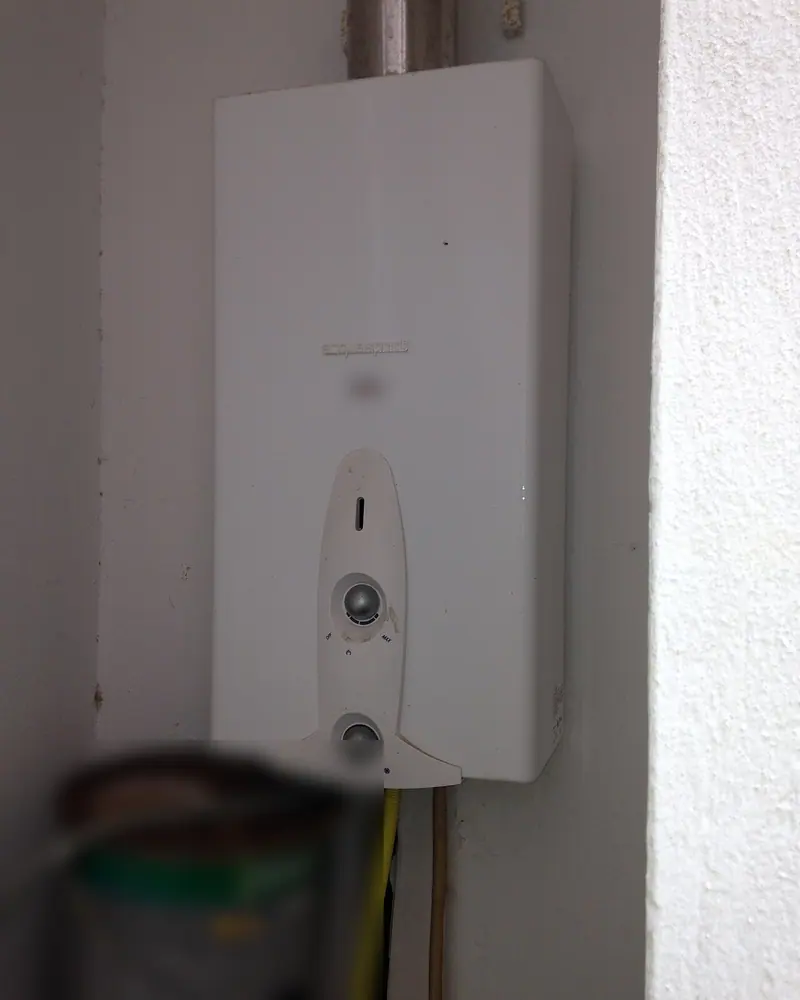
What does a wall-hung gas heater look like?
A white casing on the wall with pipes beneath: gas in, water in, hot water out. Everything on the pipes below is engineer's work. A householder can look without touching: is the casing intact, are vents and the space around it clear of towels and stored items, and is there staining or scorch marks on or around it? If anything looks wrong, don't use it until a Gas Safe registered engineer has checked it. If a CO alarm sounds or you smell gas, don't stop to deal with the heater: leave first. Where scalds are the worry, ask about a valve at the outlet; see thermostatic mixing valves and scalds and temperatures.
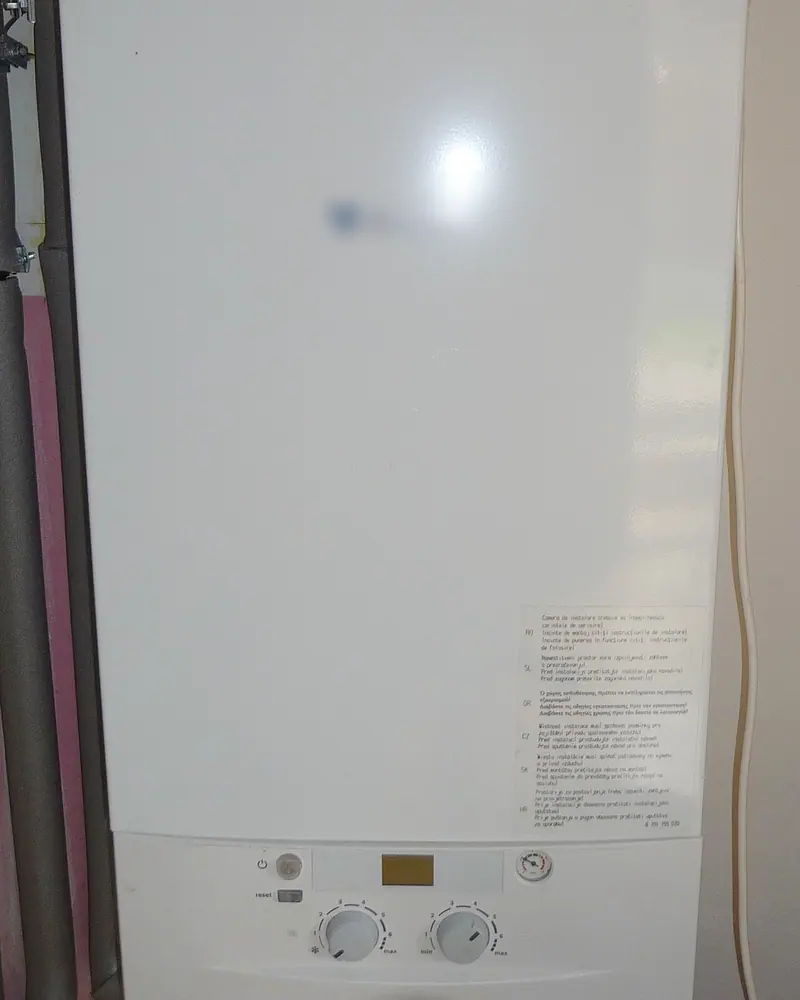
Why does the flue pipe matter?
The flue carries the burnt gases outside, so it must stay joined, clear and open to the air. Do not box in the boiler, tape over a vent, hang washing on it, or push things against the pipe. If a joint looks loose or the flue has been boxed in, an engineer should check it before the boiler is used again. Boilers in bathrooms and cupboards raise the question of where they may stand; those rules are for a Gas Safe registered engineer to apply to your room.
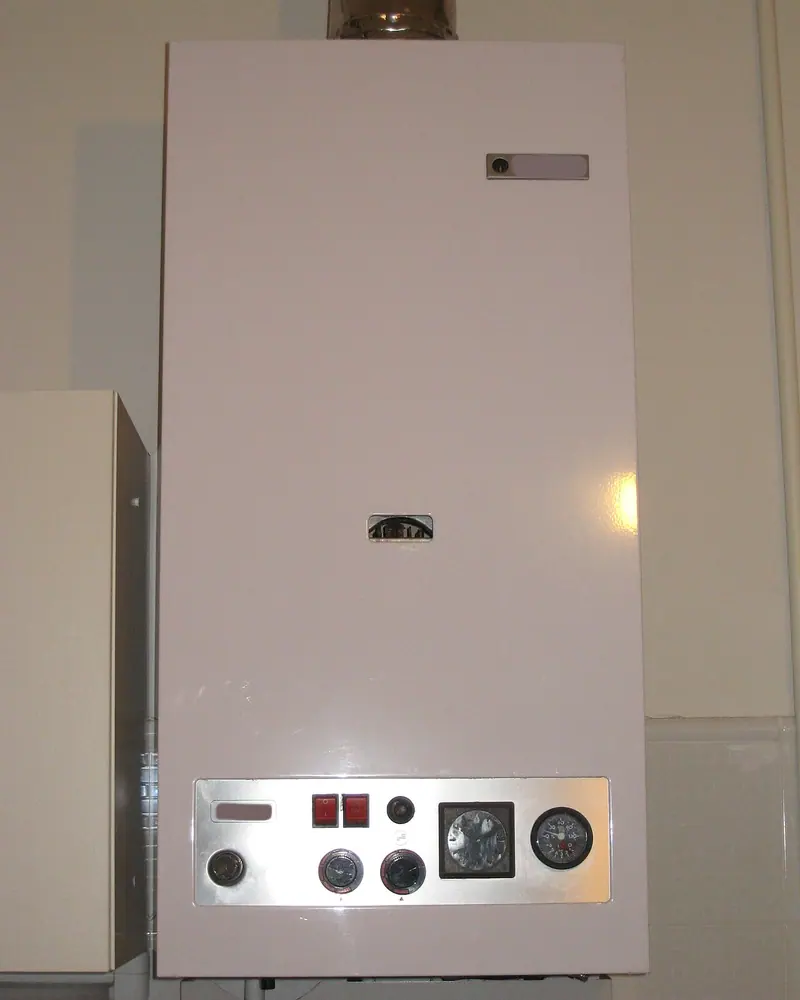
What may a householder touch?
The control panel is for the user: timers, the settings in the maker's instructions, and noting any warning light or message. Don't turn the hot water down to prevent scalds; that is what a valve at the outlet is for. The casing, the burner and the gas and water connections are not. Never remove the cover to look or fix. If a warning appears, note it and call a Gas Safe registered engineer rather than resetting repeatedly. A heater near a bath also gets steam and splashes, so keep the panel dry. And do not bring a portable heater into the bathroom at all.2
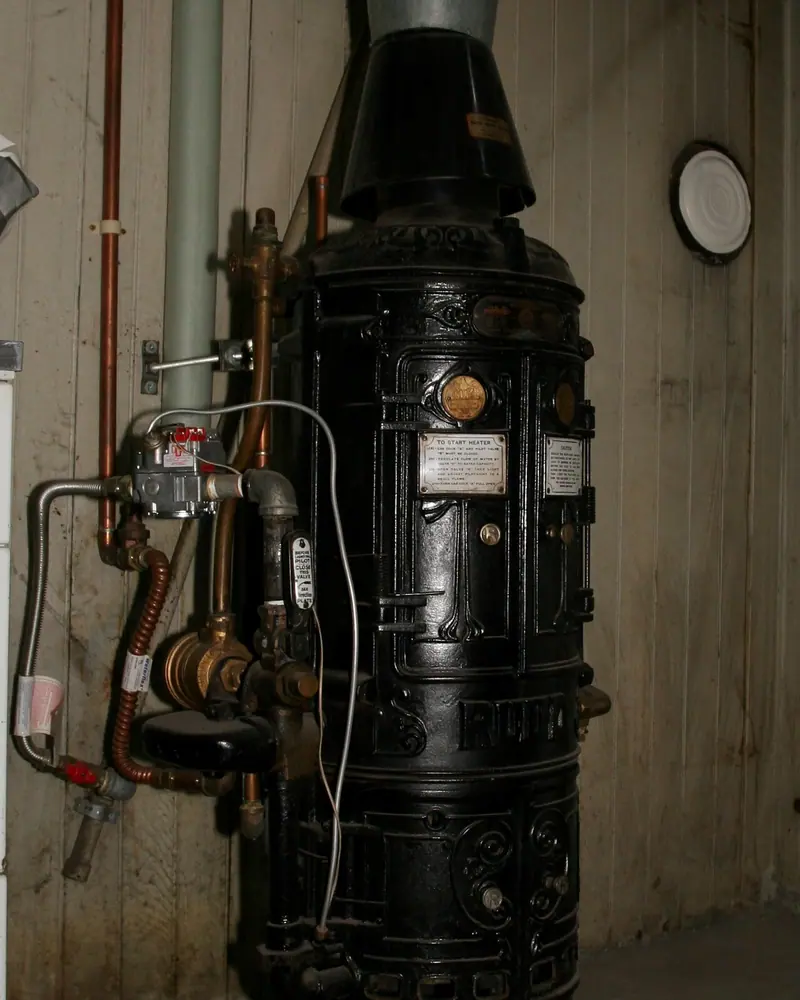
What if an old heater is still connected?
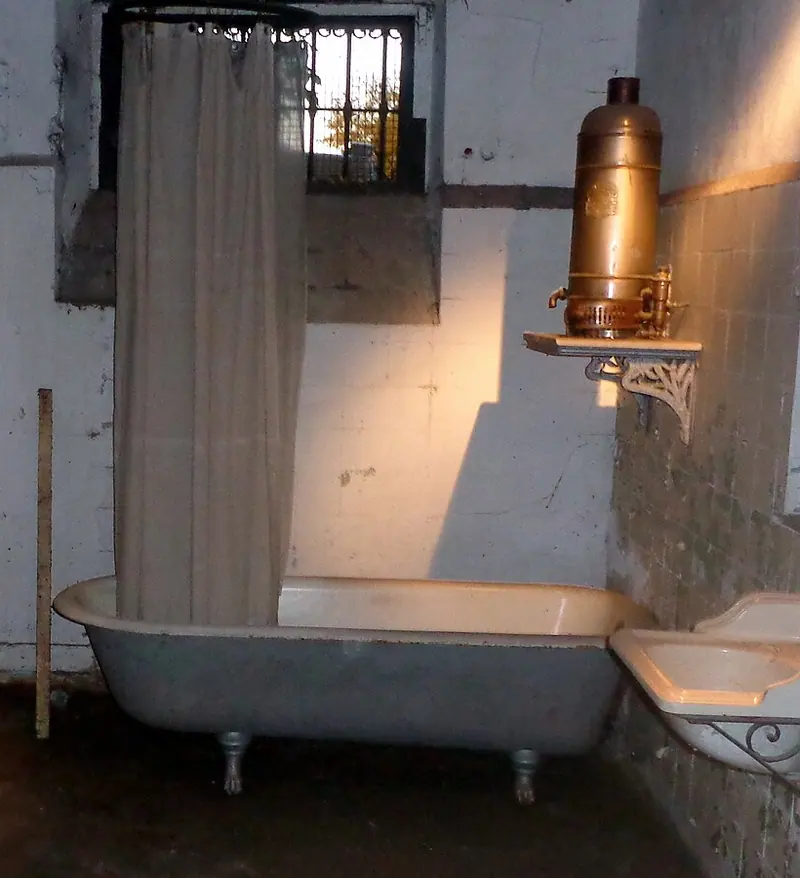
This one is preserved, but an old appliance may turn up in a real home, behind a panel or in a cellar, and may still be connected. If you find one, do not light or run it. Have a Gas Safe registered engineer say whether it is safe, can be kept or must be disconnected. Age is not a reason it fails, but it is a reason nobody can say it is safe by looking. Ask an engineer, and make sure a CO alarm is in the room.
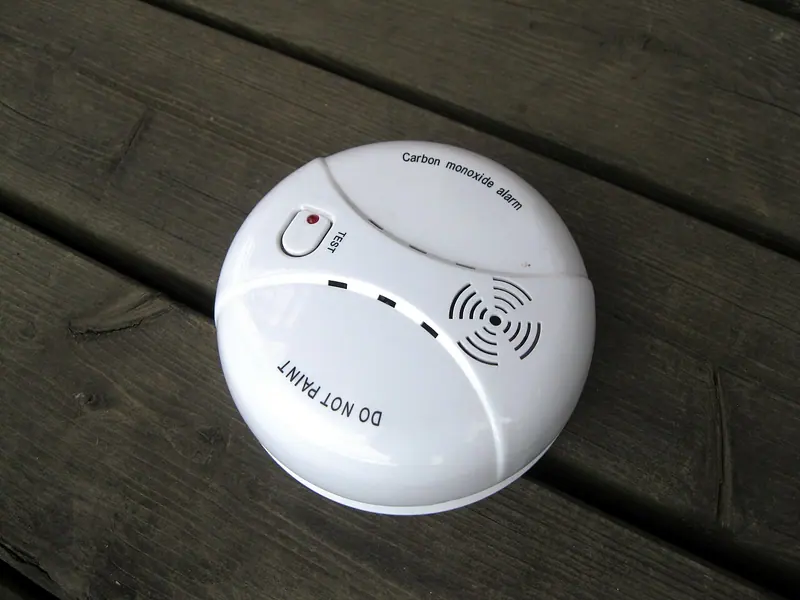
Where does a CO alarm belong?
The NHS says to fit an alarm in each room that has a gas, oil, coal or wood appliance.1 Test it as its maker says. If it sounds, leave the building first and do not go back for anything. Symptoms of carbon monoxide poisoning include headache, dizziness, nausea, weakness, tiredness and confusion.1 Ring NHS 111 about symptoms (in Northern Ireland, your GP or the GP out of hours service5); ring 999 for trouble breathing, sudden confusion, loss of consciousness, weakness or chest or muscle pain, and do not drive yourself.1
If a CO alarm sounds or you smell gas: leave the building first, and get everyone out with you. Do not use switches or phones inside, and do not go back in to switch anything off or fetch anything. Call the Gas helpline on 0800 111 999 from outside (0800 002 001 in Northern Ireland4), and do not re-enter until you are told it is safe.1
Check, don't touch
What a household can do
Who to ask
- Gas Safe registered engineer: any fitting, moving, servicing or repair of a gas appliance or its pipework. Check they are on the Gas Safe Register before they start.
- Competent plumber: a mixing valve on the water side, by agreement with the engineer.3
- GP or NHS 111 (in Northern Ireland, your GP or the GP out of hours service5) if anyone has symptoms of carbon monoxide poisoning.1
Also asked
Is it safe to have a gas boiler in a bathroom?
The rules on where gas appliances may stand are for a Gas Safe registered engineer to apply to your actual room. If a boiler or heater is already there, have it checked, keep vents clear and fit a CO alarm in the room.1 Never try to move it yourself.
Do you need a CO alarm in the bathroom?
The NHS says to have an alarm in each room that has a gas, oil, coal or wood appliance.1 So a bathroom with such an appliance needs one. If the appliance is elsewhere, a Gas Safe registered engineer can advise where alarms should go.