Thermostatic mixing valves
A thermostatic mixing valve blends hot and cold water to a set temperature, which is designed to limit scalding if the valve is correctly chosen, set and maintained. Approved Document G says such valves should fail safe and should not be easily altered by the people using the room.1
Updated , by Bathroom Safety in Pictures
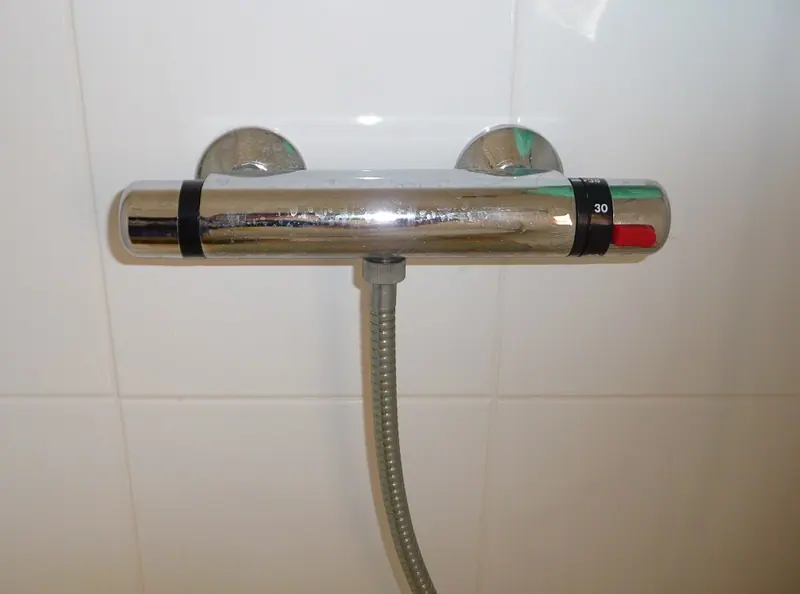
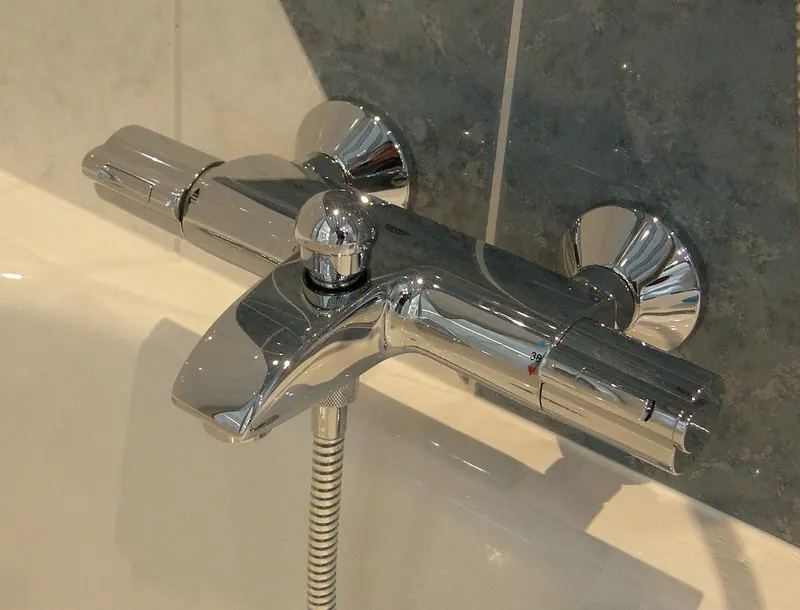
Which part is the valve?
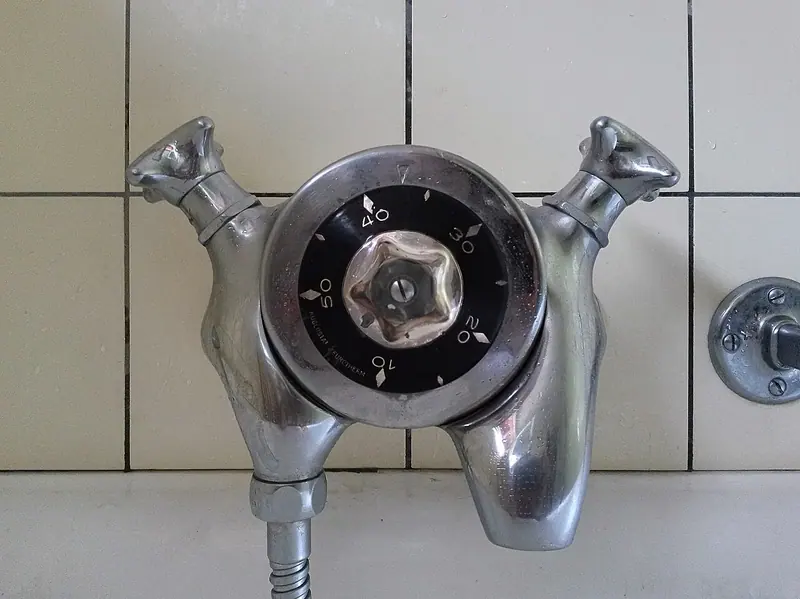
On a mixer like this the thermostatic part is built in behind the dial, and the diverter is a separate control that sends water to the spout or the hose. Do not confuse the two. A separate valve on the pipework, as a plumber may fit under a bath, does the limiting where the bather cannot reach it. Look for the maker's markings and ask the plumber which standard the valve meets: Approved Document G names BS EN 1111 and BS EN 1287.1
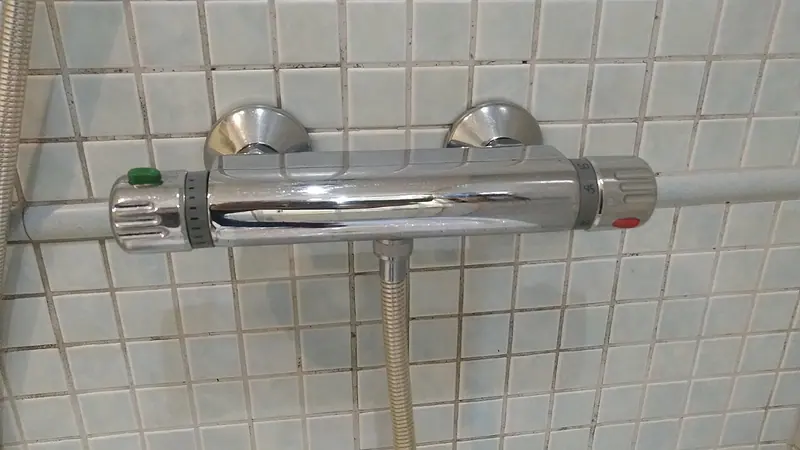
Is the plate sealed to the tiles?
Small mosaic tiles mean lots of grout, and grout around a valve is where water gets in behind the wall. Look for cracks, gaps or a dark line where the plate meets the tiles, and for any drip from the dial after a shower. Wiping the outside is fine; taking it apart is for a plumber. A valve is a safety device, and the HSE expects those in health settings to be monitored and maintained.2
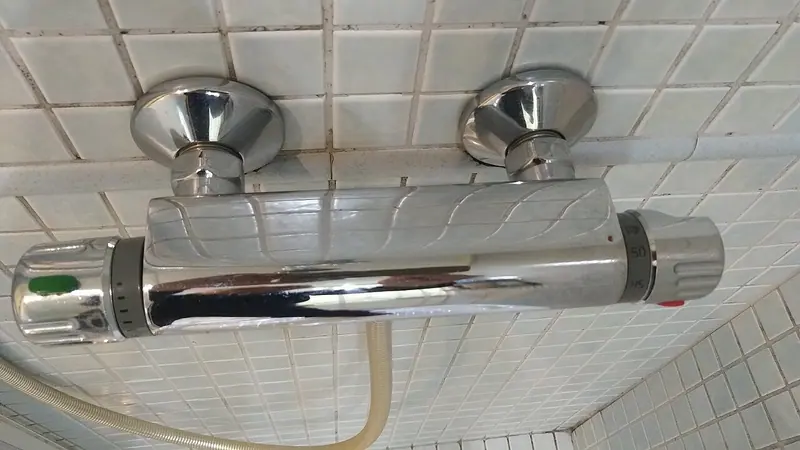
What does limescale do to a valve?
White crust on the outside is a sign of hard water, and the same scale can form inside, where moving parts sit. The result can be a dial that goes stiff, a flow that surges, or water that runs hotter or colder than it used to. If that happens, stop using the bath for anyone vulnerable and have a competent plumber look at it. Valves exist because they can stop children being scalded within seconds, the Child Accident Prevention Trust says.3 Ask the maker how often to service.
Is an old dial a thermostatic control?
The numbers round this dial, 10 to 50, suggest a temperature scale, but a photograph can't show what the valve does. A central dial can set a temperature, or it can be a diverter or switch, so read the markings and any paperwork. If you cannot tell whether the bath has any protection, ask a plumber to check. A new bathroom in an existing English home need not have a valve by law, so older bathrooms often will not.4 The cross handles are also hard on weak hands; see lever taps.
Can a shower head upset the valve?
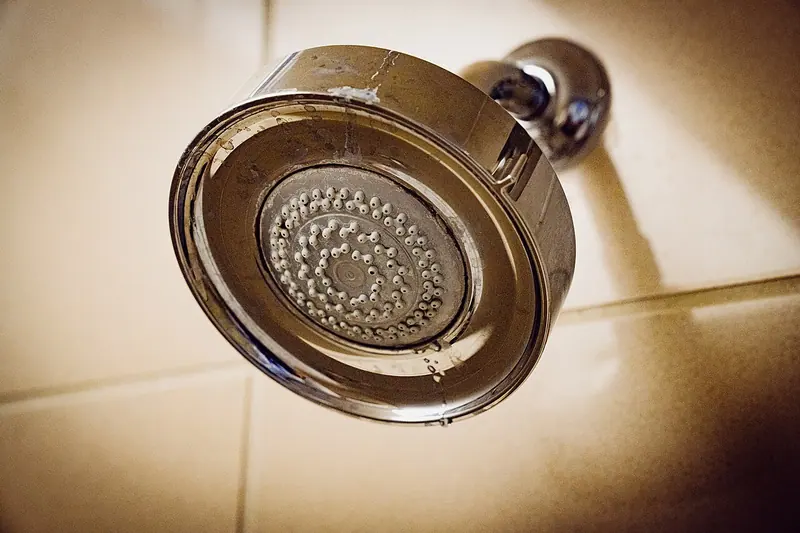
Scaled or worn nozzles change how the water flows, and a change in flow can change what the person under it feels. Clean or replace a heavily scaled head following the maker's advice. If the temperature swings when someone runs a tap elsewhere, that is a sign to call a plumber rather than to get used to it. Repeated heavy scale is also a reason to ask about the water supply itself; the stores below are in the US and are for comparison only.
Do it yourself or get it fitted
What a household can do
- Notice any change in temperature, flow or dial feel and report it.
- Leave the maximum-temperature setting alone: Approved Document G says valves should not be easily altered by users.1
- Wipe limescale off the outside as the maker advises.
Who to ask
- A competent plumber to fit, set and service the valve.
- The landlord, if you rent and the bath has no valve.
- A GP or council occupational therapist if an adult's mobility or reactions are the worry.
Valves and limescale, seen from the US
Mixing valves at PlumbingSupplyAndMore, one of two US stores with the same owners as this site, show one example of the part, and water softeners at Quality Water Treatment, the other American store with the same owners, show one way US homes deal with scale, with no UK shipping promised from either. Both suit US homes, and a UK valve should be chosen with a plumber.
Also asked
How does a thermostatic mixing valve work?
It takes hot and cold supplies and blends them to the temperature set on the valve, adjusting as supplies change. A valve of the kind Approved Document G describes should also fail safe, which means it should not deliver dangerous water if one supply fails.1 A competent plumber fits and sets it.
What is the purpose of a TMV?
To limit how hot the water reaching the bather can get. HSE advises thermostatic valves at baths and showers in health settings, and CAPT says they stop children being scalded within seconds.23 The stored hot water stays hot; the valve limits only what comes out. See scalds and temperatures.
What are some common problems with thermostatic shower valves?
Limescale is the usual suspect: stiff dials, surging flow, or water hotter or colder than before. Worn seals and loose fixings can also show up as drips. Report any change to a competent plumber rather than putting up with it.
Sources
- HM Government: Approved Document G, with 2024 amendments England
- HSE: Scalding and burning written for health and social care settings, not homes
- Child Accident Prevention Trust: Burns and scalds
- MHCLG: Part G frequently asked questions (March 2016) England