Taps you can grip: lever taps
Lever taps are easier than small cross-head handles because you can push with a palm or wrist instead of gripping and twisting. The NHS lists easy-to-turn tap handles among household equipment, and Age UK lists a lever tap extension as equipment a council can provide.12
Updated , by Bathroom Safety in Pictures
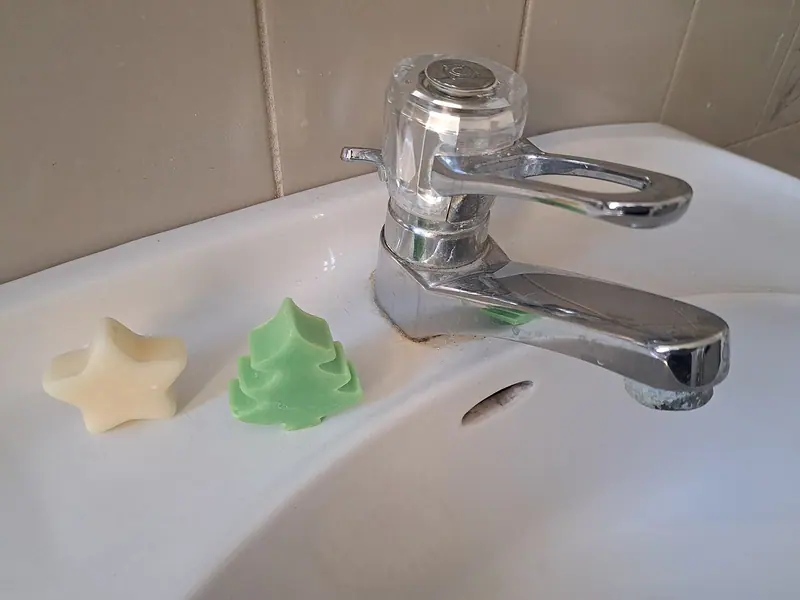
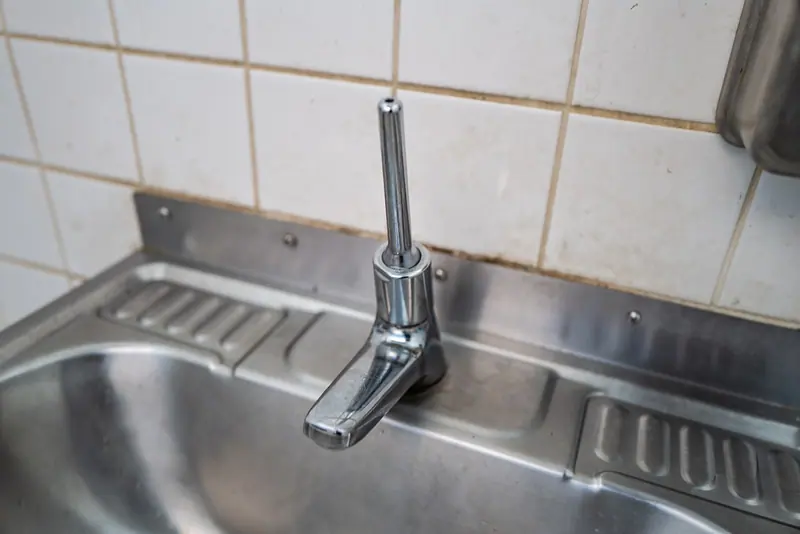
How long should a lever be?
A long lever lets someone push with a forearm or the side of a hand, so no finger grip is needed. The sink here is built for care use, but the idea carries over. Check that the lever clears the bowl and wall so knuckles do not catch, that it moves with light pressure, and that the person can still tell hot from cold. An occupational therapist can say how much reach and strength to design for. In England, Age UK says councils cannot charge for disability equipment or minor adaptations.2
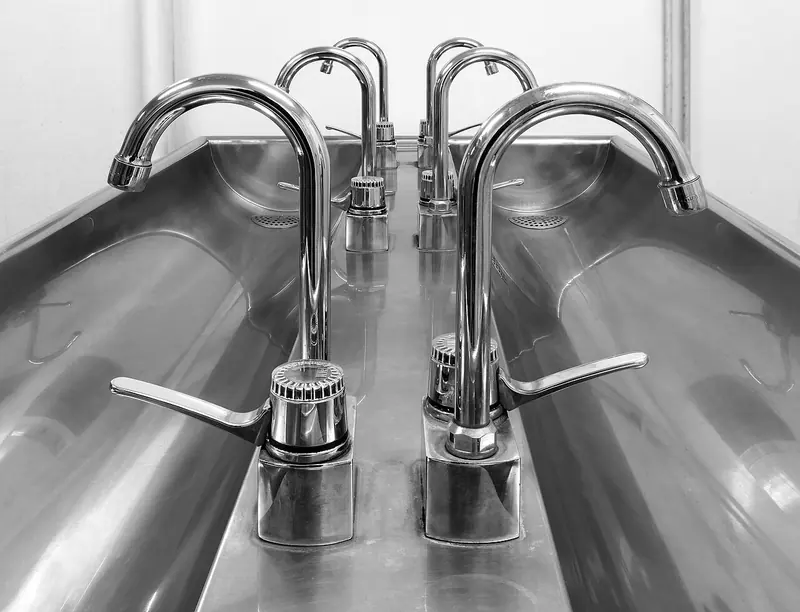
What are wrist levers for?
Wrist levers can be worked with the back of a hand, a wrist or an elbow, which suits hands that cannot close. Tall spouts also leave room to wash a hand underneath. Separate hot and cold levers mean the water mixes in the basin or not at all, so a person can end up with full hot. Test each lever before use, and where scalds are a concern, ask a plumber about a valve at the outlet; see thermostatic mixing valves.
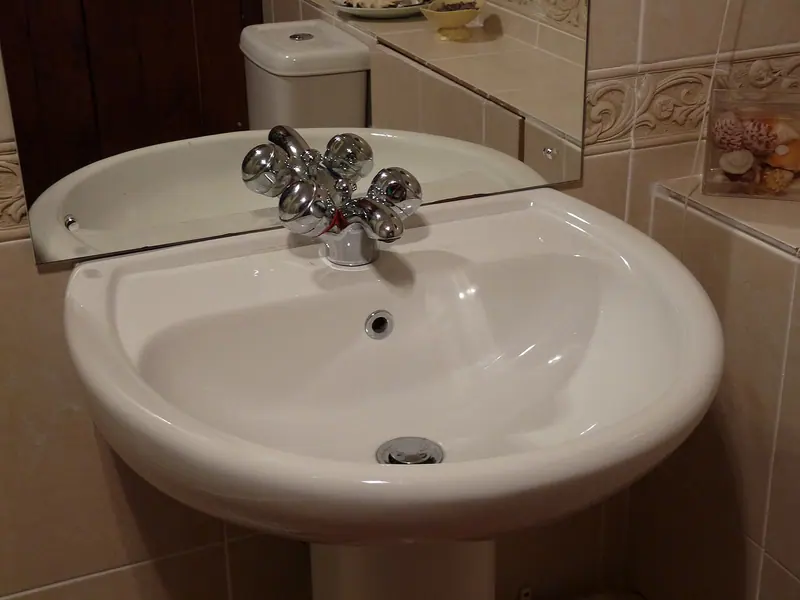
Why do cross-head taps cause trouble?
A cross-head asks for a pinch and a twist, often with wet or soapy hands, and the small arms give little leverage. Stiff taps make it worse. Check whether each handle turns with one hand, and whether the person can tell by feel which is hot. Some people with dementia prefer traditional-style taps, and the NHS says to keep them if so; the choice depends on the person.3 An occupational therapist can weigh the two.
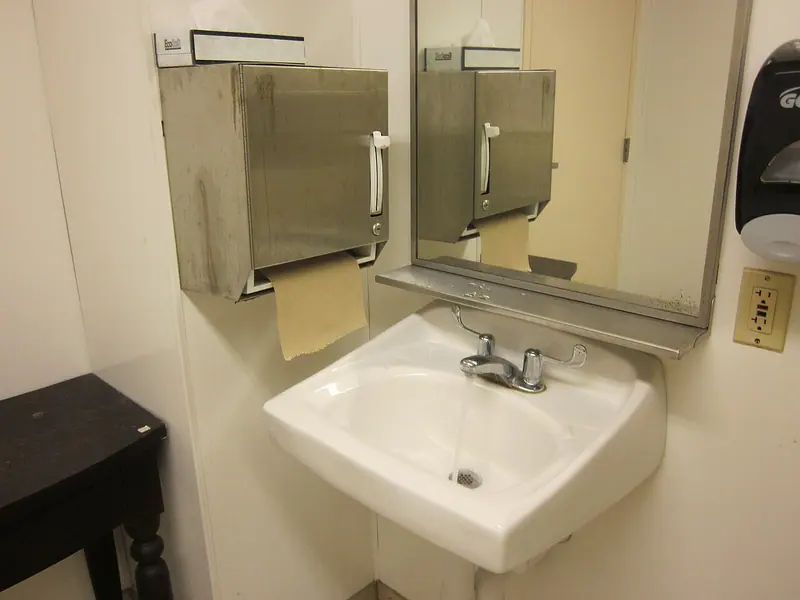
Does reach matter as much as the lever?
A wall-hung basin leaves room underneath, so someone seated can reach it, but the basin is fixed to the wall and should not be leaned on. Look at how far the levers sit from the front edge and whether a seated person can reach and push them without stretching. A small basin means a short reach but little room for hands. Check that the mirror and towels are within reach too. Moving a basin is a plumber's job.
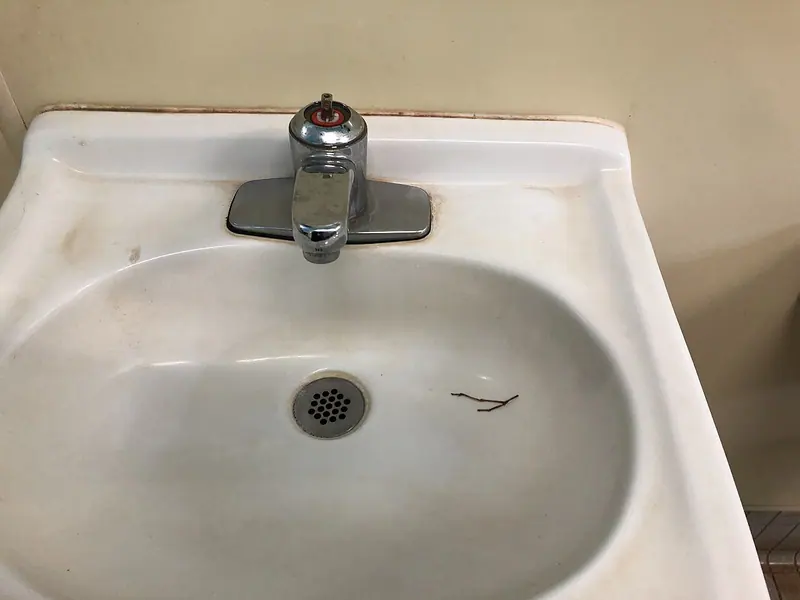
What does a worn lever tell you?
A lever that has gone stiff, loose or drips has stopped doing its job. Worn parts or limescale may be involved, and a plumber can say whether to repair or replace the tap. A lever that sticks or jumps to full hot is a scald risk as well as a grip problem. Check the lever for play, the spout for drips, and the basin underneath for staining from a slow leak. If scale keeps coming back, hard water is the cause worth asking about.
Do it yourself or get it fitted
What a household can do
- Try levers in a showroom or Independent Living Centre before choosing.2
- Test that a lever moves easily and that hot is distinguishable by feel.
- Report stiff or dripping taps rather than working harder at them.
Parts and a hardness test, both American
Faucet parts and accessories come from PlumbingSupplyAndMore, a US store under the same owners as this site, and a US guide to testing water hardness comes from SoftPro, also American with the same owners; US fittings differ and shipping to the UK isn't promised. Scale often comes from hard water, so the test shows why taps stiffen.
Also asked
What are the best taps for arthritic hands?
Taps that work without gripping: single levers, long levers and wrist levers. The best for one person is the one they can work with their strongest movement, so try several. Ask the council for an occupational therapist assessment (see an older parent's bathroom); in England, the NHS says easy-to-turn tap handles can be provided free if assessed as needed.1
Can you add a lever to existing taps?
Often yes. Age UK lists a lever tap extension as equipment, which is added to an existing tap.2 How well it works depends on the tap, so check with the supplier. Where the tap itself is stiff or worn, a competent plumber may do better to replace it.
Sources
- NHS: Household gadgets and equipment to make life easier England
- Age UK: Factsheet 42, Disability equipment and home adaptations (March 2026) England
- NHS: Living with dementia, making changes to the home
- Welsh Government: ENABLE, support for living independently Wales
- HSE: Scalding and burning written for health and social care settings, not homes