Old slippery tiles: what can be done
Anti slip tile treatment can change how a tile feels, but results vary and there is no figure here to rely on. Check the tile when wet, ask for a test result, and replace the surface if it still feels slick.1
Updated , by Bathroom Safety in Pictures
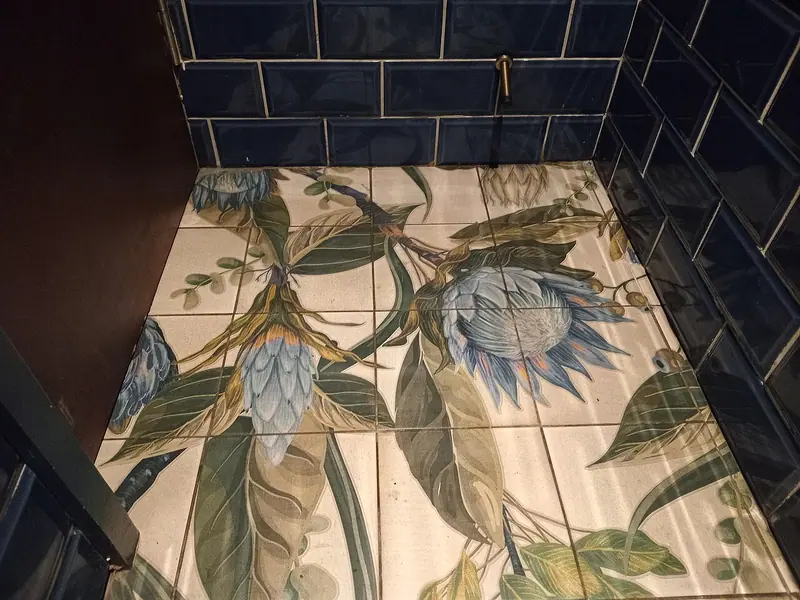
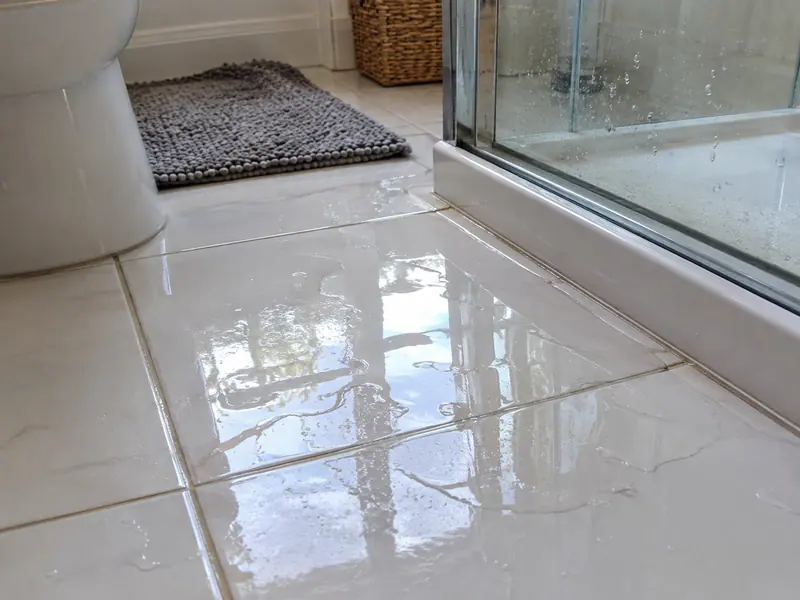
Where does a tile like this turn slippery?
Look at the reflections. A mirror-like glaze plus a film of water leaves almost nothing for a sole to hold. The worst spot is the one in this picture: right where someone steps from the tray onto the floor, with wet feet.
Don't test it with a bare foot. If it looks shiny when wet, treat it as slippery, whatever the label said when it was laid. The NHS also suggests grip-soled slippers for people at risk of falls, which is a stopgap, not a cure.2
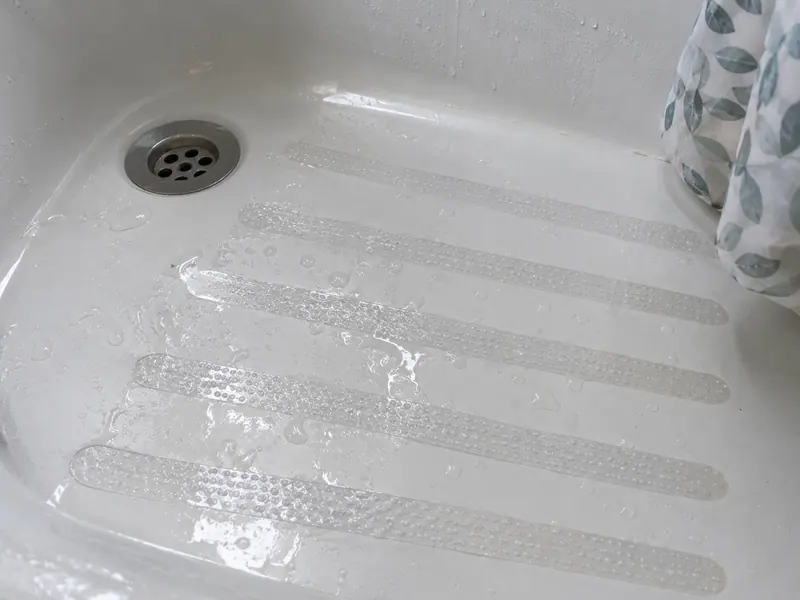
Do stick-on anti-slip strips work?
They add texture where the bath is smooth. Their weak points are the ends. Look at the edges: a corner that has begun to lift collects soap, then peels further, and the gaps under it can grow mould.
Place them where feet actually land, not in neat rows. Peel off and replace worn ones rather than leaving them to curl. If the bath is the problem, the NHS lists a rail to get in and out of the bath among useful equipment, and a rail beats a strip for stepping over the side.3
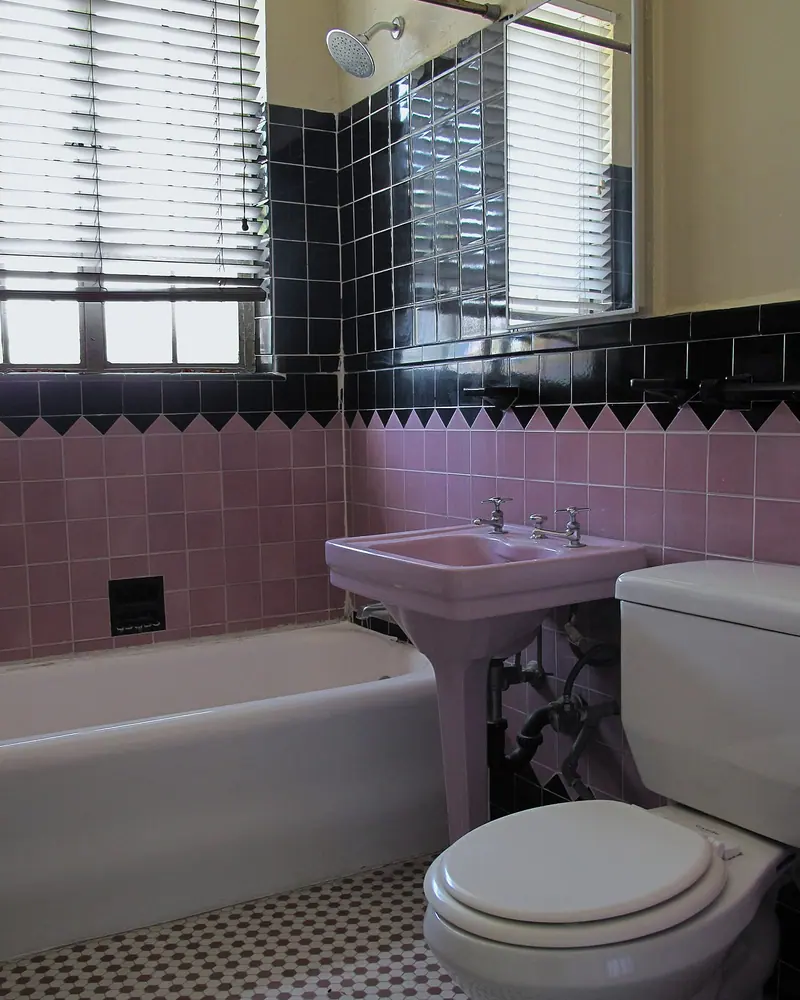
Should period tiles stay or go?
Old tiles can be charming, and they can also have worn glaze or cracked, loose pieces. Walk the floor and listen for a hollow sound under the tiles, which suggests they have lifted from the base. A hexagon mosaic gives plenty of grout lines, but worn grout is a trap for water.
One thing to check before any drilling or sanding: in a home built or refurbished before 2000, ceilings and wall coatings may contain asbestos, and the HSE says not to drill into suspect textured coatings.4 Ask for advice first.
Some anti-slip treatments are chemical. Do not apply one yourself without the maker's instructions, good ventilation and the protection they call for, and never mix it with cleaning products. It may mark the glaze or grout, so consider having the supplier apply it, and keep anyone vulnerable out of the room until it is finished.
Do not sand, scrape or drill suspect textured coatings or old panels in a home built or refurbished before 2000. The HSE says to stop work if you think you have found asbestos.5
Do it yourself or get it fitted
What you can try
- Look at the floor when it is wet: a shiny film means treat it as slippery.
- Ask any treatment supplier for a wet test result and for care instructions in writing.
- Try stick-on strips in the bath or tray, then check them every month.
When to call in a professional
- A competent tiler or flooring fitter if tiles are loose, cracked or need replacing and re-sealing.
- A professional fitter for any fixed rail where someone's weight depends on it.
- A council occupational therapist if the slippery floor is one of several worries.6
Also asked
Can you make slippery bathroom tiles non slip?
Sometimes. A treatment or a textured covering can make a tile feel less smooth, but results differ by tile and product. Ask for a wet test result, and replace the tile if it still looks or feels slick in everyday use. Ask the maker for a test result in writing.
Do anti-slip tile treatments last?
No figure is given here. Wear from cleaning and feet is the usual enemy. Ask the supplier how long the effect lasts, how to clean it, and how you will know when it has worn off.1
Sources
- HSE: GEIS2, assessing the slip resistance of flooring Written for workplaces, not homes
- NHS: Falls England-based NHS guidance
- NHS: Household gadgets and equipment to make life easier
- HSE: Asbestos, frequently asked questions
- HSE: Asbestos, where it can be found
- Age UK: Factsheet 42, Disability equipment and home adaptations (March 2026) England