Suction grab rails: when not to trust them
Suction grab rails for the bathroom should not be relied on to take your full weight. Grip depends on a smooth, clean, dry surface, and a seal can fail without warning, so where someone's balance matters a fixed rail is safer.
Updated , by Bathroom Safety in Pictures
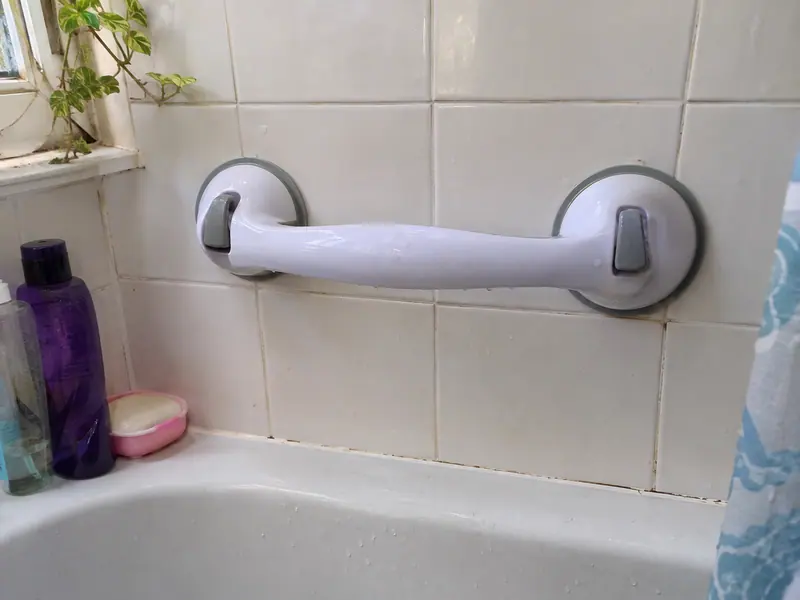
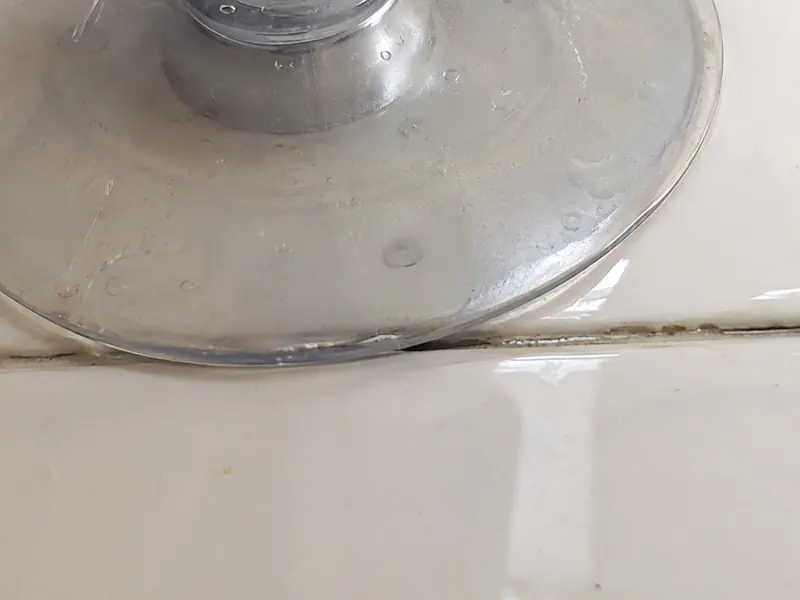
What happens when a cup crosses grout?
A suction cup needs a flat, unbroken surface right round its rim. A grout line is a groove, and air can leak along it. The gap here shows the seal is incomplete before anyone has put a hand on it.
Check the surface under each cup: smooth glazed tile, clean, dry and flat, with no grout, crack, texture or soap film. Even then, a seal can fade slowly with no change you can see. Follow the maker's limit, and don't rely on the handle for balance or to pull up on.
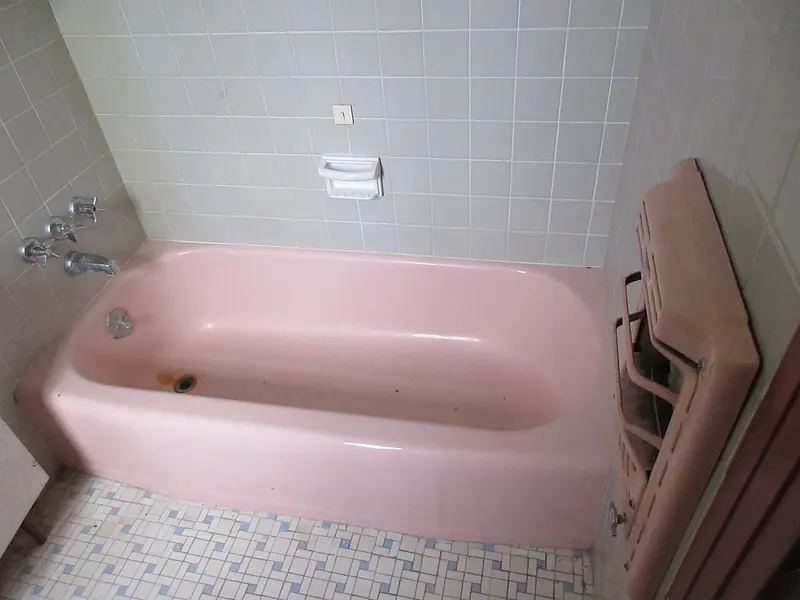
Is the bath rim a safe thing to grab?
A high enamel rim looks like a ready-made handle, and people do reach for it. It is smooth, often wet, and rounded away from the hand. It is built to hold water, not a person's weight.
The panel at the end is another thing to leave alone: it may fold or flex. If the real need is something to hold while stepping over a bath side, that is exactly what a fixed rail is for, and the NHS lists a rail to get out of the bath or shower among equipment that can be supplied once you are assessed.1

What do people grab when nothing else is there?
Frightened of slipping, people grab whatever is within reach: the shower curtain, the shelf, the curtain rail, the taps. None of them is made to take a person's weight, and a shelf or curtain will come away.
If you notice someone reaching for something like this when they get in or out, that is the sign that a rail is needed in that spot. Ask the council for an assessment: a grab rail is a minor adaptation, and in England councils cannot charge for minor adaptations costing £1,000 or less.2 Your GP can help if balance is the worry.3
Do not put your full weight on a suction handle or use one to pull yourself up. If a rail is for balance or standing from sitting, it should be a fixed rail, fitted professionally.
Do it yourself or get it fitted
If you already have one
- Press it only to clean, flat, glazed tile, never over grout or a crack.
- Wipe the cups and the tile dry before each fitting and test with a gentle pull.
- Don't rely on it for balance or if you slip, and read the maker's stated limit.
Also asked
Are suction grab rails safe?
Not for full weight. A suction seal depends on a clean, flat, smooth surface and can release without warning, so don't rely on one for balance, follow the maker's limit, and choose a screwed-in rail where a person's balance depends on it.
How much weight will a suction grab rail hold?
No figure is given here, because it varies by product, tile and condition of the seal. The maker's instructions set the limit. As practical judgement, never use one to take someone's whole weight, especially on a wet or grouted wall.