Wall strength and fixings for grab rails
Grab rail wall fixings matter more than the rail itself, because the wall has to take a person's weight. Where someone depends on a rail, have it fitted professionally, and never drill textured coatings from before 2000.2
Updated , by Bathroom Safety in Pictures
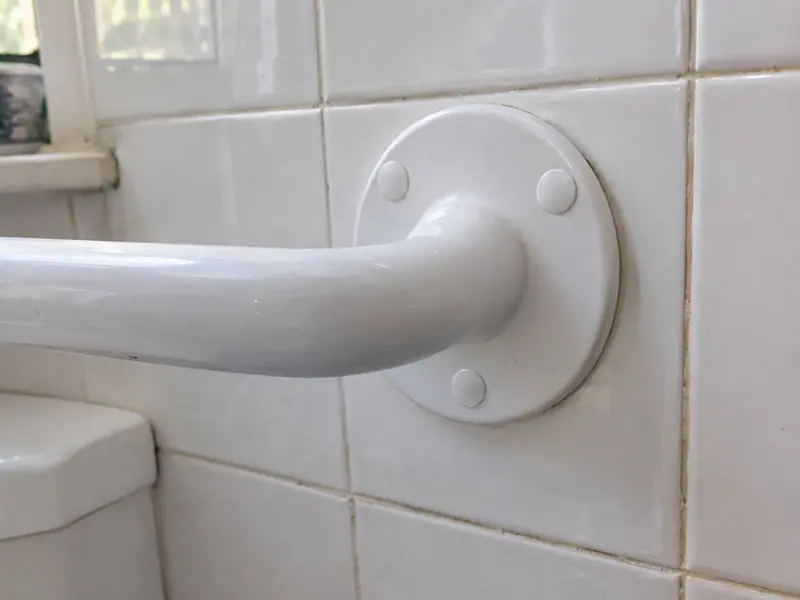
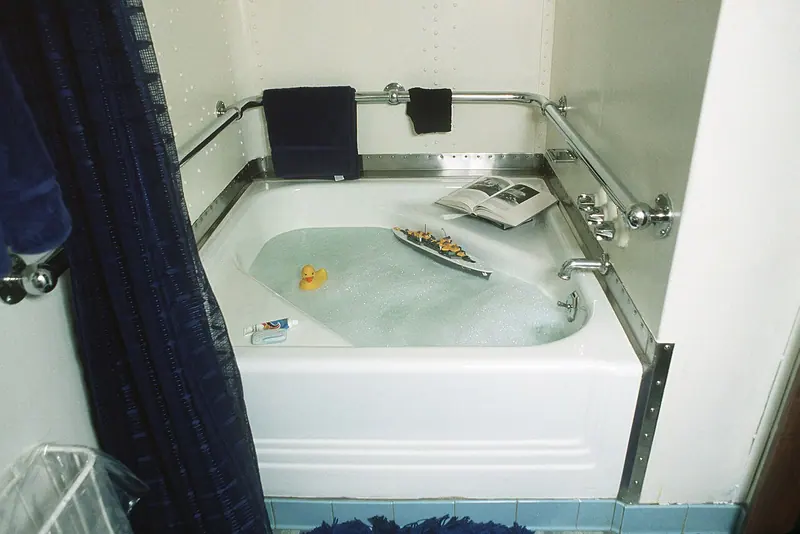
How many walls need to be strong?
Every rail needs its own sound fixing, so rails on three walls means three checks. Tiles hide what is behind: solid brick, plasterboard on timber studs, or a thin panel. Each takes a different fixing.
In England, guidance for new homes built to the accessible M4(2) category calls for bathroom walls strong enough to support rails and seats, with extra local strengthening where loads are concentrated.1 That is for homes built to that category. In an existing home, assume nothing, and have the wall judged by the person fitting.
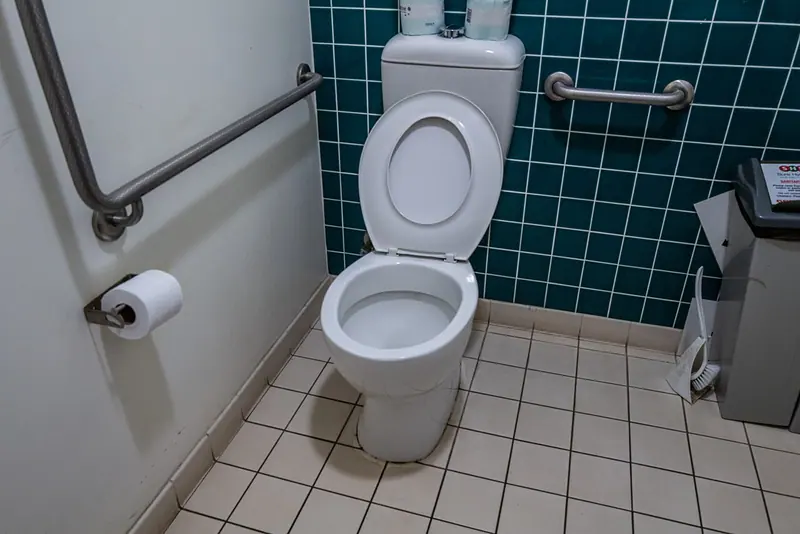
Is that roll holder a safe place to put weight?
Look at what has been added to the rail: a roll holder. Anything hung on a rail can catch a sleeve, swing round or get in the way of a hand. Keep the full length clear for gripping.
One rail here is on a painted wall and the other on tile. Either way, ask whether the fixing goes into the structure behind or only into the surface finish.
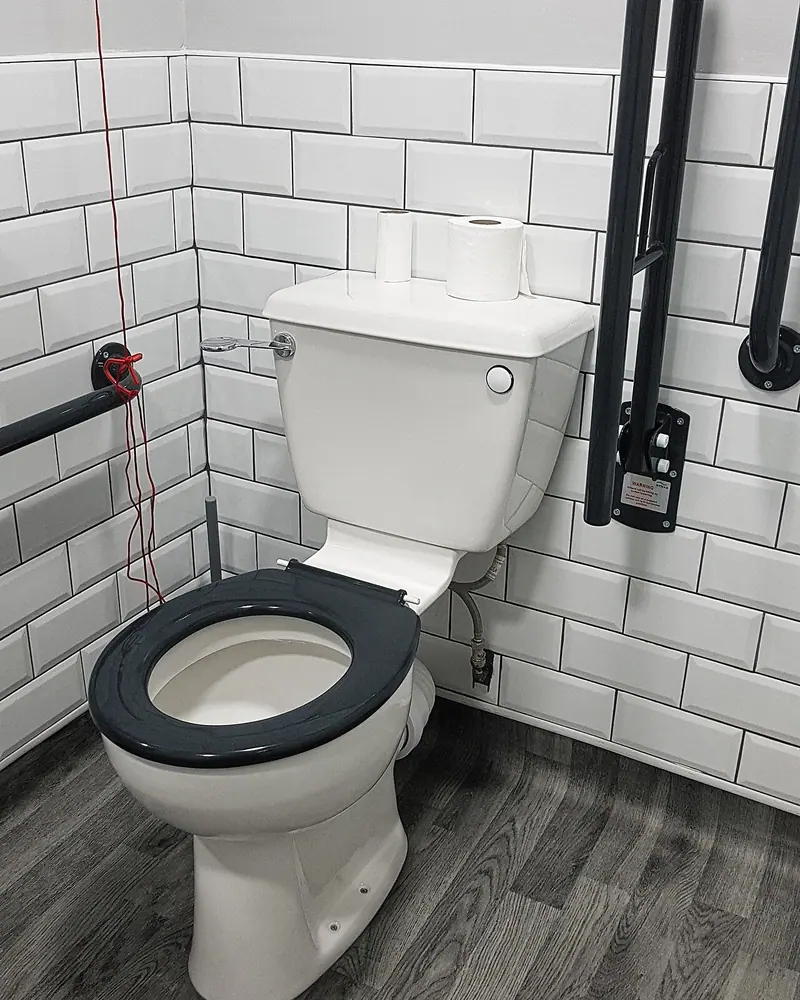
Why do fold-down rails need such strong fixings?
A fold-down rail works as a lever: the load at the hinge is greater than the person's weight at the end of the arm.
The picture also shows contrast working: dark seat, white bowl, black rails, all easy to see. RNIB suggests exactly that kind of contrast for people with sight loss.4 Copying a public design at home means copying its wall as well, and that is a job for a competent fitter.
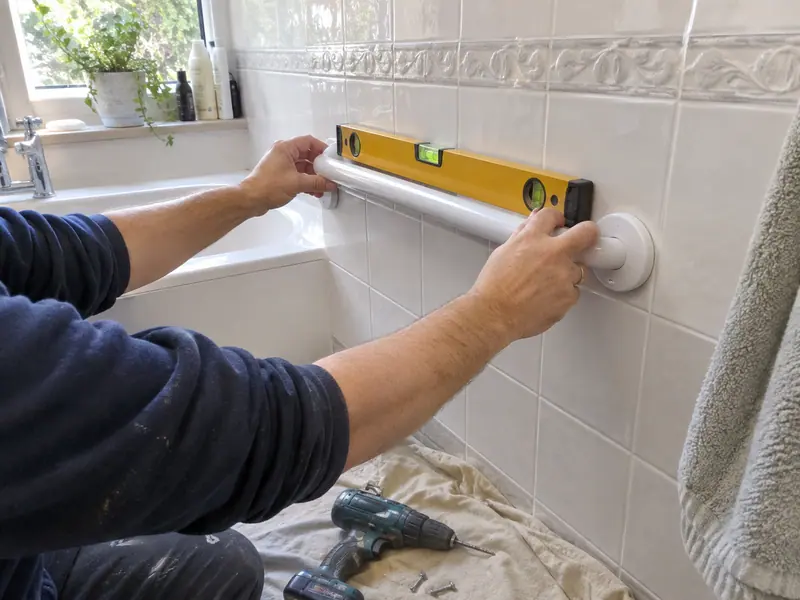
What does careful fitting look like?
The level is the visible part. The less visible parts are the checks beforehand: what the wall is made of, where pipes and cables run, and whether the tile will take a drill bit without cracking. The dust sheet and a drill set aside show planning.
A home improvement agency, such as Care & Repair or Staying Put, can identify reputable contractors and oversee the works, and many run handyperson services.5 Ask them, or your council's housing department, before you reach for a drill.
Homes built or refurbished before 2000 can contain asbestos, including in textured coatings such as Artex. Do not drill, sand or scrape a suspect surface. Tell any builder or fitter before work starts, and stop if you think you have found asbestos.3
| Wall behind the tile | What to ask the fitter |
|---|---|
| Solid masonry | Which fixing suits it, and is anything buried in it? |
| Plasterboard on timber | Does the rail land on timber, or is a board or plate needed behind? |
| Thin panel or boxing | Is it strong enough, or does it need strengthening first? |
| Textured coating from before 2000 | Has it been checked for asbestos before anyone drills? |
Do it yourself or get it fitted
Checks a householder can make
- Tap the wall and note hollow and solid areas, then tell the fitter.
- Note where the person reaches, to tell the occupational therapist.
- Check the rail keeps its grip after a week of use: no wobble, no movement at the flange.
Also asked
Can you fit a grab rail to a stud wall?
Often yes, but only with the right fixing into timber or a board behind the plasterboard. Plasterboard alone will not take a person's weight. Where the rail is relied upon, a competent fitter should judge the wall. English guidance for homes built to the accessible category notes that extra local strengthening may be needed.1
Can you drill into bathroom tiles for a grab rail?
Fitters do, using the right bit, and tiles can crack if it is done badly. Check first that the wall is not an old textured coating or panel, since drilling into suspect asbestos material is work for trained people.3 Leave it to a professional if weight depends on it.