Extractor fans, mould and ventilation
A bathroom extractor fan helps against mould when it vents to the outside, is kept maintained and keeps running after the shower1. Opening a window and closing internal doors while showering helps too1. Mould that keeps returning means the damp is not leaving; in a rented home, the landlord may have to act.
Updated , by Bathroom Safety in Pictures
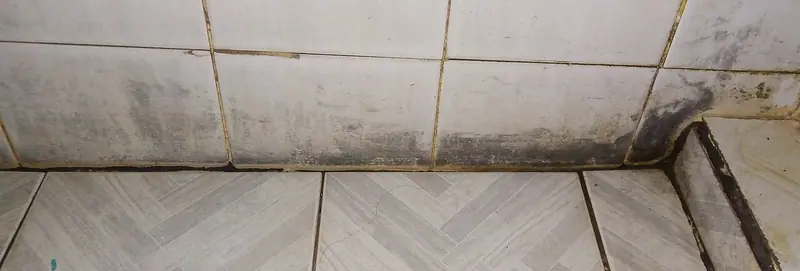
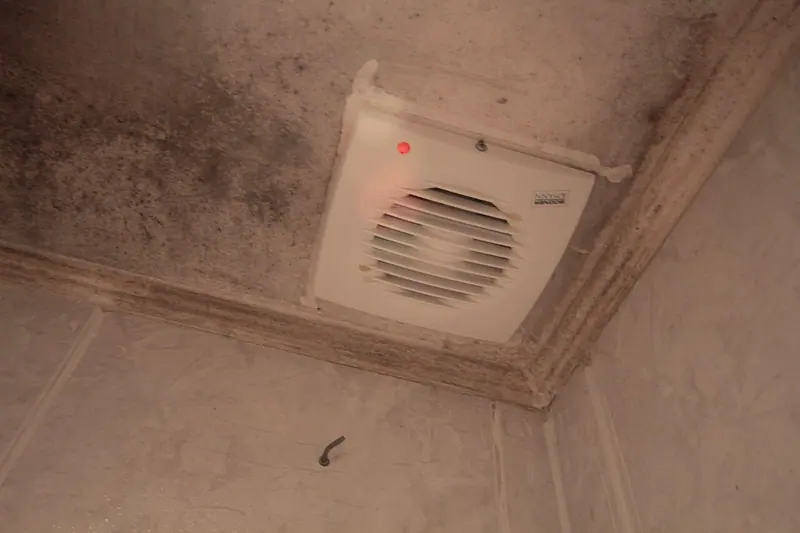
Why is there mould round the fan?
Mould right round a fan says damp is reaching the ceiling and staying. It does not prove the fan is broken, so ask in order. Does it start with the light and carry on afterwards? Is it moving air (a sheet of tissue held to the grille will show)? Is the grille clogged? And where does the air go? Approved Document F expects bathroom extract to go to the outside2, so ducting that ends in the loft is a question for the fitter. UKHSA says fans should be kept maintained1.
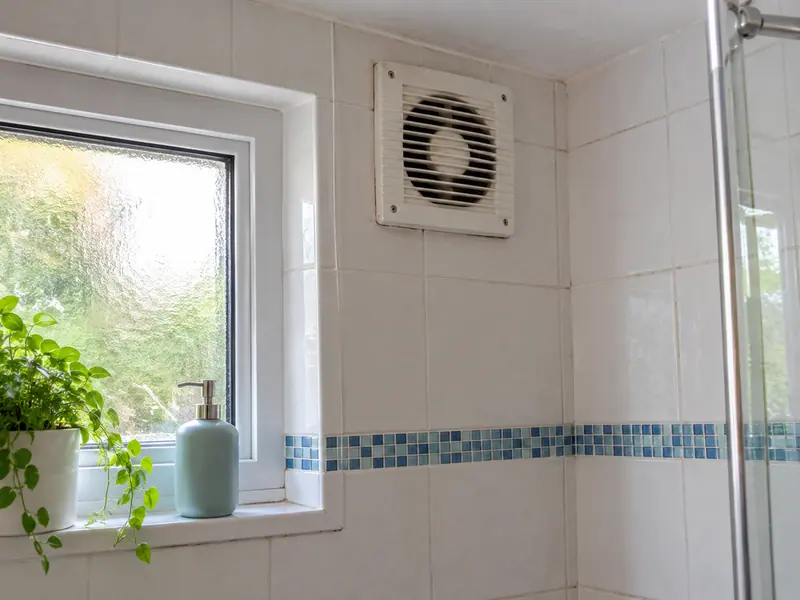
What does a working fan look like?
High on the wall, clean, with a clear grille, as here. UKHSA says fans can be controlled by humidity, or linked to the light with an overrun so they carry on after you leave1. Approved Document F gives new-work rates of 15 litres a second for an intermittent bathroom fan and 8 for a continuous one2; those are installers' design figures, not a test you can run. What you can notice is noise, whether it stops the instant the light goes off, and whether the mirror still steams.
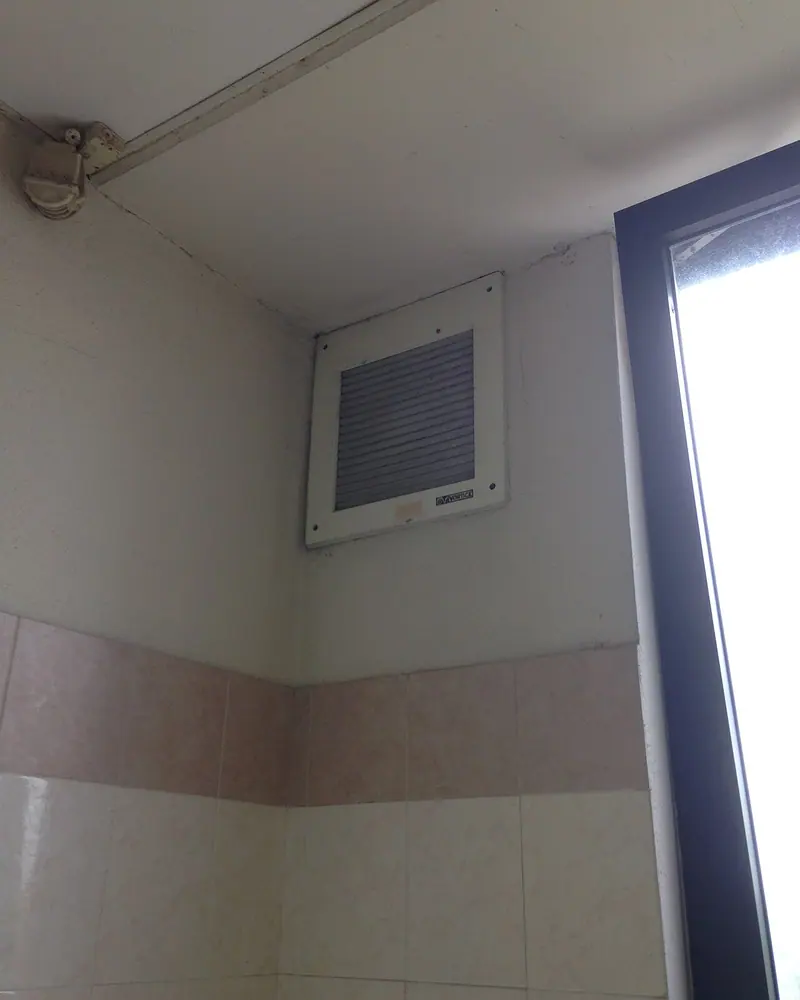
Is a vent and a window enough?
For showering, UKHSA advises opening windows and closing internal doors so the steam doesn't travel round the home1. A vent beside a window, as here, only lets air out if it is open and clear. Check it hasn't been painted shut, stuffed with a towel or furred with dust. A vent with no fan relies on warm air rising, so it helps but is not a fan. If the bathroom has no fan at all, an electrician is the person to ask about one: a fan sits close to the zones in the electrical zones page.
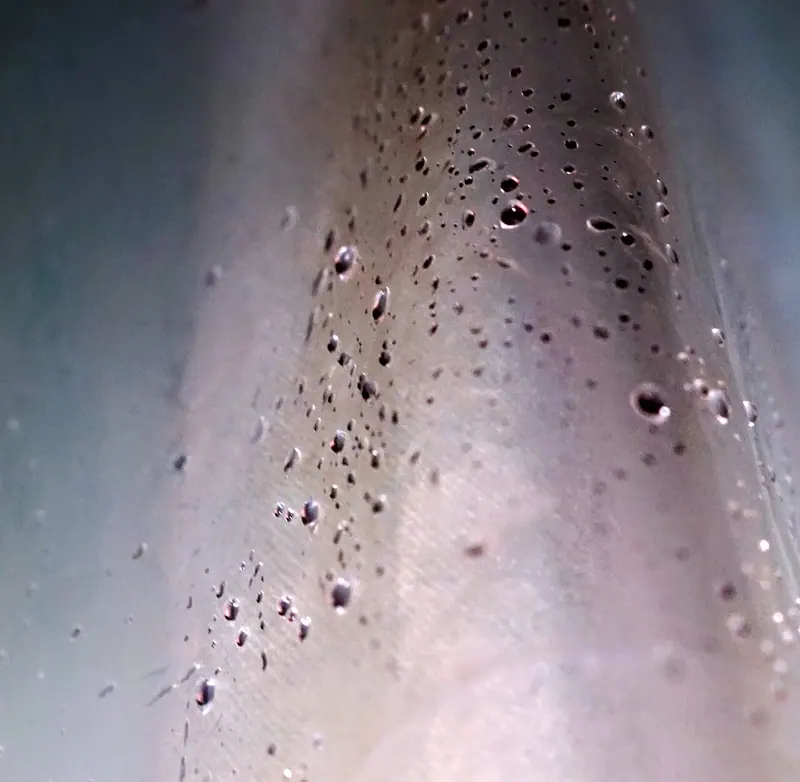
What do specks on the curtain tell you?
Specks on a curtain or liner show damp hanging about on a soft surface. Spread the curtain out after each shower so it dries rather than bunching, and look at the hem, the folds and the bottom edge. Mould that returns after cleaning is the cue to look at the cause, not the curtain: ventilation, a cold wall, a leak. UKHSA names asthma, COPD, weak immune systems, pregnancy, children, older people and people who are housebound as more vulnerable to damp and mould1. If someone like that lives there, do not wait.
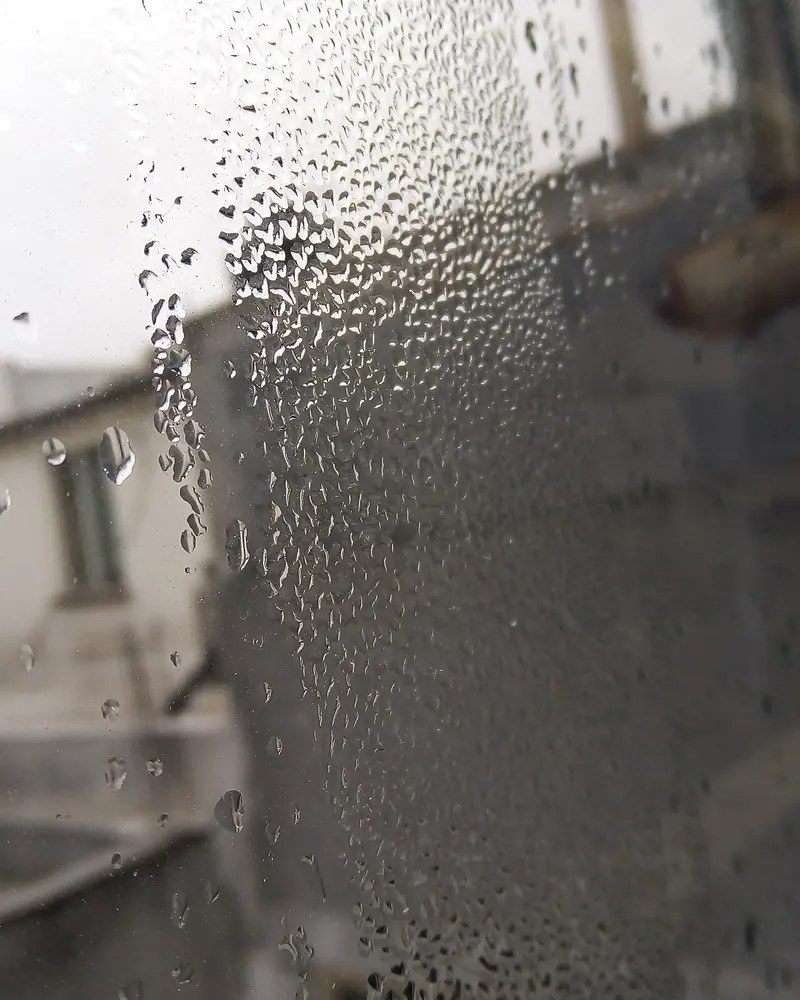
Where does the steam go?
Moisture that doesn't leave as vapour ends up on the coldest surface: the window, an outside wall, the ceiling. A window running with water after a shower says the room's moisture has nowhere to go. Wipe the glass and sill so water doesn't soak into the frame, then notice how long the window takes to clear with the fan on and the door shut. If it stays wet for hours, ventilation is short. Central Bedfordshire Council has a short film on damp and mould that covers the same ground.
If you rent: who has to act on mould?
In social housing in England, Awaab's Law has applied since 27 October 2025. A significant damp and mould hazard has to be investigated within 10 working days and made safe within 5 working days of the investigation finishing, and the tenant is owed a written summary within 3 working days3. Report the problem to the landlord, keep a record, and take it to the Housing Ombudsman if it is not dealt with3. Private renting isn't covered here, so do not assume the same timings apply there.
What you can do, and who to ask
What you can do yourself
- Run the fan during and after showers, and keep the bathroom door closed.
- Open the window while showering, then wipe the glass and sill.
- Spread the shower curtain out so it dries.
- If you rent, write down the dates, take photographs and report it to the landlord in writing.
Who to ask
- A registered electrician: a new or replacement fan, a timer or humidity control, anything wired.
- The landlord or housing association, if you rent: report it to them in writing.
A short film from Central Bedfordshire Council, 4 min 36 sec. Press play to load it from YouTube; until then, nothing is requested from there.
Also asked
Does an extractor fan stop bathroom mould?
It helps, but only as part of getting the damp out. A fan that vents outside, is maintained and keeps running after the shower removes moisture12; one that is blocked, vents into the loft or is never switched on does not. Mould that keeps coming back is the sign to check the fan, the window habits and any leak.
Who is responsible for mould in a rented bathroom?
In social housing in England, Awaab's Law puts time limits on the landlord once a significant hazard is reported3. Private renting isn't covered here, so do not take that as settled. Either way, report it in writing and keep a record of what you sent and when3.
Sources
- UKHSA and OHID: Understanding and addressing the health risks of damp and mould in the home
- MHCLG: Approved Document F, Volume 1 (2026 edition) England; the standard for new work
- GOV.UK: Awaab's Law, guidance for tenants in social housing Social housing in England