Lighting the bathroom for night visits
A good bathroom night light is soft and steady, and comes on by itself along the route from bed to toilet, so nobody has to find a switch. Alzheimer's Society advice is to leave a light on or use motion sensor lights at night1. The room needs shadow-free light too2.
Updated , by Bathroom Safety in Pictures
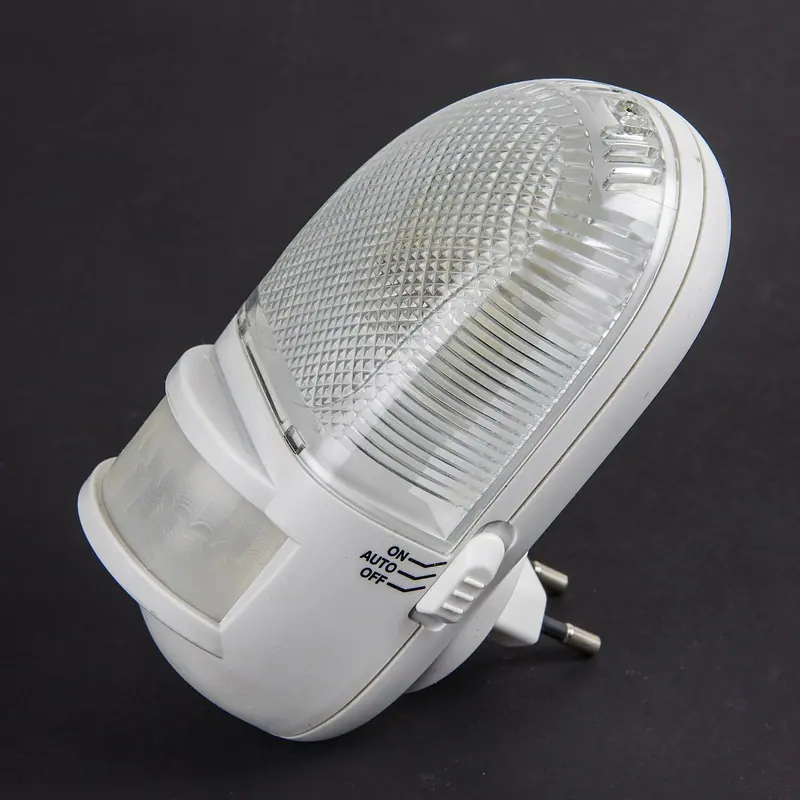
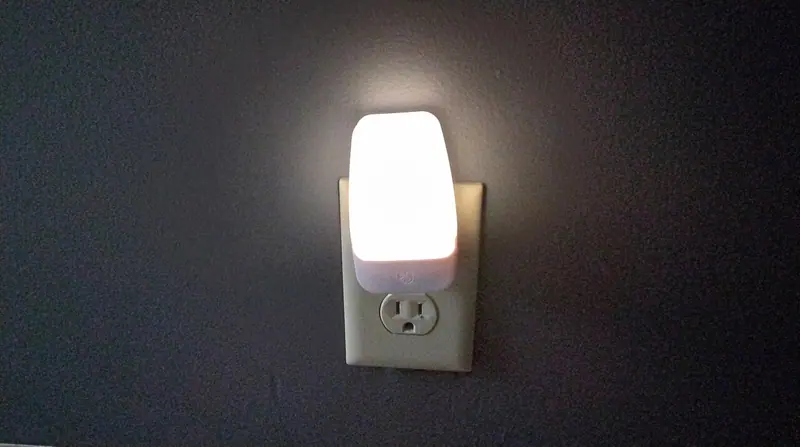
Is a plug-in light the right answer?
The glow is the point: enough to see the floor clearly. But a plug-in light needs a socket, and sockets are not allowed in bathrooms or shower rooms unless at least 2.5 m from the edge of the bath or shower tray, shaver units apart3. So put the plug-in light on the landing or hall, where it lights the way to the door. Never run an extension lead into the bathroom3. Moving or adding sockets is for a registered electrician: see the zones page.
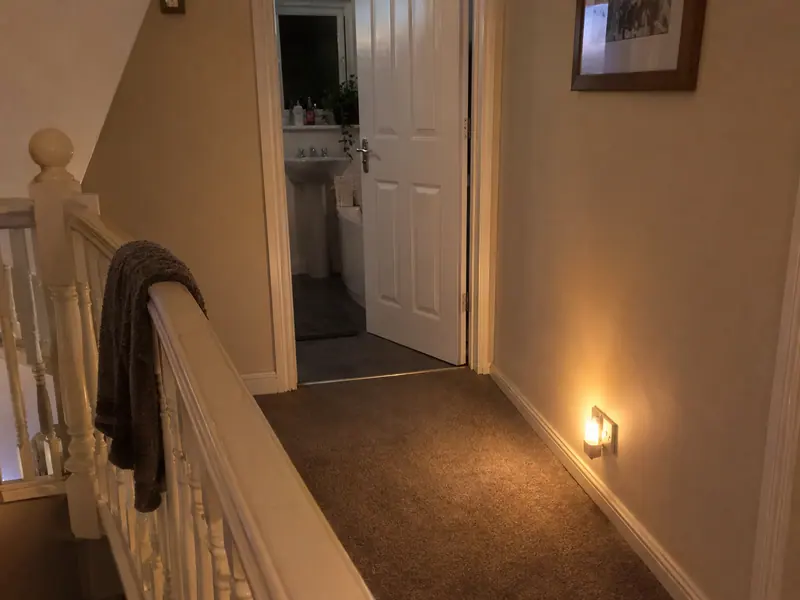
What does a lit route look like?
Look at what the light does: it shows the floor and the doorway, and the warm low light doesn't dazzle. The door left ajar tells a half-awake person where to go. Walk the route yourself at night once your eyes have adjusted. Where do you lose sight of the floor: a step, a mat, a turn? Alzheimer's Society advice to leave the door open and a light on, or use motion sensor lights, is aimed at people with dementia1, but a lit route helps anyone getting up in the dark. See also poor sight or memory.
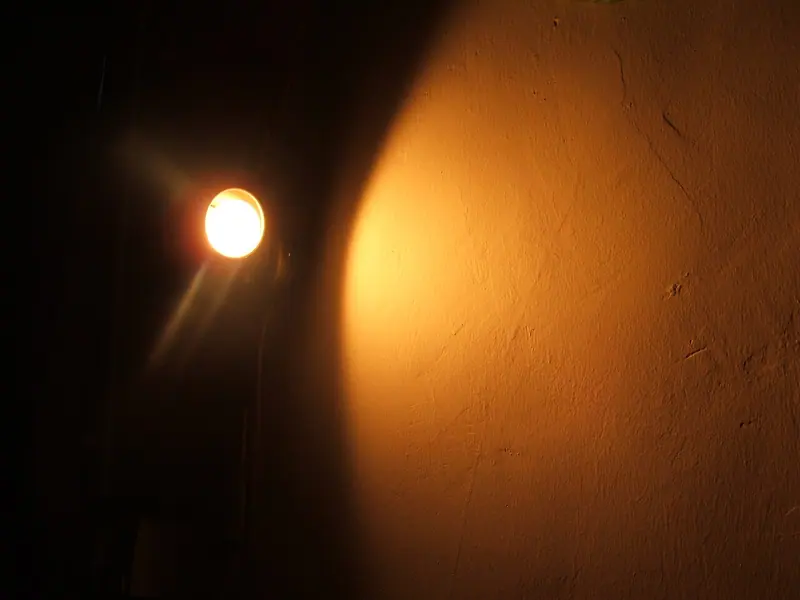
Does a low wall light help or dazzle?
A light that points at the wall gives soft light without a bright source in the eye line. Low light, uneven light, shadows and glare are named among common lighting problems2. Test it by standing where the person would stand in the dark: can you see the bulb as a bright spot? Then it will dazzle. Do shadows fall across the floor in front of the toilet? Then move the light or add a second. Pocklington Trust advises separate controls or dimmers, because needs change2.
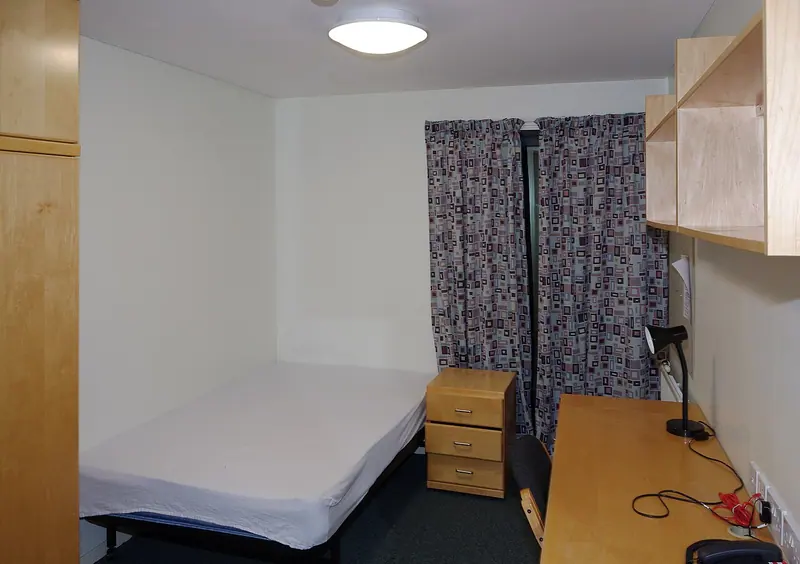
Why choose an enclosed ceiling light?
Electrical Safety First says enclosed ceiling lights are preferable in bathrooms, and a ceiling pull-cord is better than a wall switch3. A closed cover keeps splashes and steam away from the lamp and gives an even spread of light. Changing or adding a bathroom light is electrical work near the zones around the bath and shower. Leave it to a registered electrician; any installation or alteration within the zones is notifiable in England and Wales4.
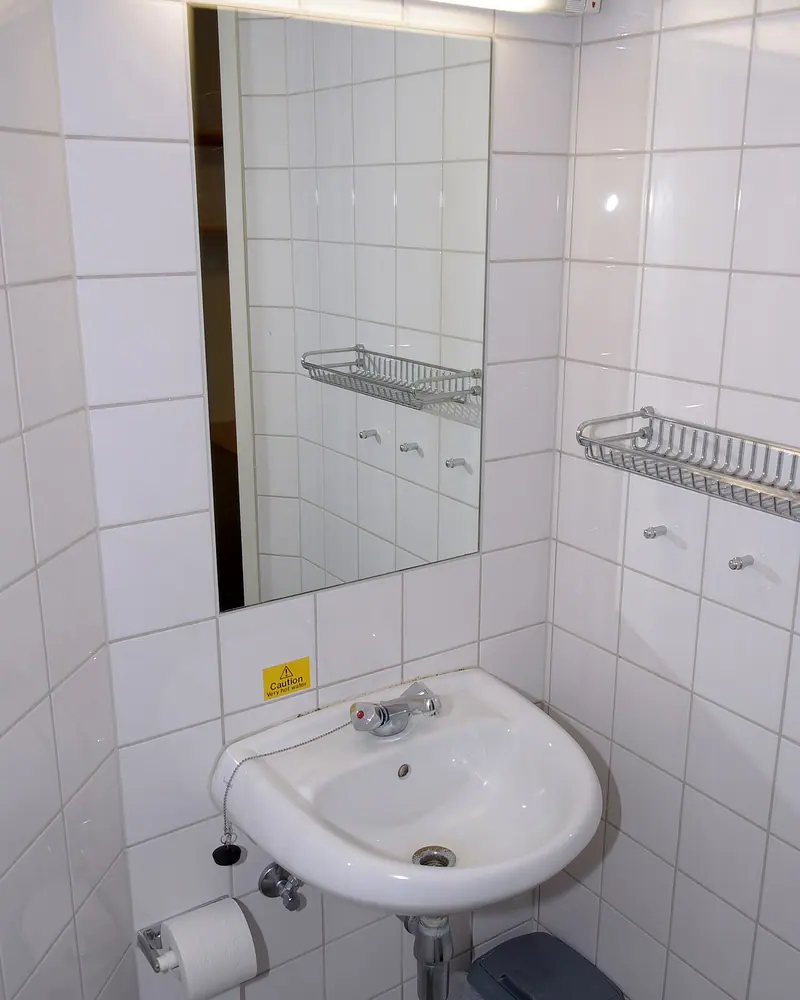
Where should the light fall at the basin?
Pocklington Trust says lights over basins and showers matter, and that LED strips give shadow-free light2. Here the strip runs above the mirror and lights the face from the top. Check your own basin: standing there, is your face lit, or are you in your own shadow? Does the strip glare back out of the mirror? Fixed lights are the electrician's job, but moving a plug-in or battery light on the landing to cover a dark corner is not.
Do not run a lead from a landing socket into the bathroom, and do not add or move sockets yourself. A battery light sold for bathrooms avoids the socket question, but follow the maker's instructions on where it may go.
Do it yourself or get it fitted
What you can do yourself
- Put a plug-in or battery night light on the landing or in the hall.
- Walk the route from bed to toilet at night and note the dark spots.
- Check for glare: can you see the bulb itself from where the person stands?
- Leave the bathroom door ajar if the person wants it open.
Who fits what
- A registered electrician: any new or replaced fitting in the bathroom, a ceiling pull-cord, a dimmer or a motion sensor switch.
- The council's occupational therapist, for how much light and which controls suit this person.
Also asked
What is the best bathroom light for night visits?
A soft, steady light that comes on by itself and shows the floor, without a bright source at eye level. Motion sensor lights are one of the options Alzheimer's Society advises for night1. Fixed fittings inside the bathroom are for a registered electrician3.
Is bright bathroom light bad at night?
Low light, shadows and glare are all named among common lighting problems2, so aim to see the floor clearly with no bright source in the eye line. Pocklington Trust advises separate controls or dimmers because needs change2. A softer second light for night can sit beside the main one, rather than replacing it.