Bath mats, loose rugs and non-slip mats
A non slip bath mat only helps if it stays put. NHS advice for people at risk of falls is to use a non-slip mat and remove loose rugs, so check every mat in your bathroom for curled corners and movement.1
Updated , by Bathroom Safety in Pictures
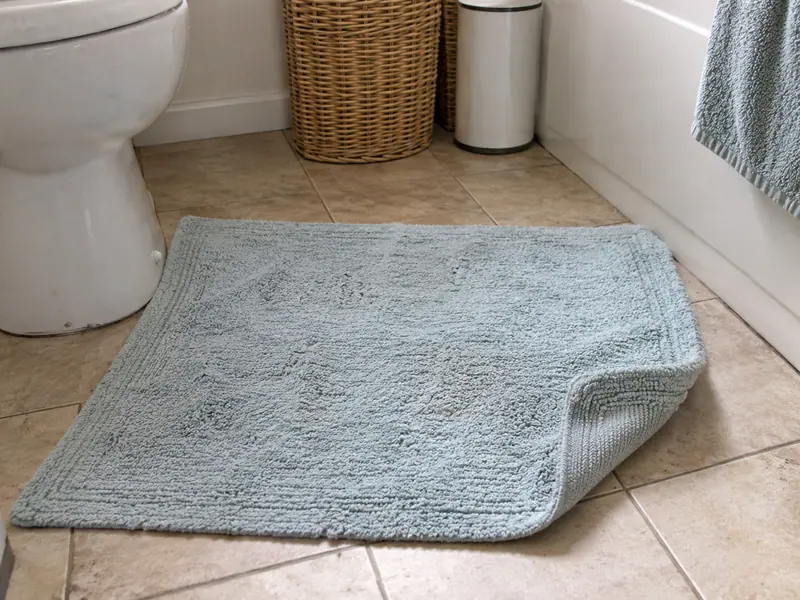
What does a curled corner do to a foot?
A raised corner is a trip edge, and it grows worse with every wash. Walking in, a toe goes under it; walking out, a heel slides the whole rug. On tile the rug rides on a film of water.
Test yours by hand, or ask someone steady to: press on the middle and push sideways. If it moves, or the corners lift when walked on, it should go. NHS falls guidance says to remove loose rugs.1 A rug bought for looks can sit outside the bathroom, away from wet floors.
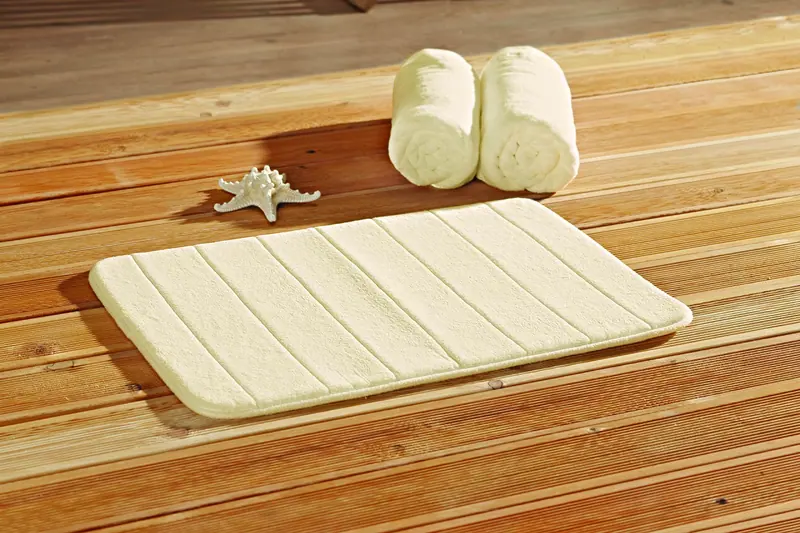
Is a soft foam mat any safer?
Soft mats feel kind underfoot and tend to be light. Light means it can slide, especially on a polished or slatted surface where it has little to grip. Foam also holds water and can stay wet for a long time.
Look at the underside, and check what the maker says it grips on. A mat is not a substitute for a floor that grips. If someone has had a fall, a mat is the smaller part of the answer, and a visit to the GP is the first step.1
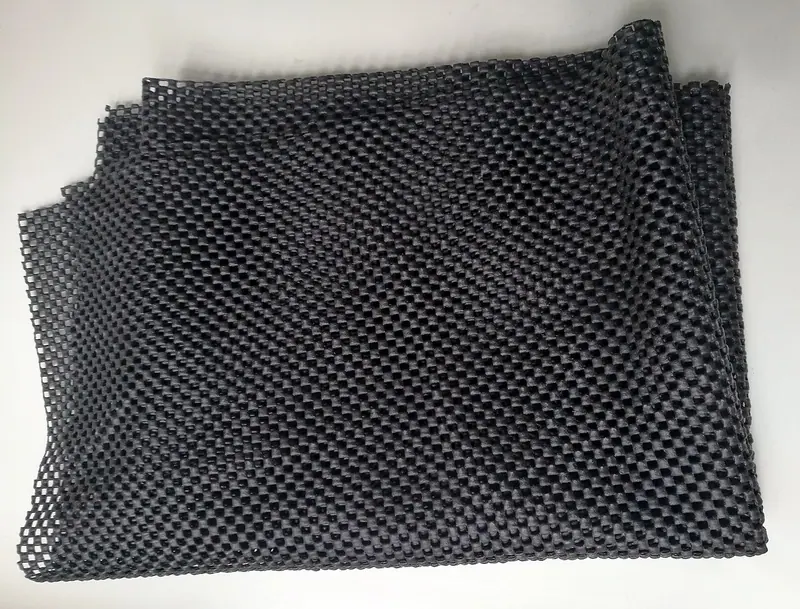
When does a rubber mesh mat suit better?
Open mesh drains, so the water does not pool on top. You can pick it up, hose it and let it dry, which stops grime and mould building underneath.
It still has to lie flat. A mat that has been folded in storage can hold its crease and lift at an edge, so unroll it and let it settle before using it. Check it each month for cracking or edges that peel.
The NHS lists a non-slip mat among equipment that can be provided free if you have been assessed as needing it.2
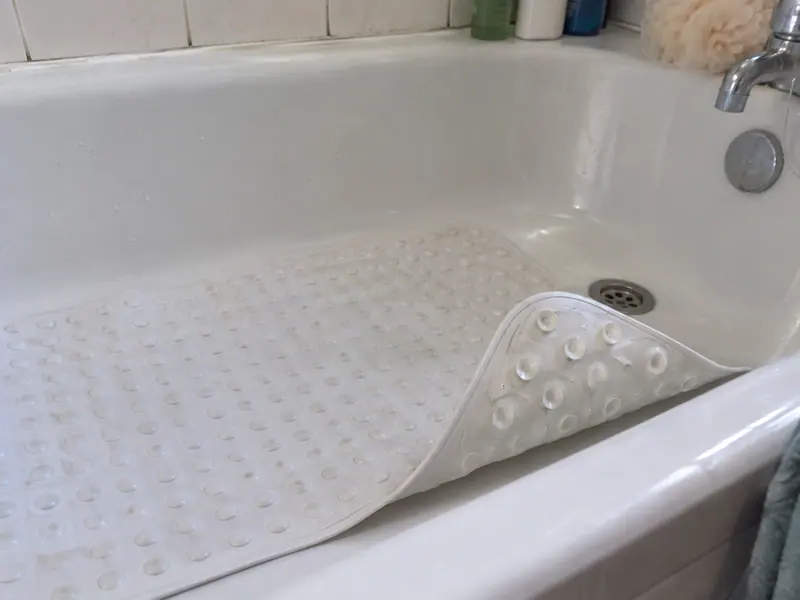
Why does my bath mat slide?
Suction cups hold only on a clean, smooth, flat surface. Soap film, bath oil, limescale or a textured bath floor all let air creep under, and then the mat shifts. A lifted corner like this one is the clue that it is no longer sticking.
Press each cup down as the maker says, wash the mat and the bath floor often, and lift the mat out to dry. If a corner will not stay down, replace the mat. Do not use it as a handhold: a mat is for feet, and a fixed grab rail is for hands.
A mat that slides is worse than none, because it looks like protection. If anyone has fallen in the bathroom, or you are worried about balance, see a GP, who may refer to a falls service for a home assessment.1
Do it yourself or get it fitted
Checks you can do
- Lift each mat and look underneath for dirt, lifted cups and cracks.
- Bin any loose rug in a wet area.
- Rinse and dry mats after use so soap does not film the underside.
When to ask someone else
- A council occupational therapist, who can look at the whole routine and suggest equipment, not just a mat.3
- Your GP if there has been a fall or you worry about balance.
Also asked
Are bath mats safe for older people?
Only if they hold still. NHS advice for people at risk of falls is to use a non-slip mat and remove loose rugs.1 Around a third of people aged 65 and over fall at least once a year.4 A mat that curls or slides can add risk rather than remove it.
Why does my bath mat slide?
Usually because suction cups cannot grip through soap film, limescale or a textured bath floor, or because a light cloth mat is riding on water. Clean both surfaces, press the cups down as the maker says, and replace a mat whose corners will not stay flat.