Where grab rails go in a bathroom
Bathroom grab rails usually go where someone steps, turns, sits or stands: beside the bath or shower, and next to the toilet. Exact positions depend on the person, so an occupational therapist measures rather than copying a diagram.1
Updated , by Bathroom Safety in Pictures
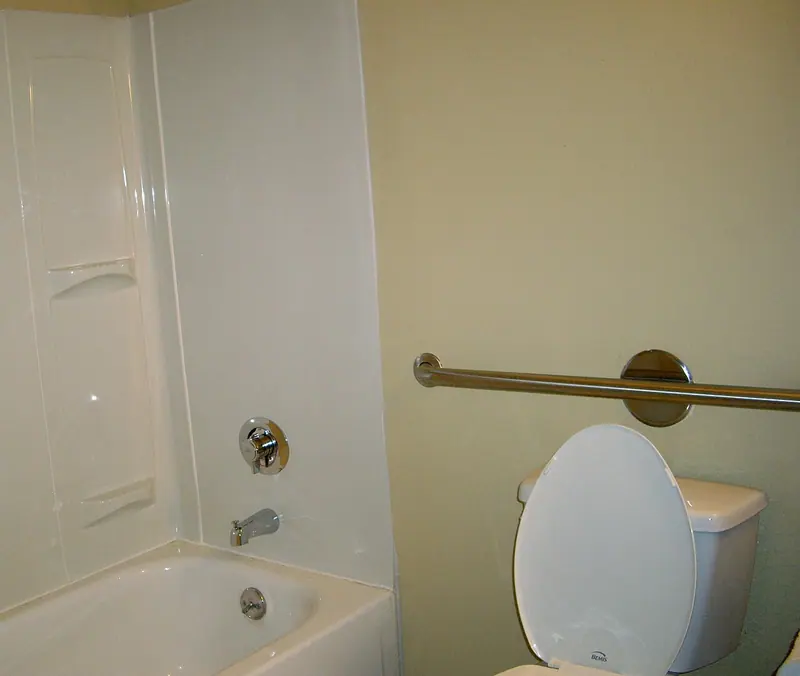
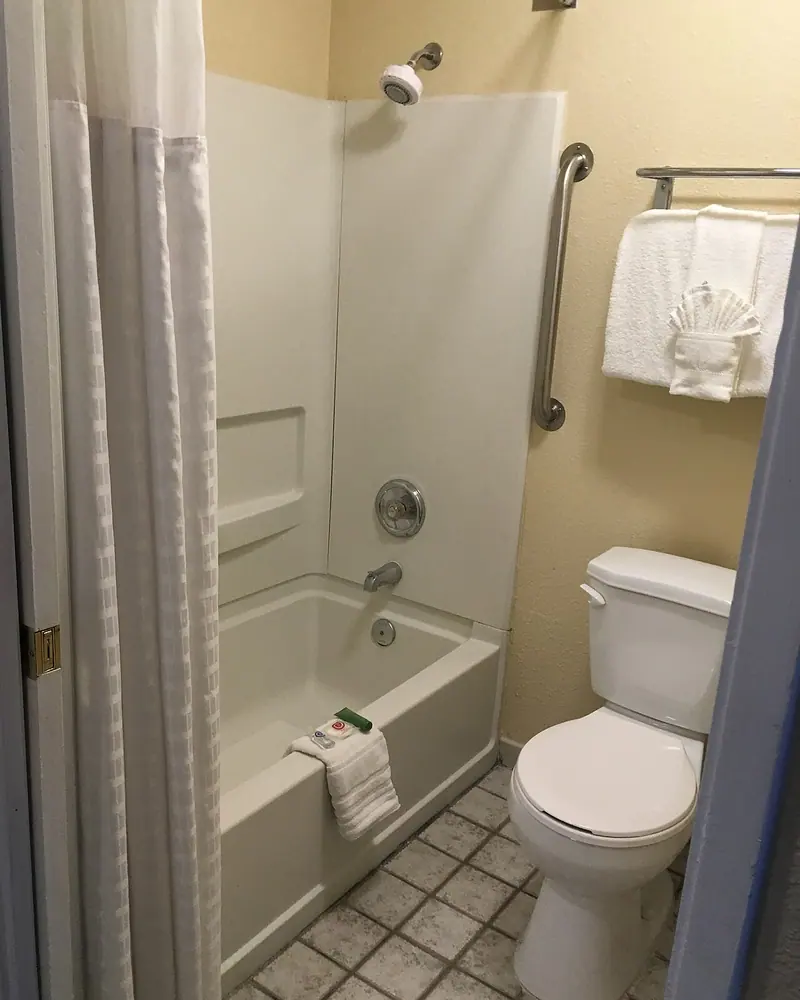
Why put a rail upright by the taps?
An upright rail gives something to pull against when rising from the bath or stepping over the side. Here it sits where a hand naturally lands as you turn towards the tap end.
Notice what is nearby. Towels hang above it, and a towel rail is not a grab rail: it is fixed for towels, not for body weight. Check the rail you are relying on is the one that is fixed to take a person's weight, and that nothing slippery, like a dripping towel, is hung over it.1
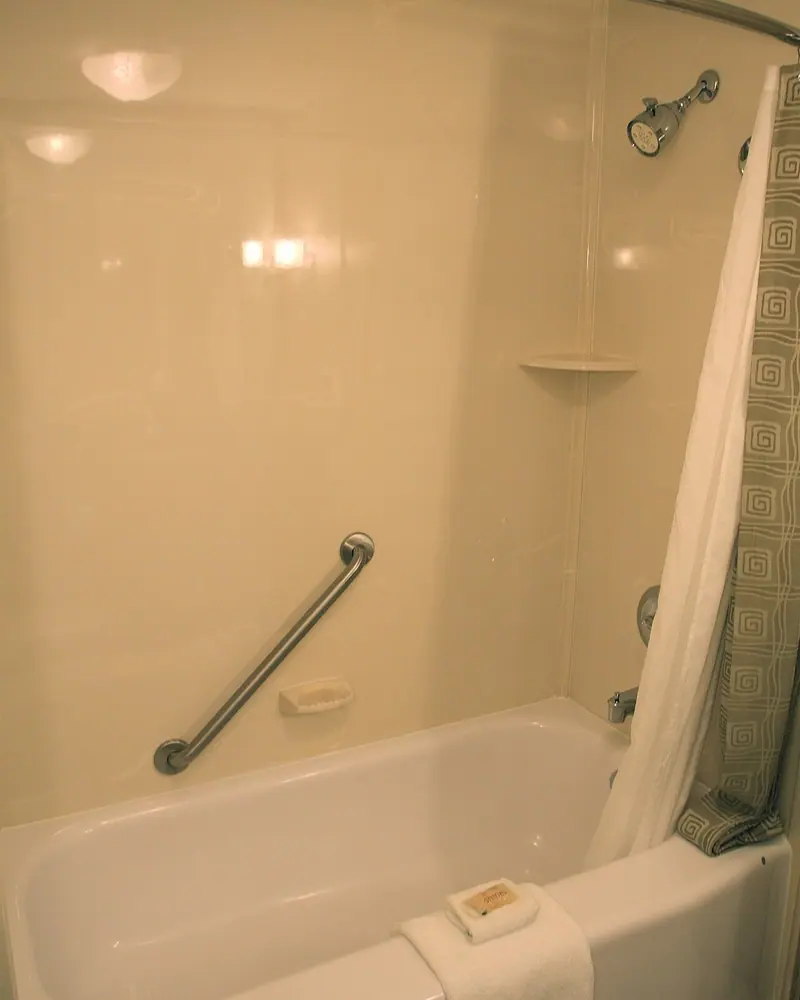
What does a sloping rail suit?
A sloped rail can follow the way an arm moves when someone stands up from low down or steps in and out. It suits some bodies and not others, which is why a one-size picture is not a plan.
The important thing in a wet bath is grip: smooth, wet metal is harder to hold. RNIB advice is for rails that stand out from the wall in contrast, so they are easier to see and find.2 Ask an occupational therapist to try positions with the person standing, sitting and stepping, before anything is drilled.
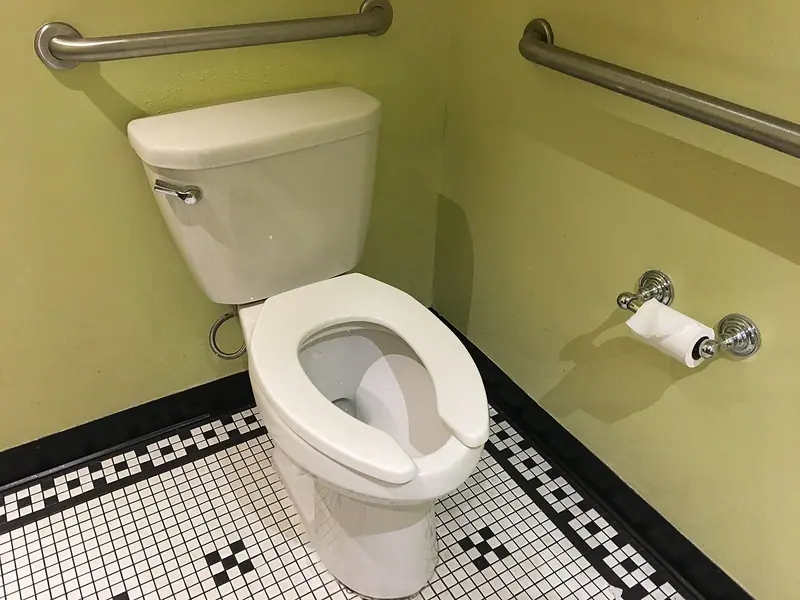
How do rails beside a toilet differ?
Rails on two sides give a person a choice of hand for sitting down and standing, and a way to steady themselves in a small room. These are chunky, set on solid walls, and contrast with the paint.
In an ordinary home the same idea is carried out with more care about what the wall is made of. Rails at a toilet take the whole of someone's weight at a moment when they are least steady. See the wall fixings guide before anything goes up.

Is this how rails should look around a bath?
This older room shows rails added to a room that was not built for them. Look at the spaces: the rail stands on the floor rather than on a wall, and the tiled area is hard everywhere a person might fall.
A rail added later should meet the person's needs and the wall's limits at once. If a rail is not placed where a hand falls, it will not be used; if it is not fixed well, it can fail when it is needed. Ask whether the wall behind tile is solid or boarded before choosing a position.3
Where someone's weight depends on a rail, have it fitted professionally. The strength of the wall and the fixings decide whether it holds, and a loose rail can be worse than none.
Do it yourself or get it fitted
Things to work out first
- Which fittings give most trouble: stepping into the bath, rising from the toilet, the shower?
- Which hand is stronger, and does the person stand or sit to wash?
- What colour are the walls, and will a rail stand out?2
Who measures and who fits
- An occupational therapist, through the council, to say where rails should go for this person.1
- A competent fitter or handyperson, or a home improvement agency, for drilling and fixing.1
- Money: GOV.UK lists grab rails among work a Disabled Facilities Grant may cover in England, Wales and Northern Ireland, and Wales names them under its small ENABLE adaptations.45
A short film from Living Made Easy (Shaw Trust), 58 seconds. Press play to load it from YouTube; until then, nothing is requested from there.
Also asked
Where should grab rails go in a bathroom?
Next to the places someone steps, turns, sits or stands: by the bath or shower and beside the toilet. The exact position depends on the person and the room, so ask an occupational therapist to measure rather than relying on a general diagram.1
How high should a grab rail be fitted?
There is no single height. It depends on who will use it and whether they stand or sit, so ask an occupational therapist to check it with the person in the room. Living Made Easy, part of Shaw Trust, has a short film of a wall rail being used to step over a bath side.