Choosing a less slippery bathroom floor
Non slip bathroom flooring is not one product. Matt tile, mosaic and safety vinyl can all grip or all fail, depending on a test result you can ask the maker for, and on how the floor is cleaned.1
Updated , by Bathroom Safety in Pictures
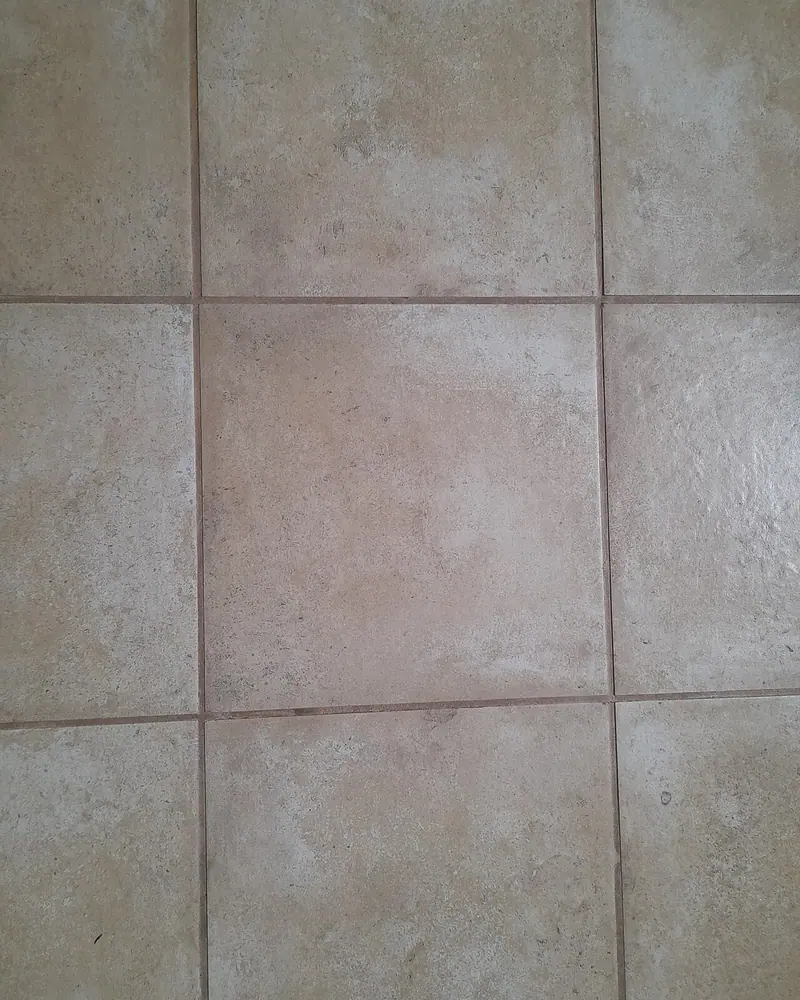
Is a slight sheen a warning sign?
A faint sheen is the grey area. Tilt your head and see how much the window reflects: a sharp reflection usually means a smooth glaze that may be slick under soap. Ask the seller whether the tile was tested for slip resistance when wet, and what the result was, rather than accepting "anti-slip" on a label.
The HSE pendulum scale puts a test value of 36 or more at low slip potential, 25 to 35 at moderate and 0 to 24 at high. It is a workplace scale, so use it as a question, not a guarantee for your bathroom.1
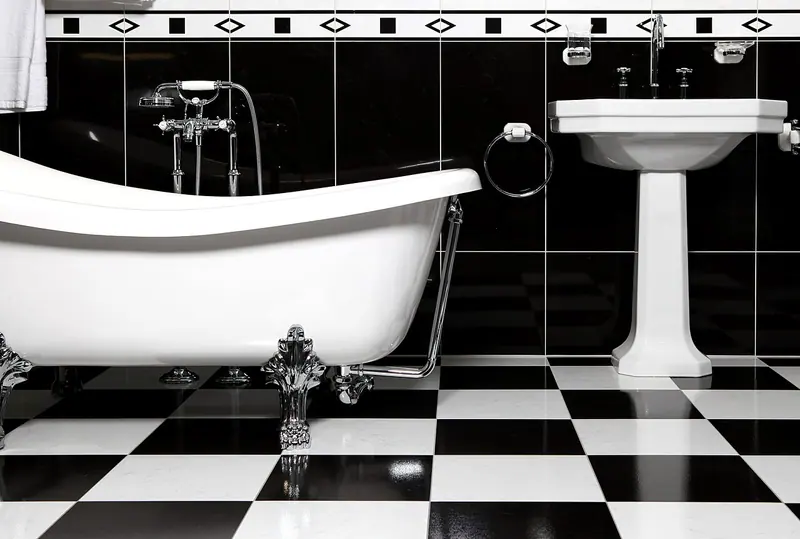
Does a polished floor suit a bathroom?
This is the look many people want and the one to be careful with. Polished or glossy tile goes slippery when wet, and a bath stepped out of drips straight onto it. If you love the pattern, ask for a matt or textured version of the same design, and put the question about wet test results to the maker.
Pattern is not grip.
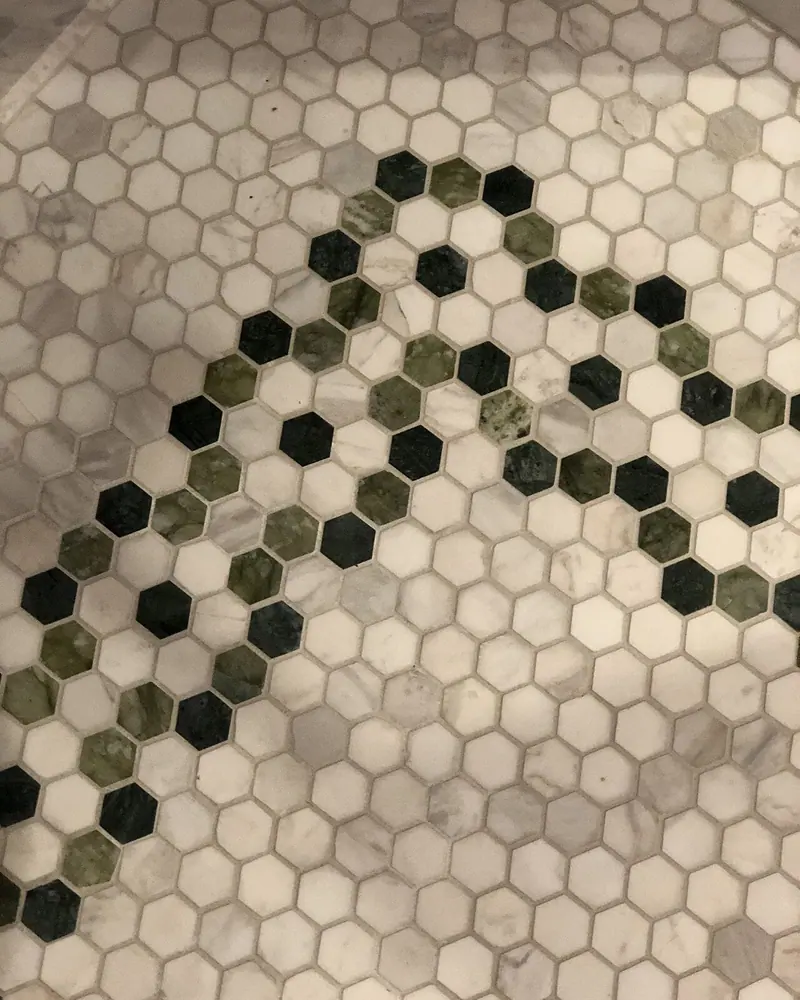
Does a mosaic floor give more grip?
Many small tiles mean many grout lines, and some people argue that grout gives the sole more to grip. No figure here backs that, so treat it as an argument for mosaic rather than a result. It cuts both ways: grout wears, stains and grows mould, so a mosaic floor needs scrubbing with a brush, not a quick wipe.
Check whether the grout is level with the tile face or sunk below it. Sunk grout traps water and grime. A glaze that is slick on each tiny tile still lets a bare foot slide.
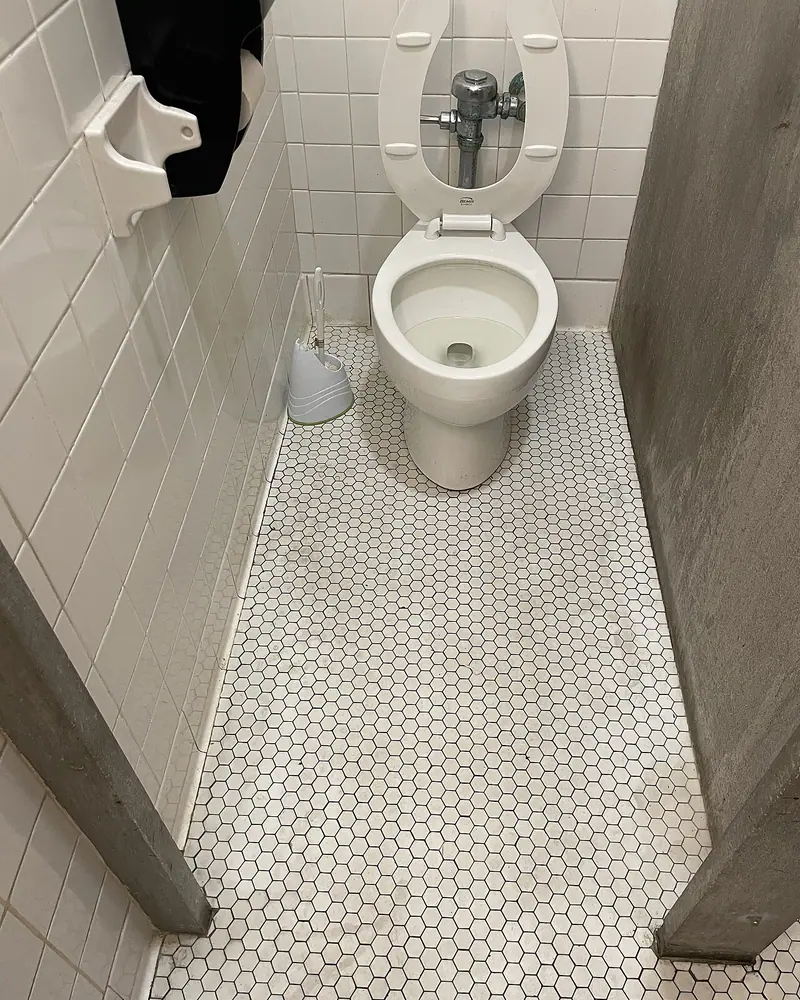
What changes in a very small room?
A narrow room leaves no space to put a mat anywhere sensible, so the floor itself has to do the work. Light mosaic like this shows dirt in the grout quickly, which is useful: a floor you can see is clean is a floor you will keep clean.
In a small room look at where you stand to wash: the area in front of the basin and by the toilet gets splashed. Those spots matter more than the middle of the floor. The NHS suggests grip-soled shoes or slippers for people at risk of falls.3
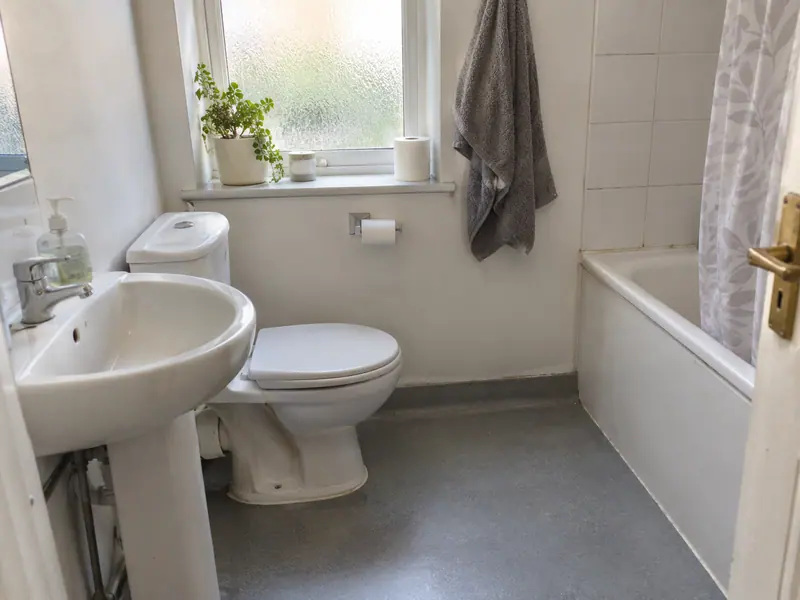
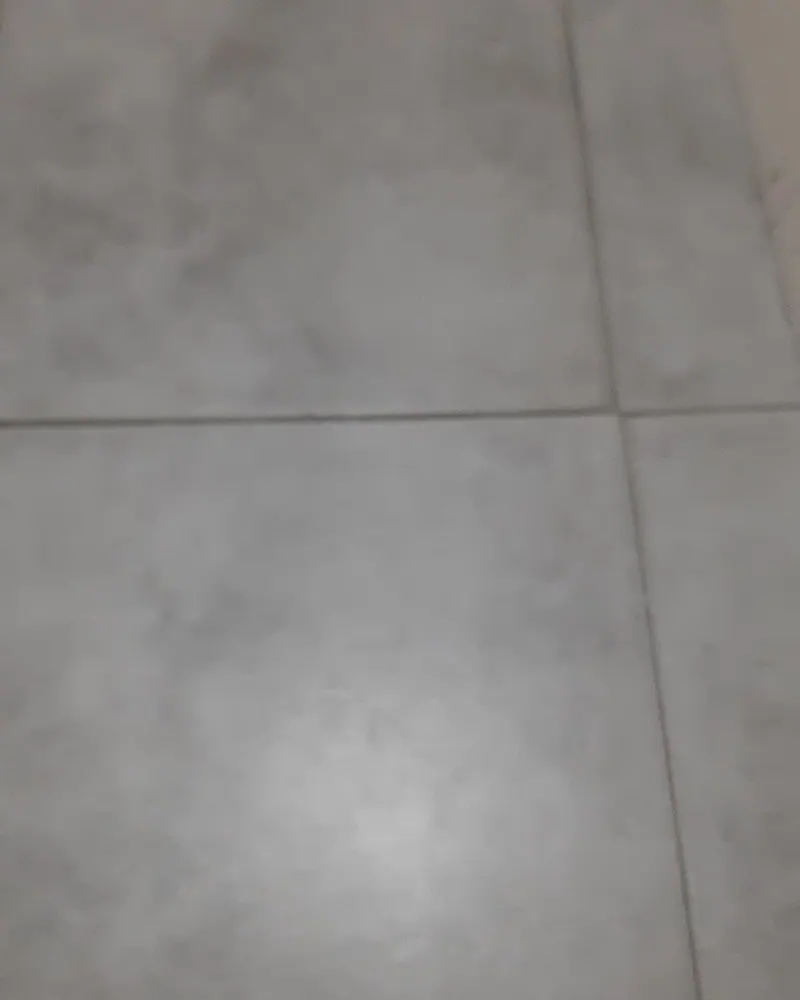
What does safety vinyl look like once fitted?
Look at the edge first. Vinyl that curves up the wall means water meets one continuous surface rather than a seam, and that is the main reason it is used in wet areas. Check the joins by the bath and toilet base for lifting.
This one is slightly worn. Wear matters: grip texture can smooth out where people stand most. Press a thumb into the sheet near the door; if it ripples, the glue has given up. A mid-grey colour also contrasts with white fittings, which helps people with low vision.2
| Test value | Slip potential | What to ask the maker |
|---|---|---|
| 0 to 24 | High | Why is this being offered for a bathroom? |
| 25 to 35 | Moderate | Wet or dry result, and for bare feet? |
| 36 or more | Low | Which rubber slider was used for the test? |
Do it yourself or get it fitted
Fine to look into yourself
- Ask for the wet test result in writing before you order.
- Check the grout and joins are level and not lifting.
- Keep the floor clear of loose rugs and clutter.3
Better left to the right person
- A flooring fitter or competent tiler for waterproofing and sealed edges, especially in a wet room.
- An occupational therapist if the floor needs to suit a walking frame or wheelchair.4
Also asked
What flooring is best for a wetroom?
There is no single best one. Whatever you choose must be tested for grip wet and barefoot, laid to a fall towards the drain, and sealed by someone who does waterproofing. Read wet rooms before choosing, as the floor and the drain are planned together.
What does an anti-slip rating on bathroom tiles mean?
It means the maker has put the tile through a test and reported a number or class. The HSE workplace scale uses a pendulum, with 36 or more as low slip potential.1 Ask which test, whether it was wet, and whether it suits bare feet.
Sources
- HSE: GEIS2, assessing the slip resistance of flooring Written for workplaces, not homes
- RNIB: Practical adaptations
- NHS: Falls England-based NHS guidance
- Age UK: Factsheet 42, Disability equipment and home adaptations (March 2026) England