Wet rooms
A wet room is a bathroom where the whole floor is waterproofed and slopes to a drain, so the shower needs no tray. What decides whether it works is the hidden layer under the tiles.1
Updated , by Bathroom Safety in Pictures
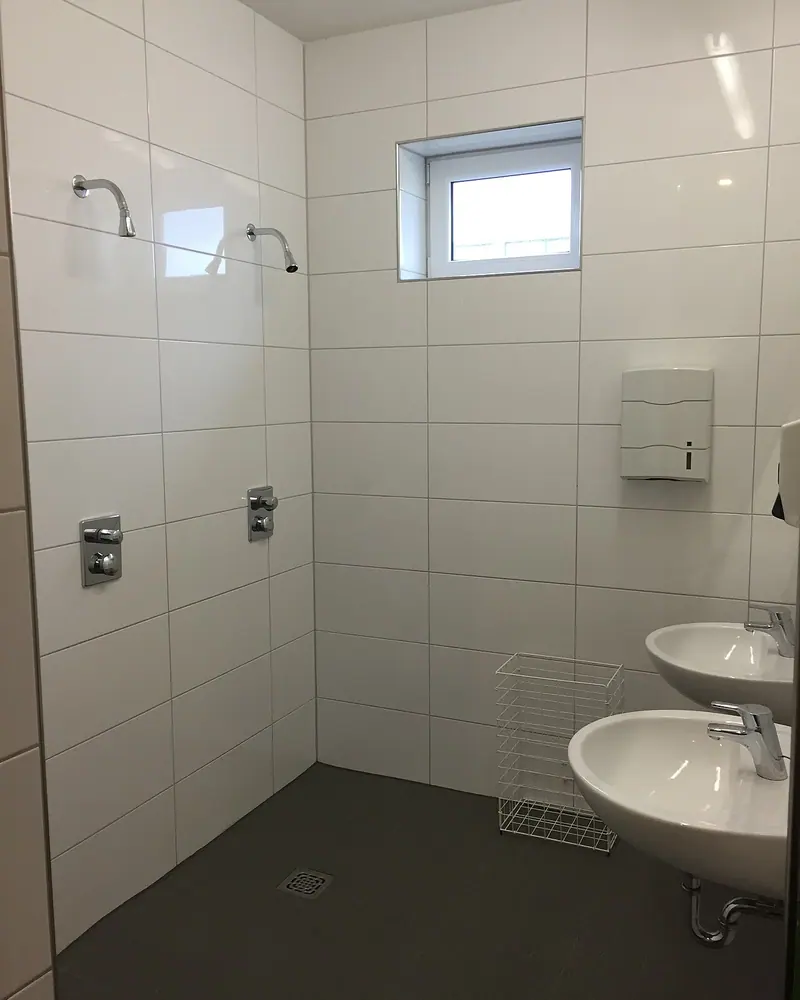
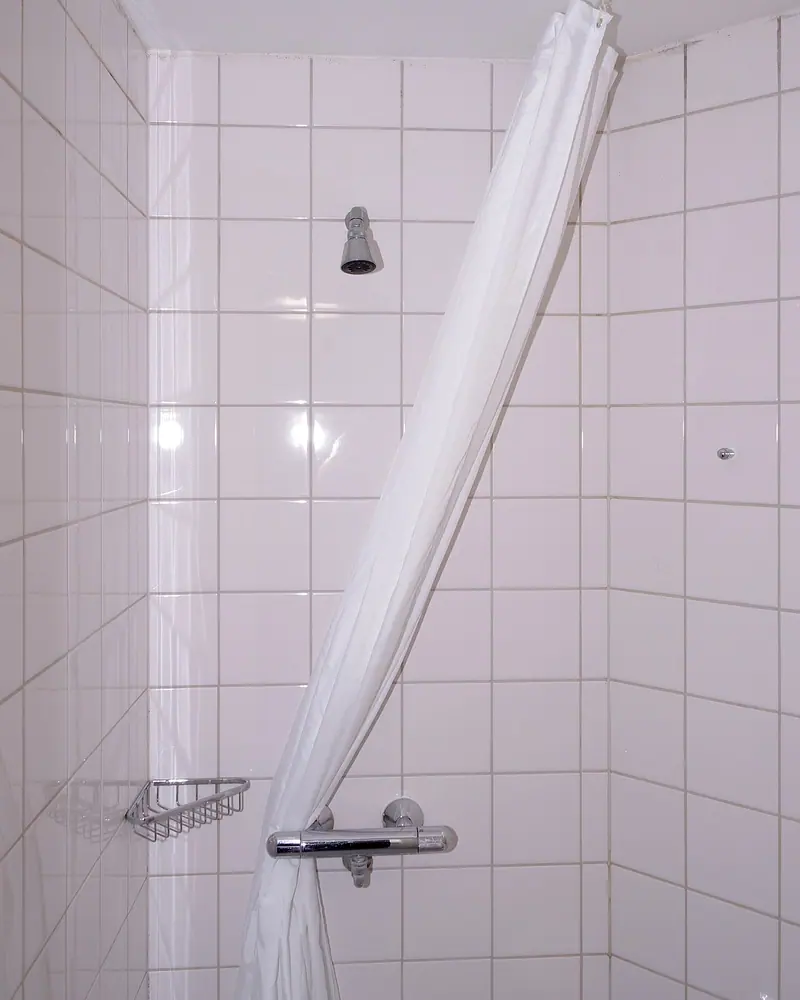
How is a domestic wet room kept dry?
The curtain is doing a job here: keeping spray off the rest of the room. Without a tray, water goes where it likes. In your own room, look at the base of the curtain: does it hang inside the sloped area?
Under a wet-room floor there should be a waterproof layer, often called tanking. Ask the fitter how the walls and floor are sealed and how the joint between them is handled. For a shower with no tray, NICEIC says the electrical zone around a fixed shower head extends 1.2 m, so lights and sockets need planning.2
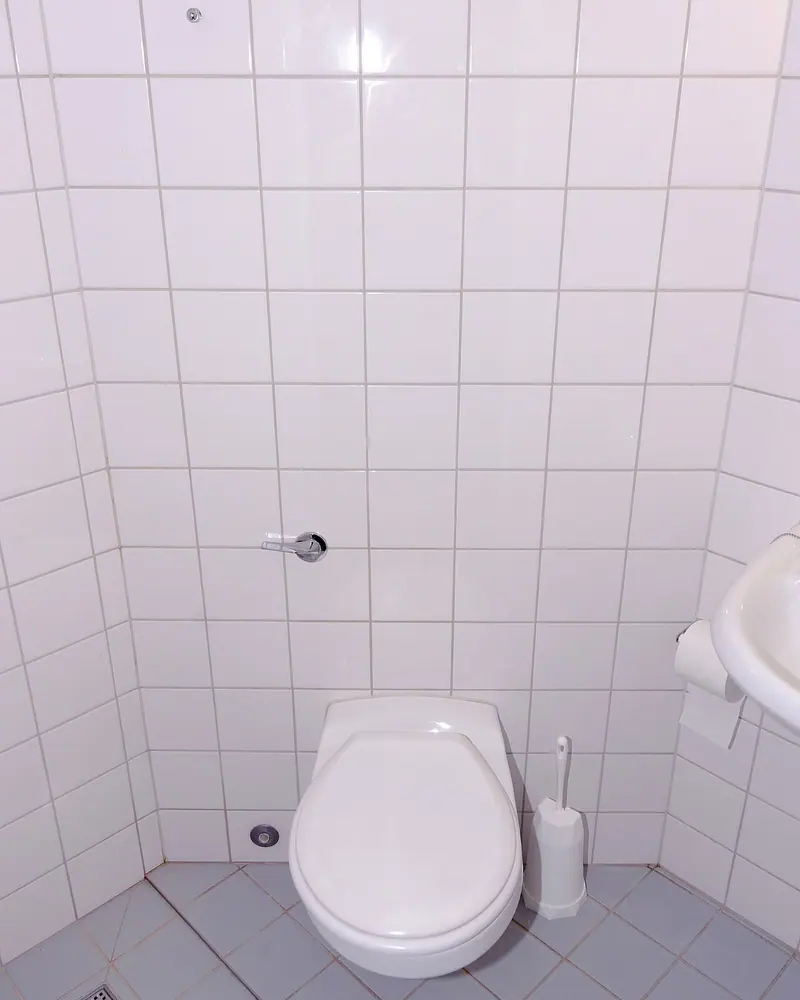
Can you have a toilet in a wet room?
Yes, and here it is wall-hung, which leaves the floor clear to clean and lets water flow under it. The drain sits in the corner and the floor falls towards it.
Think about what the toilet shares with the shower: the same wet floor. Toilet paper, a towel or a mat left near the drain can block it. Ventilation matters more where the whole room gets wet. Approved Document F lists extract rates for new bathrooms, and damp and mould harm airways and lungs.34
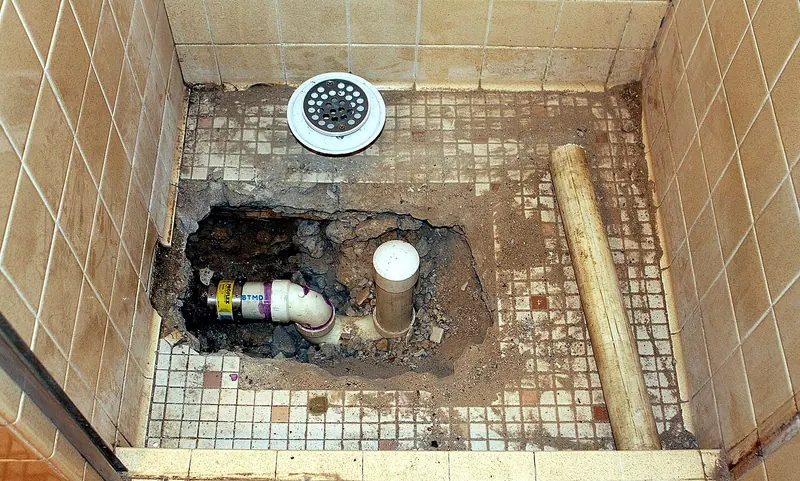
What happens when the waterproofing fails?
This is the hidden risk. Water has got under the tiles, soaked the base and rotted it. From above, the signs are soft or springy spots, tiles that sound hollow, cracked grout, or stains on the ceiling in the room below.
A failed floor is the main drawback of a wet room, because it is hard to see and disruptive to open up. Ask who guarantees the waterproofing and for what period, in writing. If your home is rented, report problems to the landlord and keep a record.
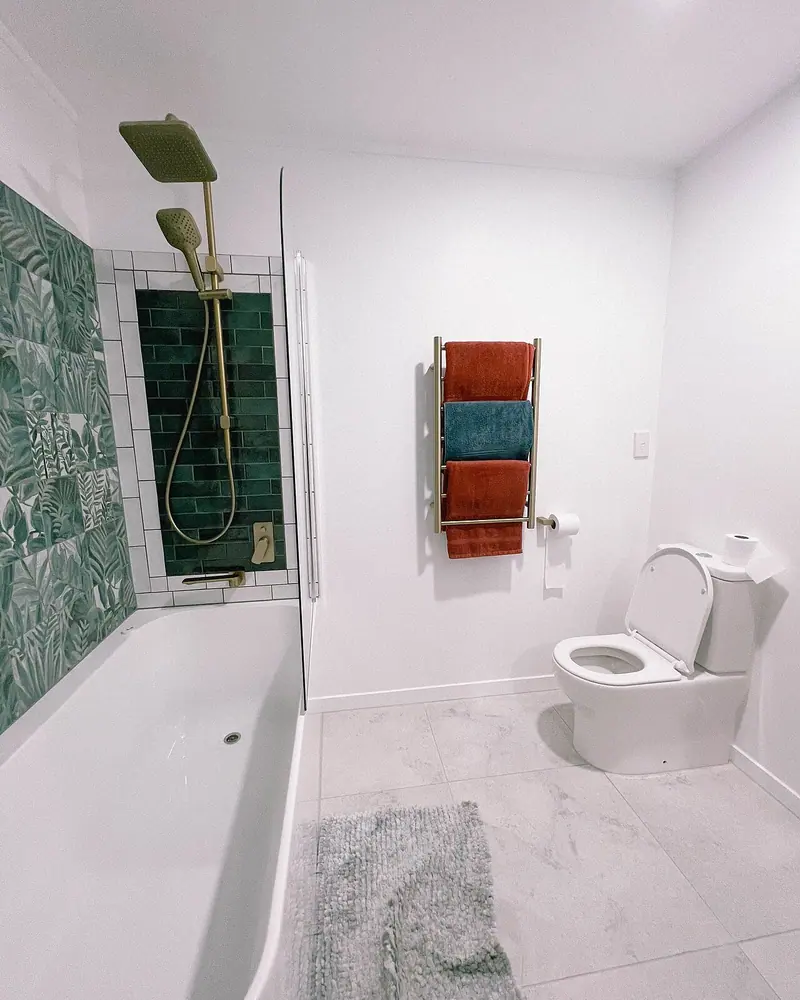
Is this a wet room or just a bathroom?
Not a wet room: it has a bath, a normal floor and a separate toilet. It is here for comparison. In a conventional bathroom water stays in the bath or tray, and the floor only needs to cope with splashes.
If you are choosing between the two, ask what you gain. A wet room removes the step and the tray, and English guidance for homes built to the fully accessible category treats a room with a level-access shower as one.1 It also adds drain, waterproofing and ventilation to plan. The level-access shower page shows the floor side.
Do it yourself or get it fitted
What you can check
- Ask how the floor and walls are waterproofed and who guarantees it.
- Check the room has a working extractor fan and a door you can close.3
- Walk the floor and listen for hollow tiles.
Traps and drains for reference
To see what a trap looks like, traps at PlumbingSupplyAndMore, a shop in America run under the same owners as this site, are a US reference only: American drain parts differ from British ones, and shipping to the UK isn't promised.
Also asked
What are the disadvantages of a wet room?
Everything in the room can get wet, the floor needs a proper fall and waterproofing, and a hidden leak can be disruptive to put right. The room also needs good ventilation. Damp and mould can harm airways, lungs and mental health.4
How do you waterproof a wet room?
By a continuous waterproof layer under the tiles on the floor and up the walls, sealed at the drain and corners. That is work for a competent specialist fitter. Ask for the method and any guarantee in writing.
Can you have a toilet in a wet room?
Yes, and wall-hung toilets are common in pictures like this because they leave the floor clear. Keep towels and paper away from the drain, and make sure the electrics and ventilation have been planned for a room that gets wet.2
Sources
- Approved Document M, volume 1 (2015 with 2016 amendments) England, new homes and new work
- NICEIC: Bathrooms and electrics, householder guide England and Wales notification rule
- Approved Document F, volume 1 (2026 edition) England, new work
- UKHSA and OHID: understanding the health risks of damp and mould in the home
- Age UK: Factsheet 42, Disability equipment and home adaptations (March 2026) England