Textured ceilings and asbestos
Artex and other textured coatings in a home built or refurbished before 2000 may contain asbestos, so do not drill, sand or scrape one until you know what it is1. HSE lists drilling through textured coatings as work for trained workers, and says to stop work if you think you have found asbestos2.
Updated , by Bathroom Safety in Pictures
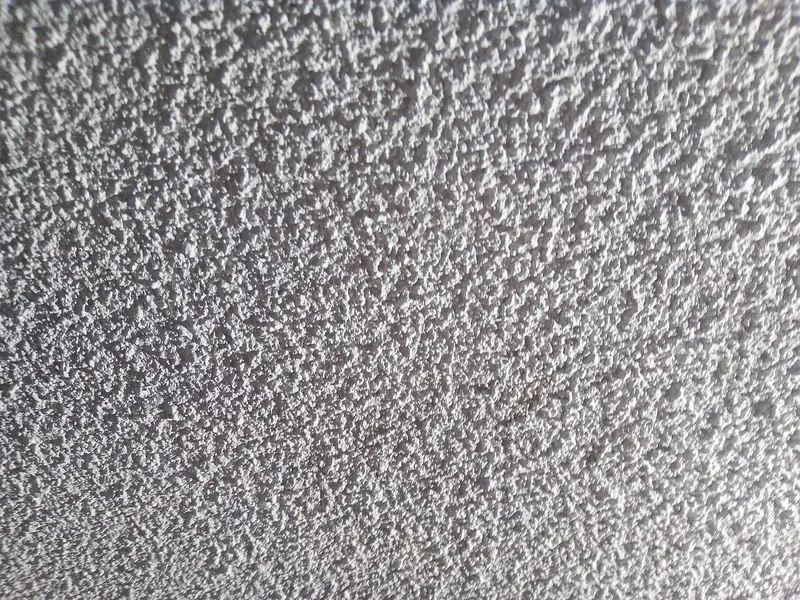
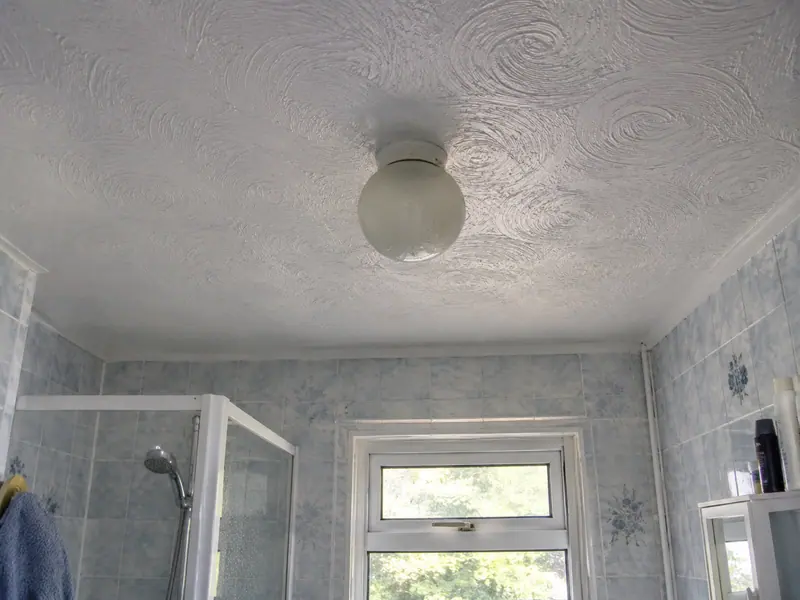
What does a swirled Artex ceiling look like?
HSE describes textured coatings on ceilings and walls, with trade names such as Artex, as hard and originally white, and often painted over2. That fits this ceiling: hard-looking swirls above old tiles. The bathroom's steam doesn't change the rule. If the coating is in good condition, HSE says asbestos is often best left in place1. If it is cracked or crumbling, don't scrape at it. The council can advise on disposal, and its environmental health officer can advise too1.
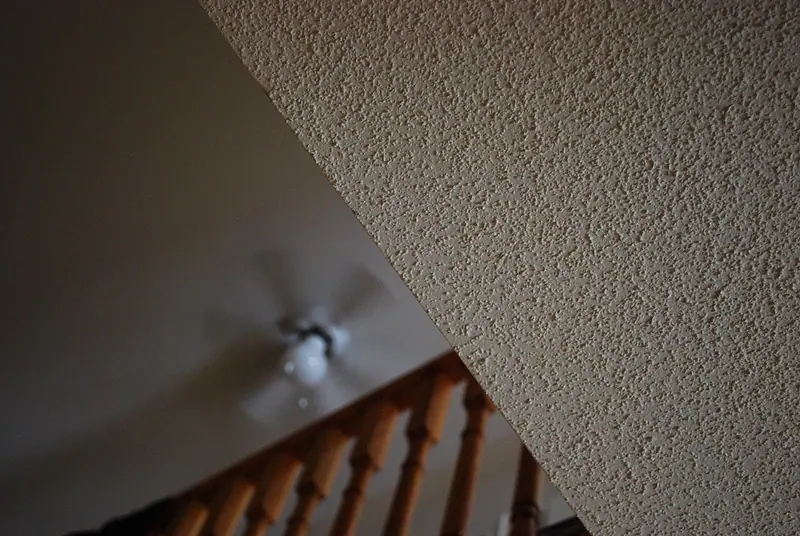
Why does a light fitting matter here?
Every job that touches the ceiling meets the coating: replacing a light, adding a spotlight, cutting a hole for an extractor fan. HSE lists drilling or boring through a textured coating as work for trained workers2. A bathroom upgrade often involves exactly these jobs, so tell builders and tradespeople about the coating before they start; HSE says to tell builders before work1. If they find it while working, the rule is to stop.
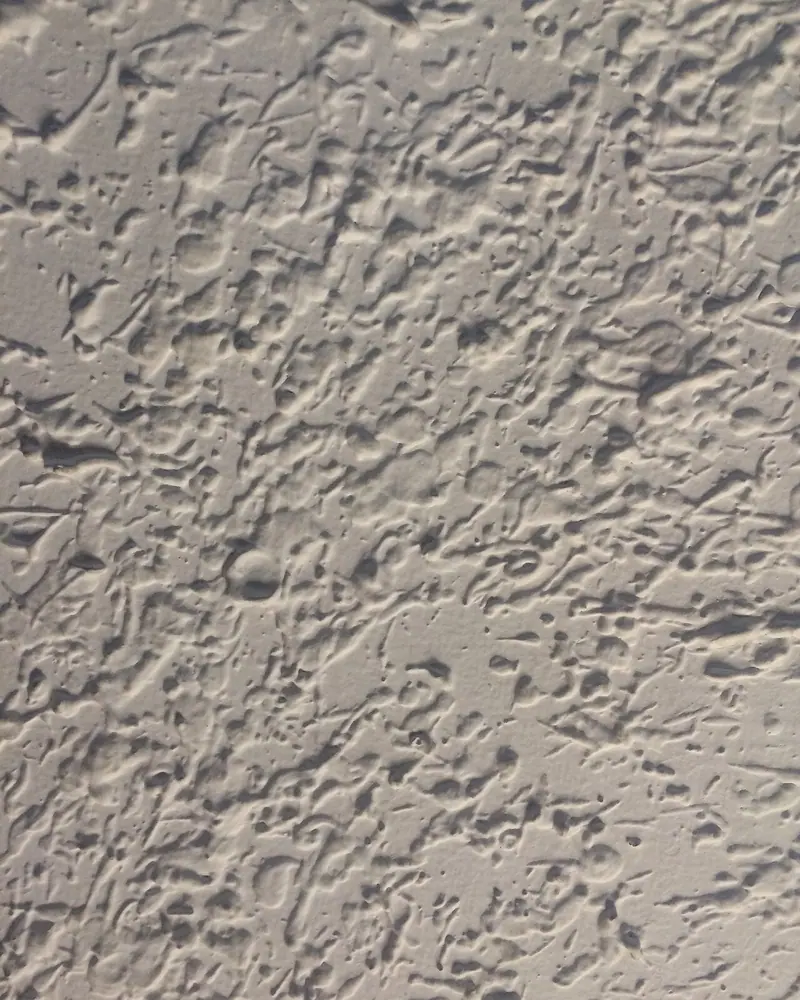
Do walls count as well as ceilings?
HSE's list names textured coatings on ceilings and walls2. The same caution applies where you are about to drill a wall: a grab rail fixing, a shower seat bracket, a towel hook. A thick, rough finish in a bathroom from before 2000 is a reason to pause, not to panic. Ask whoever is fitting the rail what they will be drilling through. The wall fixings page explains why the wall behind a rail matters for strength as well.
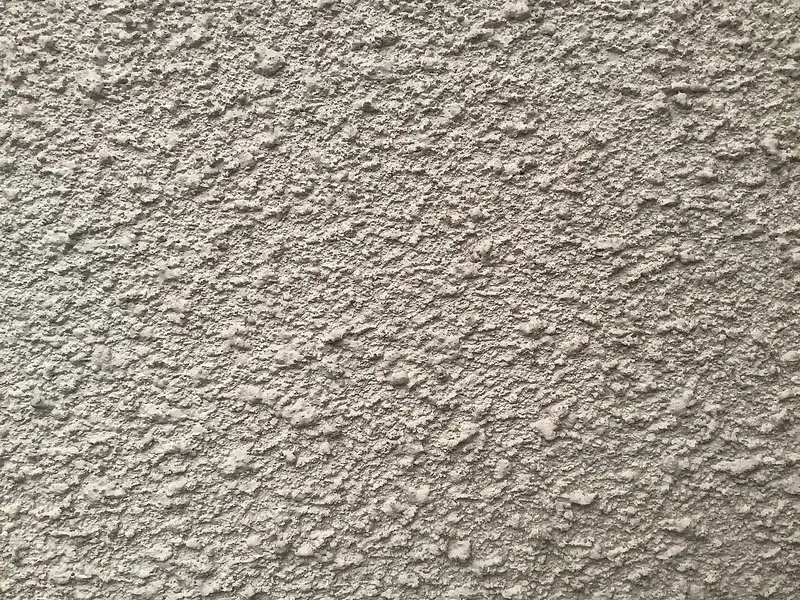
Does paint make it safe?
No. HSE notes these coatings are often painted over2, and paint doesn't change what lies underneath. A painted stipple like this cannot be identified by eye. What decides things is the date and the work: a home built or refurbished before 2000, and a job that will drill, sand or scrape, means stop and ask1. If the coating is in good condition and untouched, leaving it alone is often the answer1.
Do not drill, sand, scrape or cut into a textured coating in a pre-2000 home until you know what it is. If you think you have found asbestos, stop work2. HSE says not to repair or remove it yourself without training1.
Check, don't touch
What you can do yourself
- Find out when the home was built or last refurbished.
- Leave the coating alone if it is in good condition.
- Tell every builder and tradesperson about the coating before work starts.
Who to ask
- Trained asbestos workers for any repair or removal; the council for disposal advice, and its environmental health officer for guidance1.
- A home improvement agency such as Care & Repair or Staying Put, which can help find reputable contractors and oversee works3; see also who fits what.
Also asked
Do you have to declare Artex when selling a house?
The guidance here does not cover selling, so ask a solicitor or conveyancer. What HSE does say is that asbestos may be in any home built or refurbished before 2000, and that you should tell builders about it before any work starts1.
Is it illegal to plaster over Artex?
Nothing from HSE here settles that either way. HSE's advice is that asbestos in good condition is often best left in place, and that you should not repair or remove it yourself without training1. Anyone planning to cover or skim a coating should get advice first from the council or a trained worker.
What year did they stop putting asbestos in Artex?
HSE gives no year for Artex alone. It says asbestos was banned in 1999 and may be in any home built or refurbished before 2000, and it lists textured decorative coatings, with Artex as a trade name, among the places it may be found12.