Who fits what in a bathroom
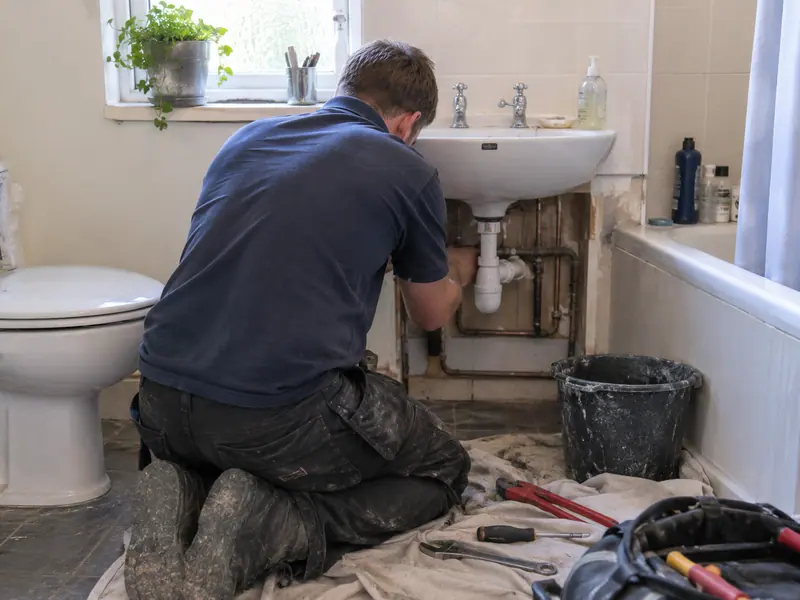
Who fits grab rails and bath lifts? A competent fitter, with professional fitting where someone's weight depends on the rail, because the wall and fixings matter. A registered electrician does bathroom wiring1, a competent plumber fits a thermostatic valve4, and only a Gas Safe registered engineer touches gas.
Updated , by Bathroom Safety in Pictures
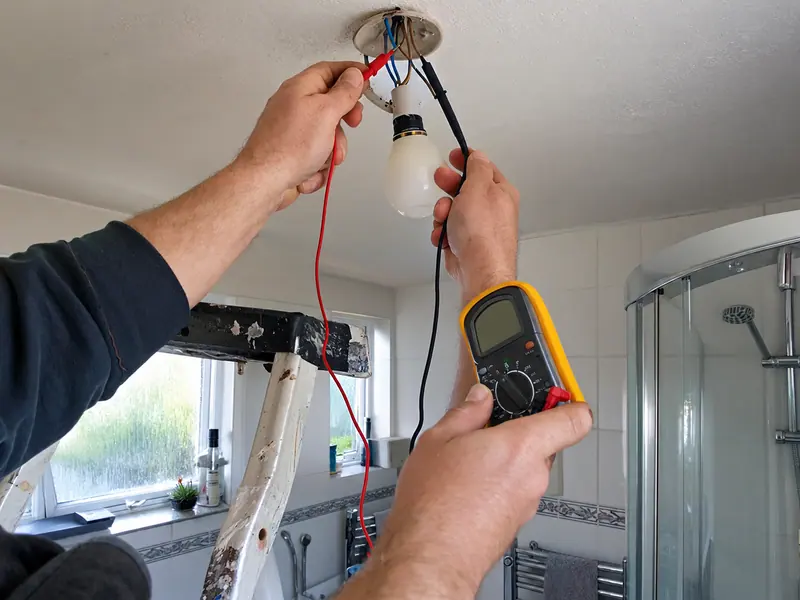
Does an electrician need to fit bathroom lights?
Yes: a registered electrician, because Electrical Safety First advises it for bathroom electrics1. NICEIC says you shouldn't be doing DIY electrics anywhere in your house, and that any installation or alteration within zones 0, 1 or 2 is notifiable in England and Wales2. That covers lights, fans, shaver units, electric towel rails and heaters, and moving or adding a socket. Changing a bulb is not what this means; replacing a fitting, rewiring or adding a socket is. The zones page shows the areas.
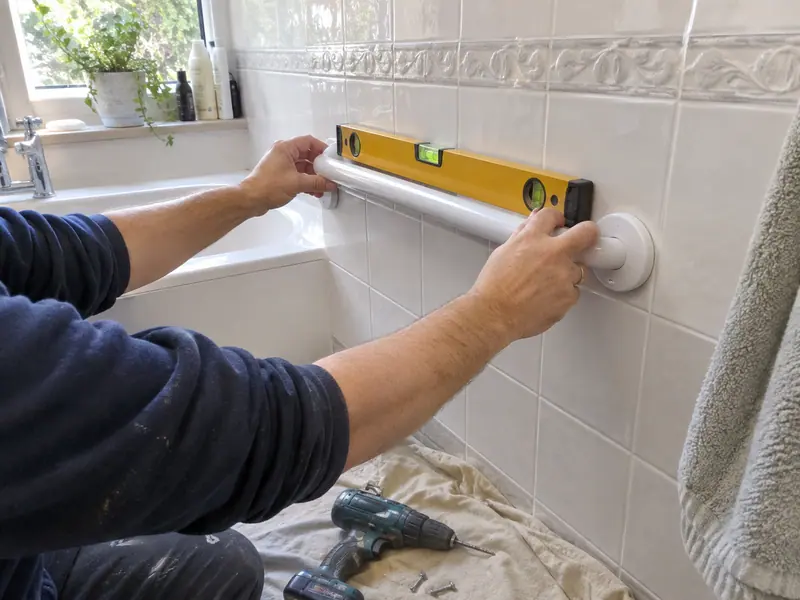
Who can fit a grab rail?
A person may put their whole weight on it, so the wall and the fixings matter more than the rail itself, and professional fitting is the safer course. A competent fitter, a handyperson service or a home improvement agency can do it; Age UK says agencies are not-for-profit, can identify reputable contractors, oversee works, and many run handyperson services3. An occupational therapist says where it goes. In a home built or refurbished before 2000, tell the fitter about any textured coating first: see textured ceilings and asbestos.
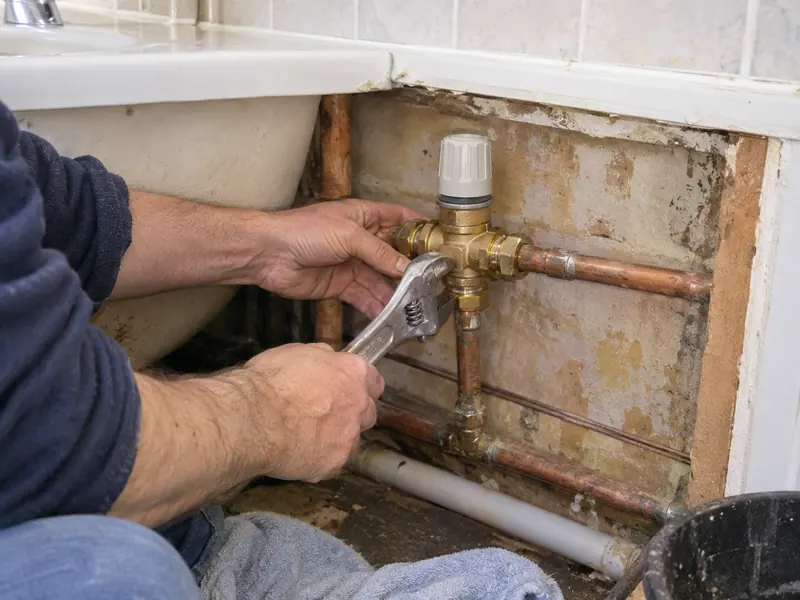
Who fits a thermostatic mixing valve?
A competent plumber. Approved Document G says valves are shown by BS EN 1111 or BS EN 1287, should fail safe, and should not be easily altered by building users4. A new bathroom in an existing home need not have one by law, but people may want to consider the safety benefits5. The protection belongs at the outlet, not in a lower cylinder setting: HSE's guidance for landlords tells tenants not to adjust stored hot water temperature6.
| Job | Who | Why |
|---|---|---|
| Bathroom light, fan, shaver unit, socket, heater, electric towel rail | Registered electrician | Work in zones 0, 1 or 2 is notifiable in England and Wales, and NICEIC advises against DIY electrics anywhere in the house2 |
| Thermostatic mixing valve, taps, pipework | Competent plumber | A valve should fail safe and resist being altered by users4 |
| Gas water heater, boiler, flue | Gas Safe registered engineer | Gas work is for Gas Safe registered engineers only; a CO alarm or gas smell means leaving first |
| Grab rails and their fixings | Competent fitter or handyperson; professional fitting where weight depends on it | The wall and fixings matter; an occupational therapist says where the rail goes3 |
| Bath lift | Ask the supplier before ordering | Ask who fits it before you order; Age UK advises a trial at home for expensive equipment3 |
| Finding and overseeing contractors | Home improvement agency, such as Care & Repair or Staying Put | Not-for-profit; can identify reputable contractors and oversee works3 |
If you rent: ask the landlord first
In a rented home, ask the landlord before anything is fitted or changed. A landlord can apply for a disabled facilities grant for a tenant, and then the tenant's income is not counted7. For hot water, HSE guidance for landlords tells tenants not to adjust the stored temperature6: do not turn the cylinder down, and ask about a valve at the tap instead. Landlords' duties on adaptations, and on mould in private renting, aren't covered here, so do not assume a particular right applies.
What you can do, and who to ask
Yours to do
- Clear loose mats and clutter, and ask the occupational therapist before buying anything big.
- Ask to see an electrician's or engineer's registration, and ask for the certificate afterwards.
- Tell anyone drilling in an older bathroom if you suspect a textured coating or panels.
Theirs to do
- Wiring, sockets and lights: a registered electrician.
- Gas appliances and pipes: a Gas Safe registered engineer.
- Thermostatic valves, pipework, showers: a competent plumber.
- A rail that takes someone's weight: a competent fitter, or the council's handyperson or a home improvement agency where one exists.
How a firm sets out its services
Central Plumbing HVAC is an American plumbing service company in Pennsylvania, connected with this site; the about page says how, and which businesses have the same owners. Its services page is shown only as an example of how a firm sets out what it does. It is not in the UK and this site can't recommend it for work here. In Britain, ask any plumber what they are qualified to do before the work starts.
Also asked
Who can fit a grab rail?
A competent fitter, a handyperson service or a contractor found through a home improvement agency3. Where someone's weight depends on the rail, professional fitting is the safer course because wall strength and fixings matter. An occupational therapist, not the fitter, says where the rail should go for that person.
Does an electrician need to fit bathroom lights?
Yes, a registered electrician1. Any installation or alteration within zones 0, 1 or 2 is notifiable in England and Wales, and NICEIC says you shouldn't be doing DIY electrics anywhere in your house2. Ask the electrician how the work will be notified.
Sources
- Electrical Safety First: Bathroom electrical safety
- NICEIC: Bathrooms and electrics, a householder guide
- Age UK: Factsheet 42, Disability equipment and home adaptations (March 2026) England
- MHCLG: Approved Document G (2015 with 2024 amendments) England
- MHCLG: Approved Document G, Part G frequently asked questions (March 2016) England
- HSE: Legionella, landlords' responsibilities
- GOV.UK: Disabled Facilities Grants England, Wales and Northern Ireland; Scotland is listed as not available