Bath lifts
A bath lift is a powered seat that lowers a person into the bath and raises them again, so they never have to get up from the bath floor. Age UK lists the electric bath lift as disability equipment, and in England councils cannot charge for equipment they provide after an assessment.1
Updated , by Bathroom Safety in Pictures
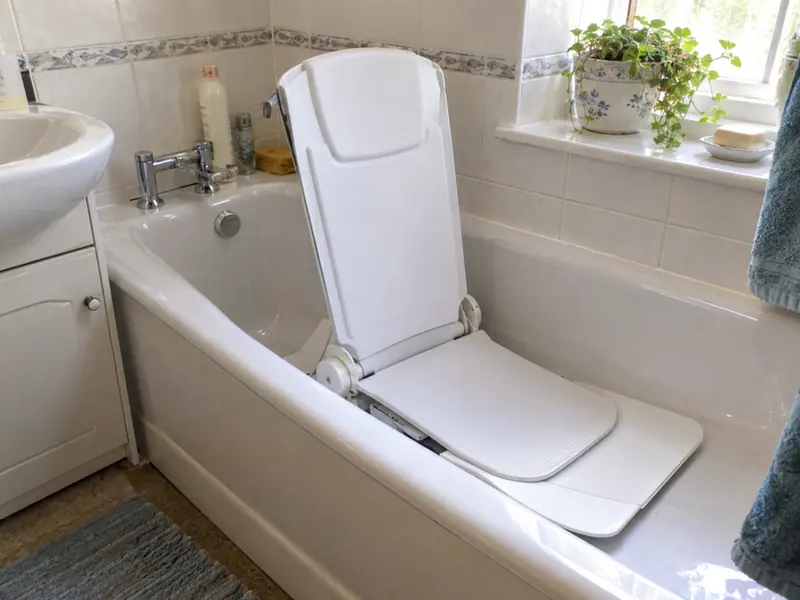
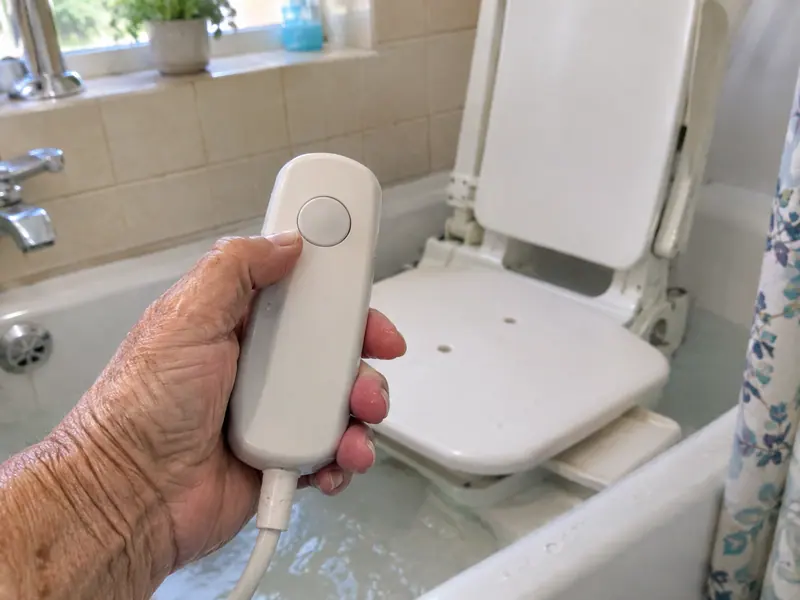
Who works the handset?
The person in the bath normally runs the lift, so the handset must suit their hands. Can they find the button, press it firmly and let go when they mean to? Is the lift quick enough to be comfortable and slow enough not to alarm? Ask how the battery is charged, how to tell it is running low, and what the plan is for getting out if it stops mid-bath. Ask a supplier, or an occupational therapist, to run through a dry practice first. Age UK advises trying expensive equipment at home.1 A reduced VAT rate can apply to a bath lift for someone aged 60 or over3; Age UK states 5%.1
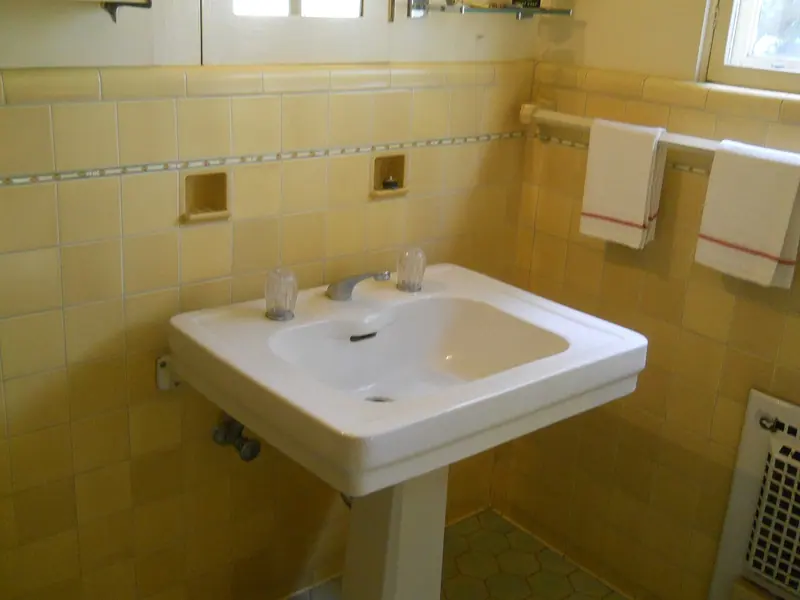
Will it fit the room?
A lift sits inside the bath, but the room around it still matters. Look at where a helper would stand, whether the basin or towel rails crowd the bath edge, and where the handset is kept dry and within reach. Charge the battery outside the bathroom unless the maker says otherwise, and never by extension lead. A small room can rule out a lift, or rule out a carer helping. Measure the bath's inside as well as the space beside it, and compare with the maker's stated sizes. Where space is tight, compare the footprint and door swing of a walk-in bath with your room too.
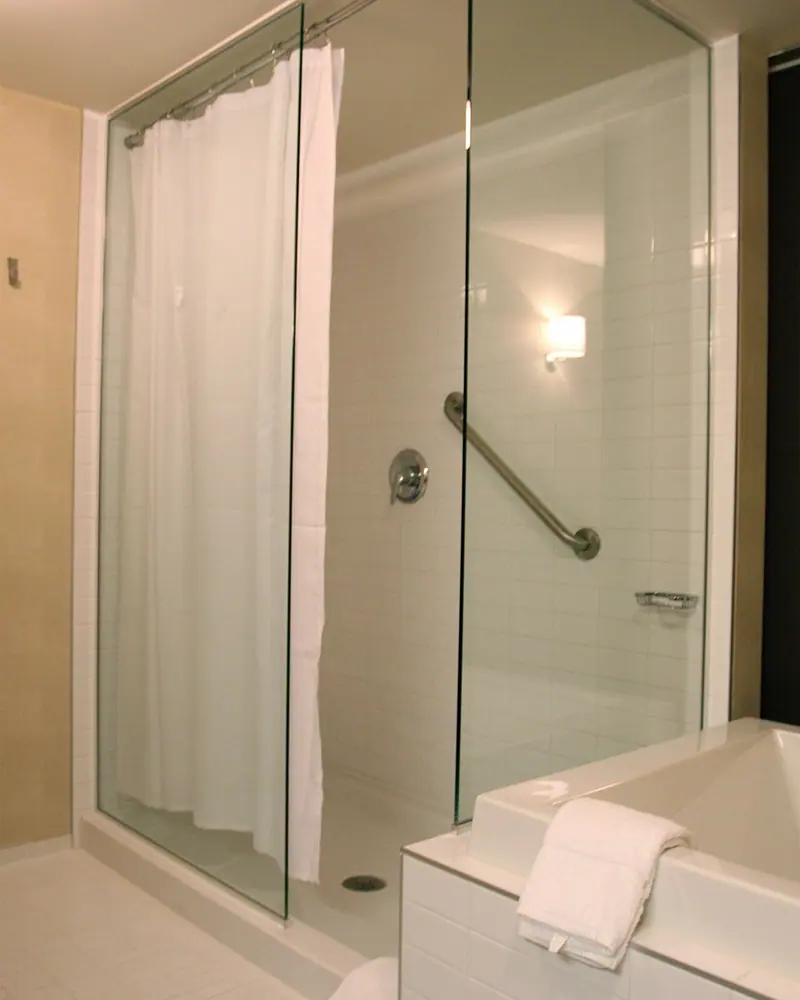
Would a shower do instead?
A lift is a good answer when someone loves their bath or has no room for a shower. If bathing is simply the aim, a shower with a seat and a rail removes the bath edge altogether. Age UK's list of work a Disabled Facilities Grant may fund includes a level-access or wet-room shower and a shower with a seat.1 Rails like the one in this photo need a wall that can carry the person's weight, and the fixing is a job for a professional. See level-access showers.
Do it yourself or get it fitted
Before you buy
- Ask to try the lift in the actual bath, not only in a showroom.1
- Check the maker's limits for bath size and the person's weight.
- Check the person can reach and use the handset, wet or dry.
- Check someone knows what to do if the battery runs flat.
Also asked
Can you get a bath lift on the NHS?
The route the NHS describes is through the council, which may provide equipment after a free needs assessment; in England, councils cannot charge for it.12 Whether a bath lift is offered depends on the assessment and the council, and long waits for an occupational therapist are common. Ask for a prompt assessment if risk is high.
What is the best bath lift for elderly people?
No single model is best, because it depends on the person's size, strength, grip and the bath. Look for a lift that suits the bath inside, a handset the person can use, and a supplier who lets you try it. An occupational therapist can advise on suitability before anything is bought.1