Walk-in baths with doors
A walk-in bath has a watertight door in its side, so you step in through the door and sit instead of climbing over the rim. Compare its size and door swing with your room. A reduced VAT rate can apply to walk-in baths with sealable doors for someone aged 60 or over1; Age UK states 5%.2
Updated , by Bathroom Safety in Pictures
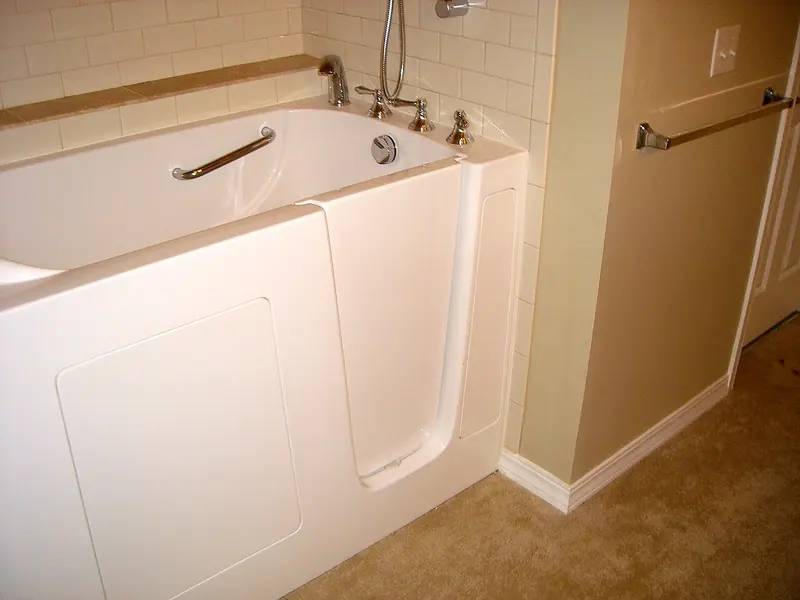
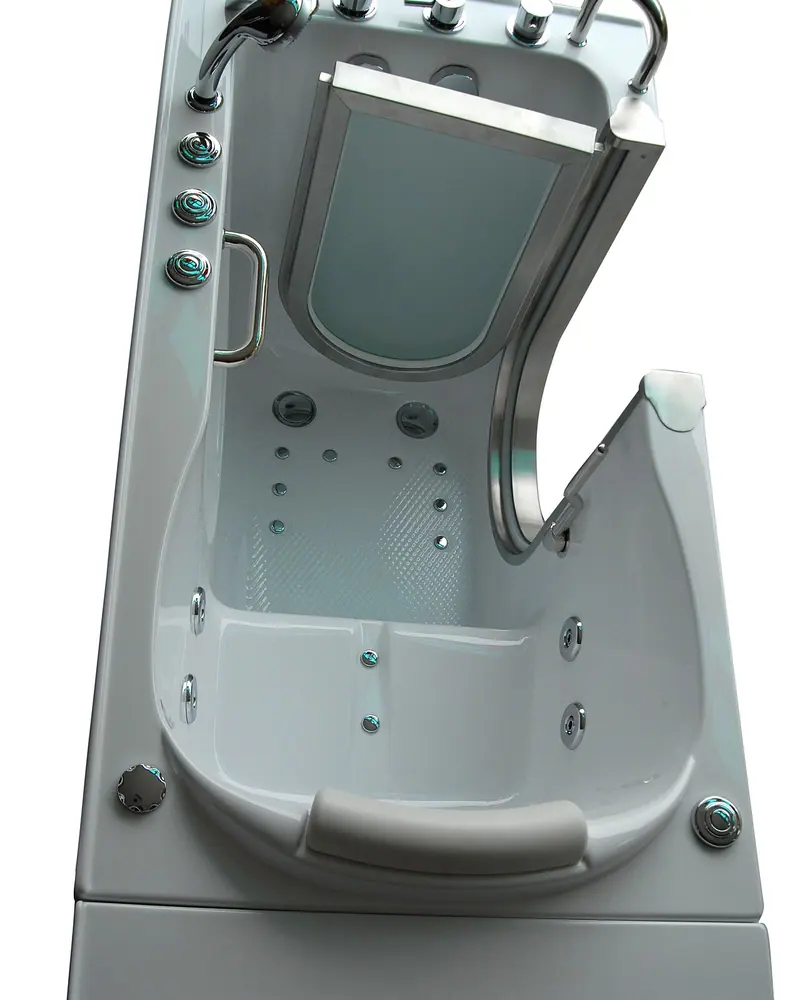
What does the open door show?
The opening is where the saving is made, so judge it closely. How high is the threshold you step over? Is the doorway wide enough for the person and any walking aid? Can they turn and lower onto the seat without twisting? Jets are extra parts to clean and keep working, so ask the maker what upkeep they need. Sit in a dry demonstration bath before ordering; Age UK advises trying expensive equipment where it can be done.2
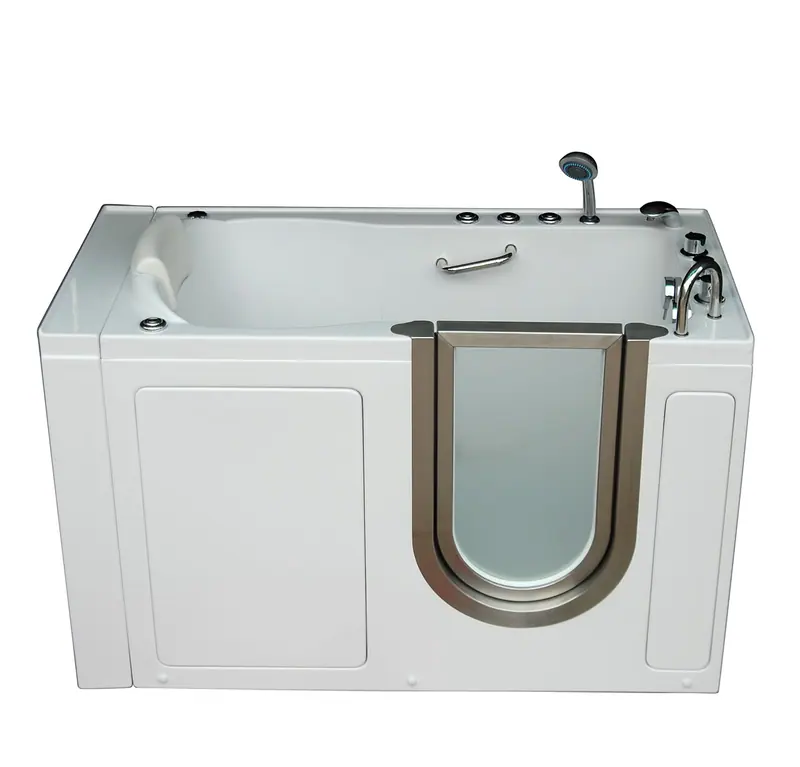
Where could a walk-in bath leak?
The door is a seal in the side of a bath, and the seal is the part to ask about. Look at the frame and the line where door meets tub. Ask how the seal is replaced, what the warranty covers, and how the latch holds against the water. People often ask whether these baths leak; there is no figure on that here, so rely on the installer's written warranty and the maker's instructions. Ask, too, whether the floor can carry a full bath with a person in it.
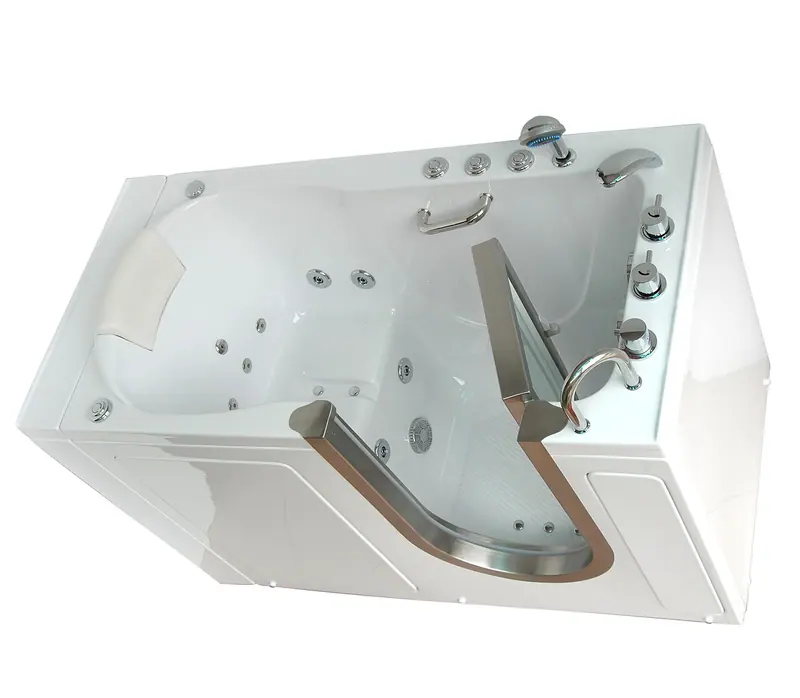
Is the seat where you want it?
From above you can judge the seat: how far from the door, how far from the taps, and whether the person sits upright or reclines. Ask the maker whether you sit in the bath while it fills and drains, and how someone stays warm. If the water reaches you as it fills, a thermostatic valve at the outlet matters; HSE advises TMVs at baths and showers in its health settings.3 See thermostatic mixing valves.
Do it yourself or get it fitted
Questions to settle first
- Try a demonstration bath, if possible with the person who will use it.2
- Ask how long it takes to fill and drain, and how the person stays warm.
- Ask for the seal warranty and the replacement seal in writing.
Also asked
Are walk-in baths worth it?
They can be for someone who wants to keep bathing but cannot climb over a rim. They are a bigger commitment than a bath board or lift, and a shower or a bath lift may do the job with less. Try one first, and ask an occupational therapist to compare options.2
Do walk-in baths leak?
A walk-in bath relies on a door seal, so a worn or badly fitted seal is the likely weak point. No figures on how often that happens are given here. Ask the installer about warranty and replacement seals, and check around the door after the first fills.
Sources
- HMRC: VAT Notice 701/7, Reliefs from VAT for disabled and older people
- Age UK: Factsheet 42, Disability equipment and home adaptations (March 2026) England
- HSE: Scalding and burning written for health and social care settings, not homes
- NHS: Household gadgets and equipment to make life easier England
- NHS: Falls