Getting an occupational therapist assessment
An occupational therapist home assessment usually starts with a request to the council's social services for a needs assessment, which is free1. A GP can also refer someone worried about falls to a falls service, which can include a home assessment2. Waits are common, and excessive delays can be challenged3.
Updated , by Bathroom Safety in Pictures
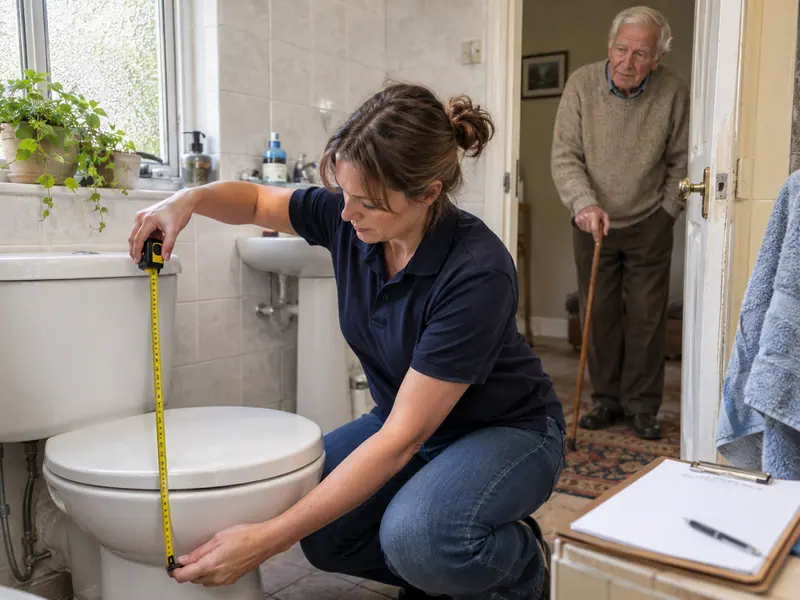
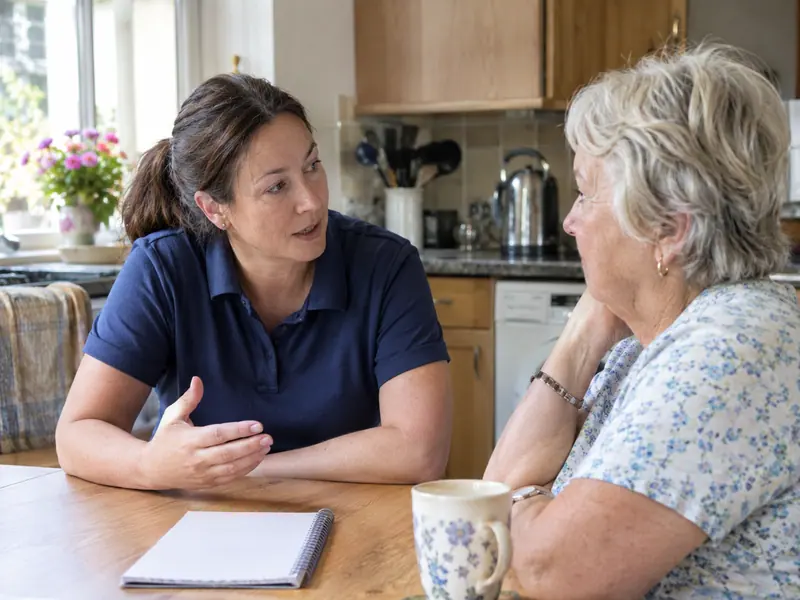
What happens at an assessment visit?
These sources don't set out what a visit contains, so treat the picture as one illustration. What they do say: the free needs assessment comes from council social services1; the council may send an occupational therapist or trained assessor when someone applies for a disabled facilities grant4; and a falls service can include a home assessment, a medicines review and strength and balance training2. Before any visit, write down the hard moments: getting out of the bath, the night walk to the toilet, the step.
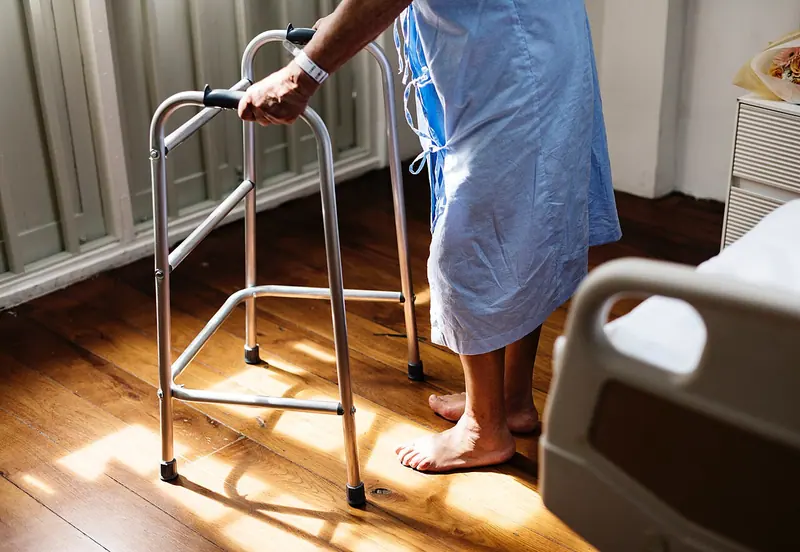
What about after a hospital stay?
Leaving hospital is the other moment assessments come up. Age UK says reablement is free for up to six weeks, for example after a hospital stay3. Ask the ward or the discharge team who arranges any home assessment on discharge. Long waits for an occupational therapist are common, high-risk needs should be assessed promptly, and the council still has a duty to meet eligible needs in the meantime3.
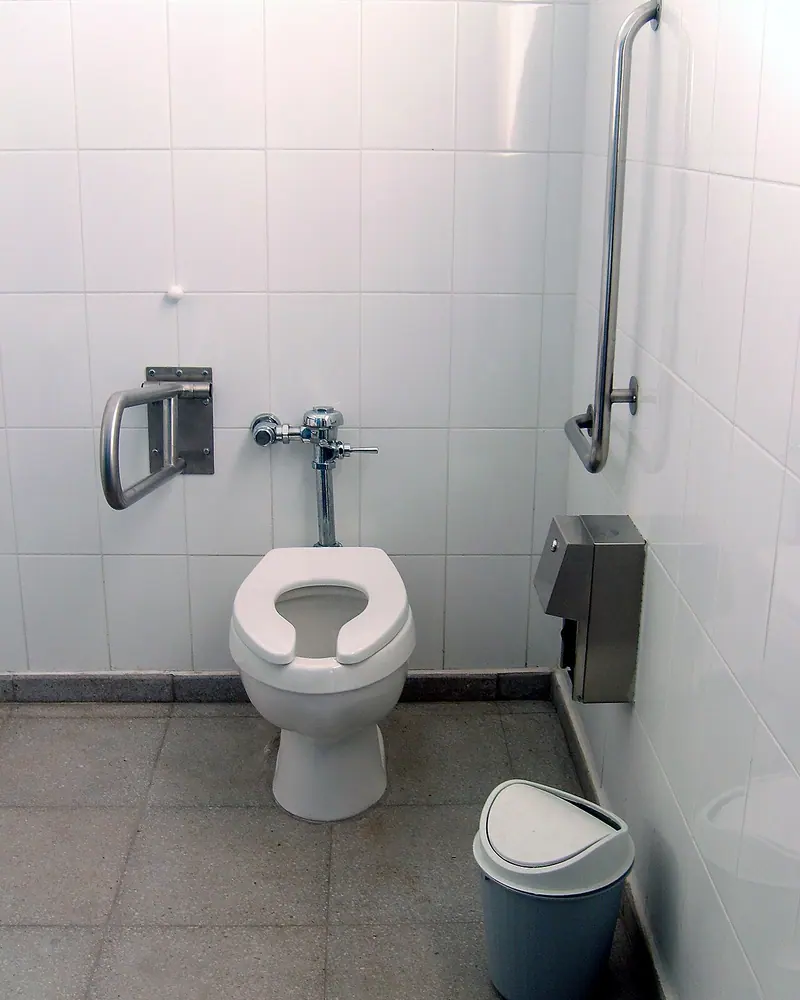
Why can't this guide say where the rail goes?
Because it depends on the body and the room. A tall vertical rail like this one suits some people and not others, and the right position depends on the person's height, reach and balance. An occupational therapist measures the person, and that is what separates a rail that helps from one that gets in the way. Wall strength and fixings matter too, and where weight depends on a rail, fitting is for a professional: see wall fixings.
If you are not in England
These steps are written for England. In Northern Ireland, nidirect says to start by contacting your local Health and Social Services Trust, and normally only work your occupational therapist recommends is considered for a grant5. Wales and Scotland run their own schemes: the grants page shows each nation from its own source. In Wales or Scotland, ask the council first how to request an assessment.
What you can do, and who to ask
Before you ask
- Write down the hard moments and any falls or near-misses.
- List the equipment already in use, such as sticks, frames, mats and seats.
- Ask for the assessment in writing if you can, and note the date.
Also asked
How do you ask the council for an occupational therapist visit?
Ask the council's adult social services for a needs assessment, which is free1. Say what is hard and what the worry is. If the wait is long, the council still has a duty to meet eligible needs meanwhile, and a delay that seems excessive can be challenged3.
Can you get an OT assessment through your GP?
An occupational therapy referral through a GP isn't confirmed in these sources. They do say a GP may refer someone to a falls service, which can include a home assessment, strength and balance training and a medicines review2. A GP is the right first call if falls or balance are the worry.
Sources
- NHS: Household gadgets and equipment to make life easier
- NHS: Falls
- Age UK: Factsheet 42, Disability equipment and home adaptations (March 2026) England
- GOV.UK: Disabled Facilities Grants England, Wales and Northern Ireland; Scotland is listed as not available
- nidirect: Disabled Facilities Grants Northern Ireland; its figure differs from the one on GOV.UK