Bathroom door locks and which way the door opens
A bathroom door lock should have an emergency release you can work from the hallway, and nothing should be able to block the door from behind. Only two points come from guidance here: new-home WC doors in England open outwards1, and Alzheimer's Society advises anyone with dementia who lives alone never to lock the door2.
Updated , by Bathroom Safety in Pictures
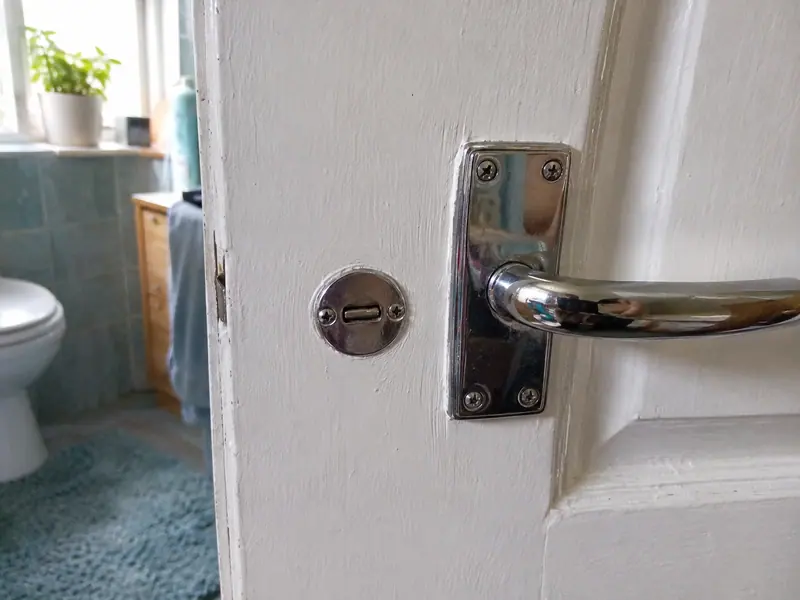
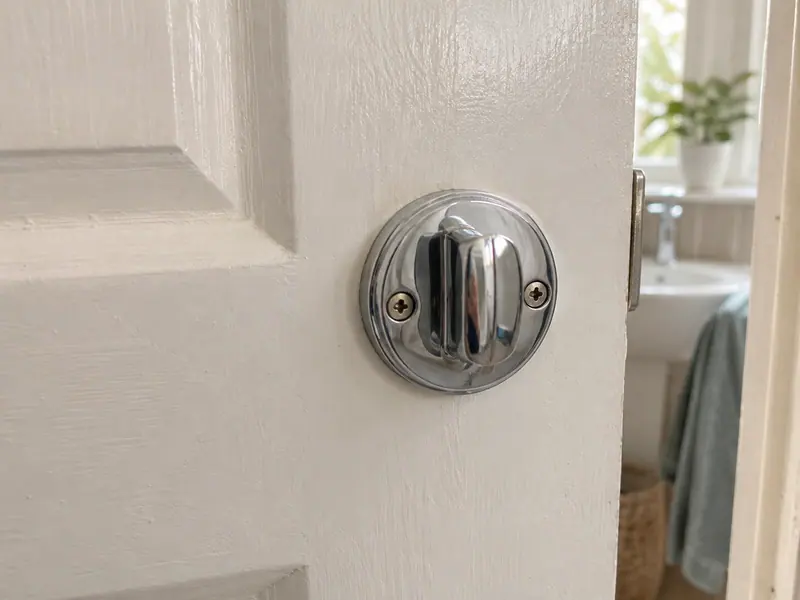
Can the person inside turn this with weak hands?
Try the lock the way someone with sore or wet hands would, with the heel of the hand rather than a pinch. A stiff lock can be as hard to undo as to do up. Then check the release outside really does match this lock, because a door with a thumb-turn inside and no way in from the hall is the worry. Alzheimer's Society advice for people with dementia is plain: never lock the bathroom door if you live alone2. Where a lock is wanted for privacy, that is a different decision, best made with the person, not for them.
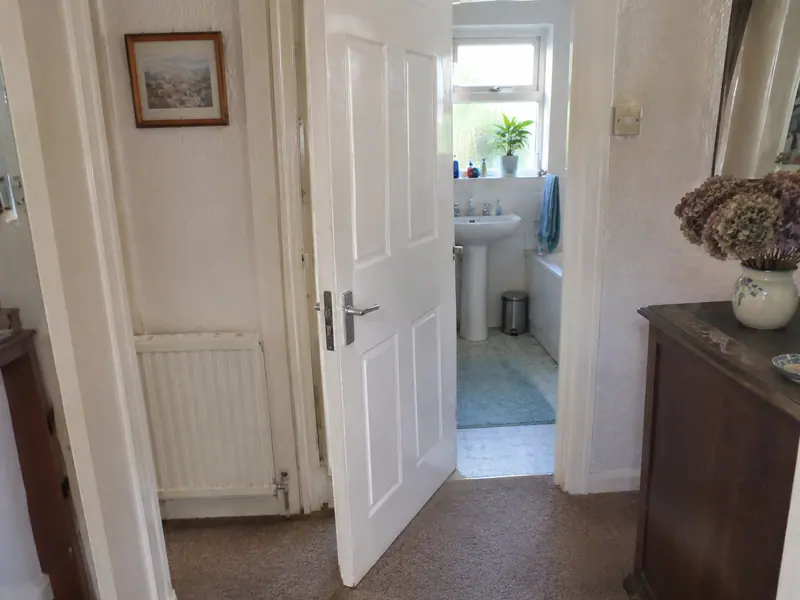
Why would a bathroom door open outwards?
If someone falls just inside a door that opens in, their body can jam it, and a rescuer cannot get past. A door that swings out cannot be blocked that way. Approved Document M says the door to a WC room in new homes in England opens outwards1. For an existing house, it is a judgement. Swapping the swing has a cost: the door now opens into the hall, so check it will not meet another door or someone coming along. A joiner can change a swing.
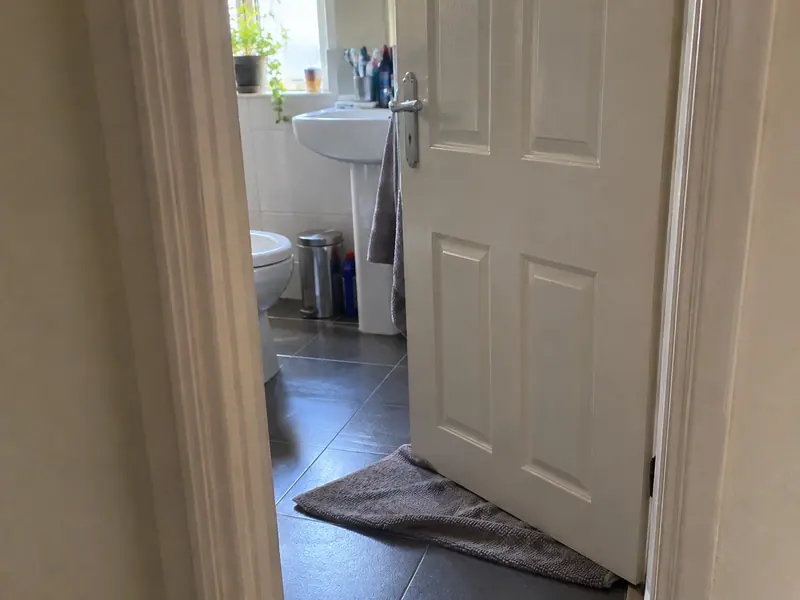
What could stop this door from opening?
This is the picture to hold in mind before anything happens. A mat, a laundry basket or a bag can stop a door that opens inwards, and a person on the floor behind it stops it completely. Walk round the room and look at the arc of floor behind the door: nothing that rides up, nothing stored there. If you are outside and cannot get in, do not force the door against a person. Speak, listen, and use the release. NHS advice is to call 999 if someone has fallen and may have injured their head, back, neck or hip, or cannot get up3.
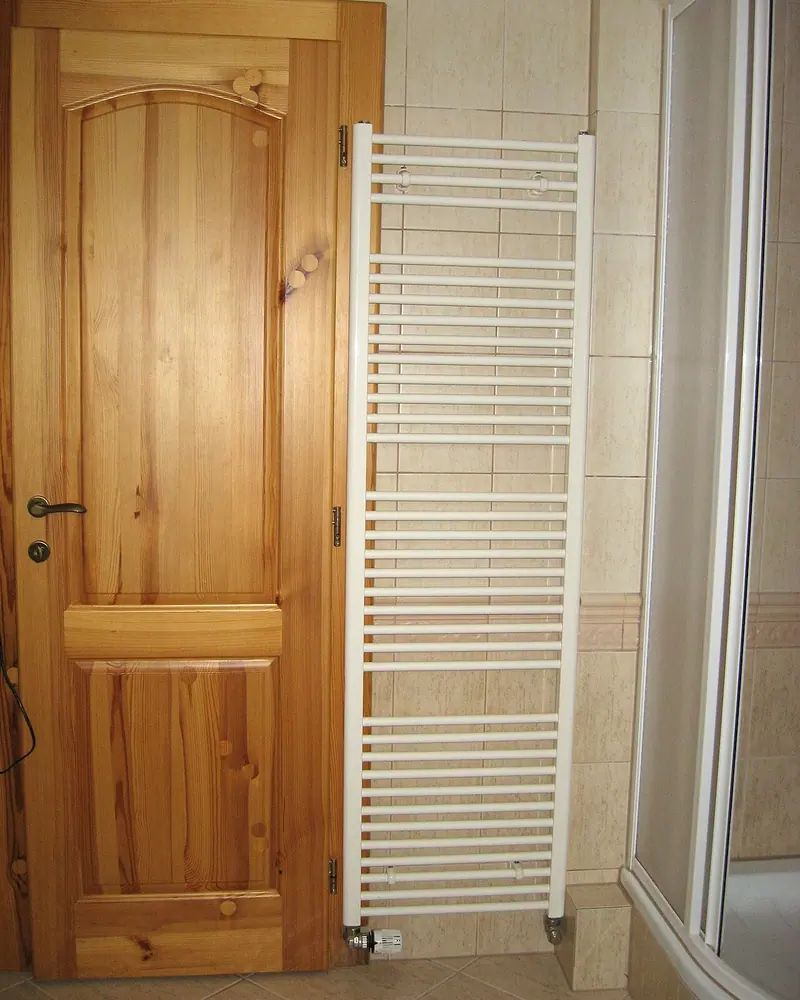
Does anything beside the door get in the way?
A tall rail next to a doorway narrows the space to get through, and anyone steadying themselves on the way in will reach for the nearest solid thing. A heated towel rail is not a handhold: it can be hot and it is not fixed to take body weight. Look at where the door swings against it, and whether a person with a walking frame, or someone helping them, can pass. If balance is the worry, a properly fixed rail is the answer, and the grab rails page explains why placement is for an occupational therapist to judge.
Do it yourself or get it fitted
What you can check yourself
- Find the release on the hallway side and be sure you know what turns it.
- Look behind the door for mats, baskets and storage that could stop it opening.
- Ask whether the lock turns easily with wet or sore hands.
- If the person lives alone, agree whether the lock stays unused or comes off.
Who to ask
- A joiner or builder, to change which way a door swings or to fit a lock with a release.
- The council's occupational therapist, to say whether a lock or door change suits this person: see getting an assessment.
Also asked
How do you open a locked bathroom door from outside?
Look for a small round plate with a slot on the hallway side, usually beside the handle; the maker's instructions say what turns it. If someone behind the door may be hurt, speak to them first. NHS advice is to call 999 when someone has fallen and may have injured their head, back, neck or hip, or cannot get up3.
Should a bathroom door open outwards?
In new homes in England, guidance asks for the door to a WC room to open outwards1. For an existing home it is a practical choice. An outward door cannot be jammed from behind, but it needs room to swing into the hall without hitting anything.
Sources
- MHCLG: Approved Document M, Volume 1 (2015 with 2016 amendments) Building regulations guidance for England; applies to new homes
- Alzheimer's Society: Making your home dementia friendly
- NHS: Falls