Toilet frames and rails
A raised toilet seat with a frame adds height and gives two arms to push on when standing. You may not need both: a seat alone adds height, and a rail beside the toilet can give the handhold. Age UK lists raised seats, toilet frames and commodes among equipment an occupational therapist can advise on.1
Updated , by Bathroom Safety in Pictures
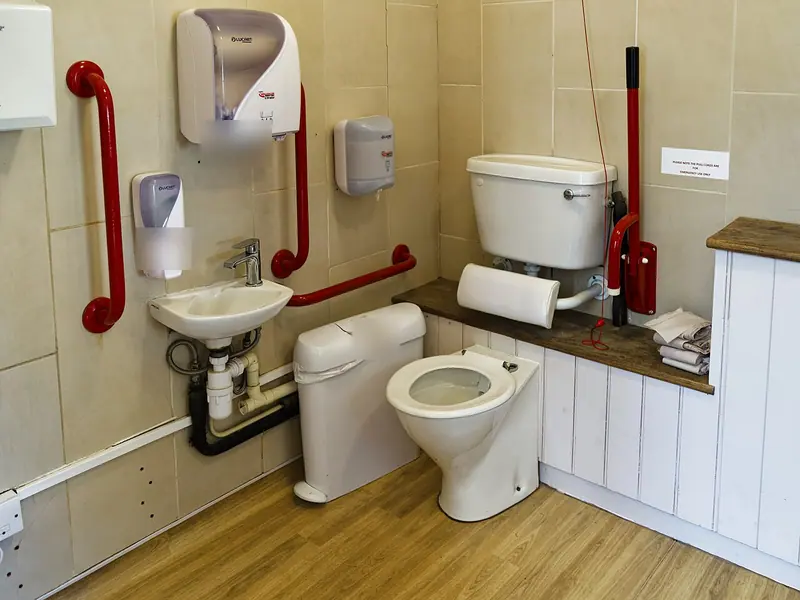
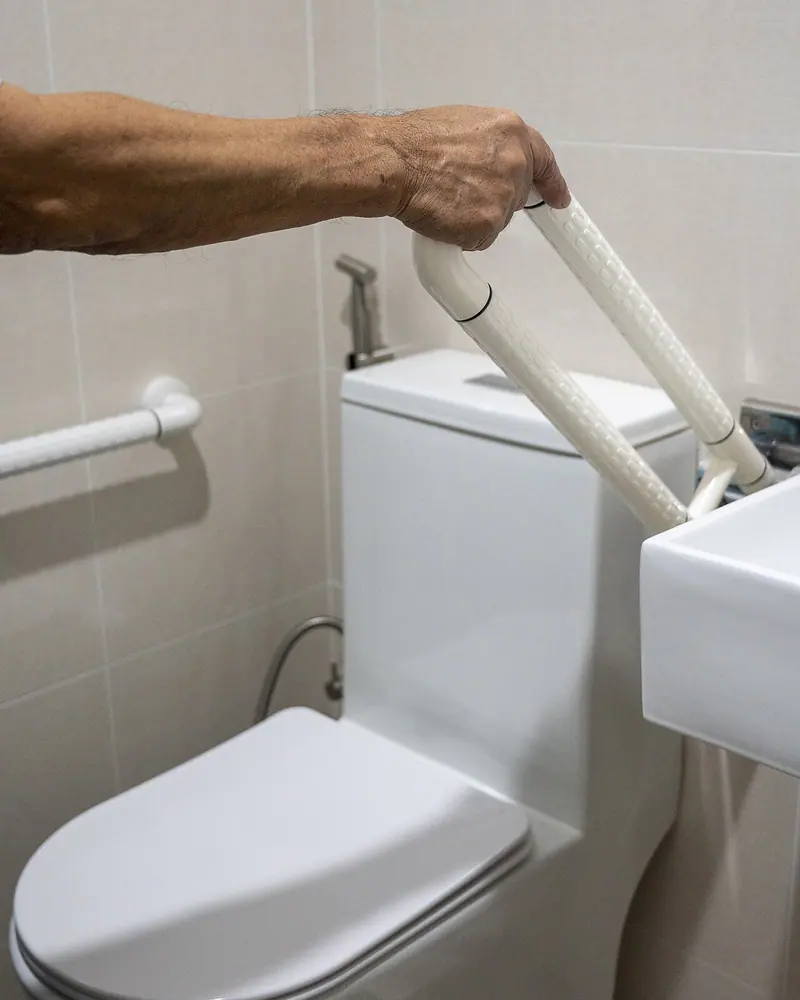
How does a fold-up rail work?
A fold-up rail swings down to be used and up to clear the space. Check that it locks firmly in the down position, that it does not flex when pushed on, and that you can lift it one-handed when the time comes. It is held by its fixings to the wall behind, so the wall is the real test. Where a person's weight depends on it, the fixing should be done by a professional. Follow the maker's limits; no figure for a load is given here.
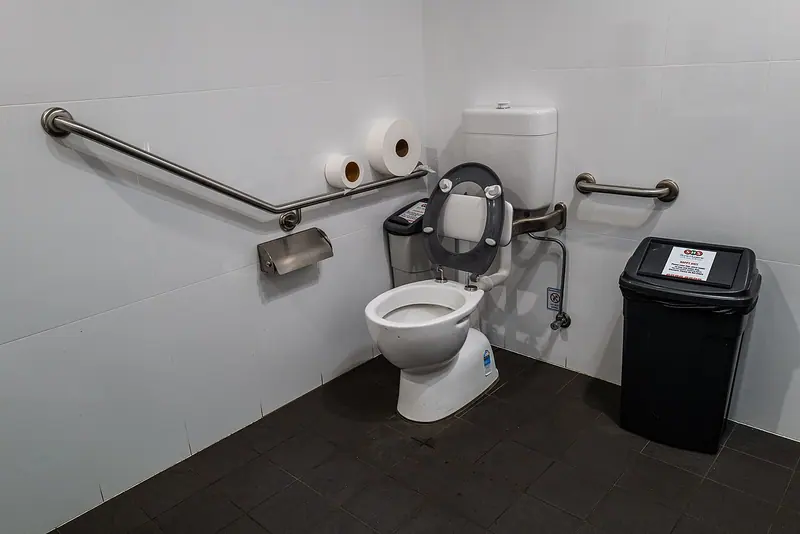
Can you see the rails?
The dark steel rails here stand out against the white walls, so they are easy to find. For someone with poor sight that matters: RNIB suggests rails that contrast with the wall behind.4 At home, choose a colour that stands apart from the wall, and one that is different from the floor so the room reads clearly. See the worry page on poor sight or memory. Check that the rail is long enough to reach from the seat and still within reach as the person stands.
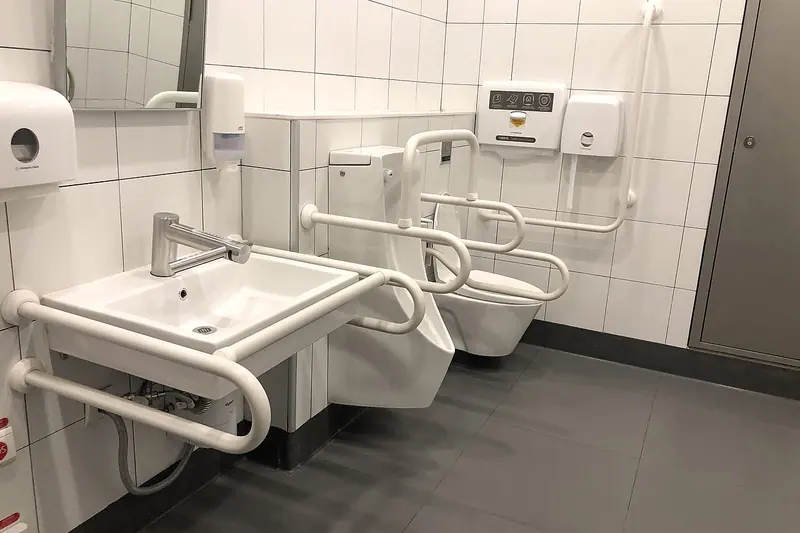
What about the rail by the basin?
A rail runs round the basin as well as the toilet, so the person has a handhold all the way from the seat to the sink. A basin, a cistern or a towel rail is not a handhold, whatever it looks like; none is designed to take a person's weight. Look for a continuous, fixed rail, or two that meet, and check the path from toilet to basin for wet floor. A rail only helps if it is within a reach of the person at each step.
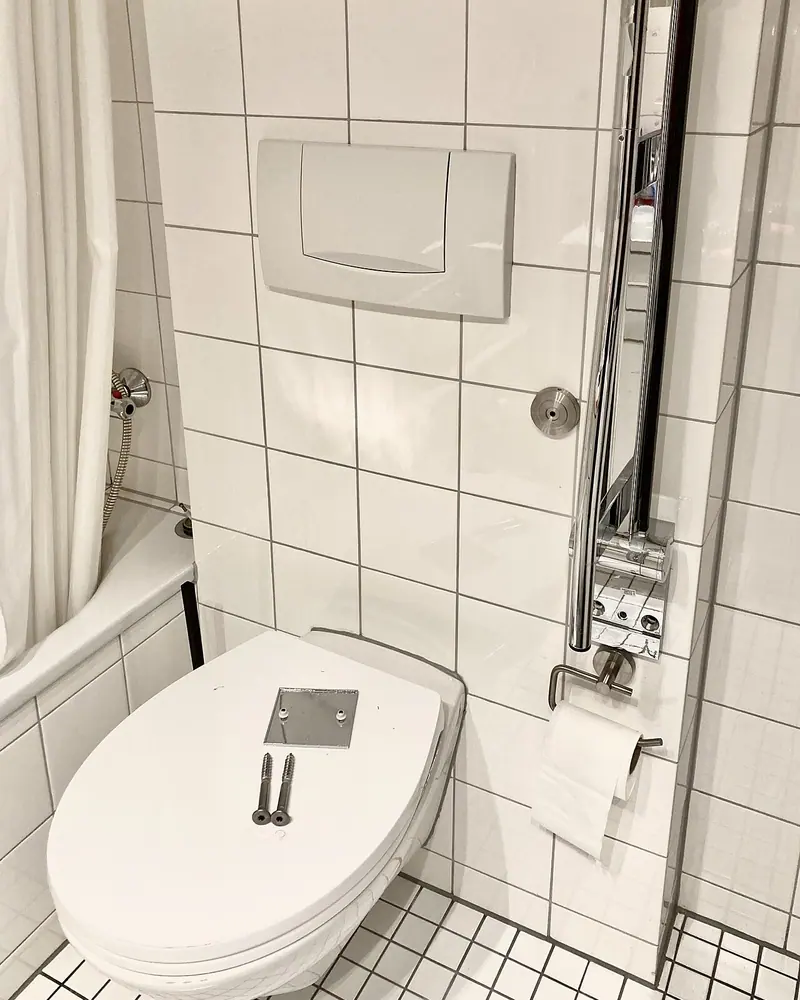
Can a frame be fitted without drilling?
Some frames stand on the floor around the pan and need no wall fixing, so check the maker's instructions for how they stay put. A rail like this one is different: it is fixed to the wall and needs fixings that reach something solid. Tiles over plasterboard, a stud wall or a hollow panel will not take a person's weight without help. In new homes built to the accessible category, English guidance asks for walls strong enough for rails; existing homes are not covered.3 See wall fixings.
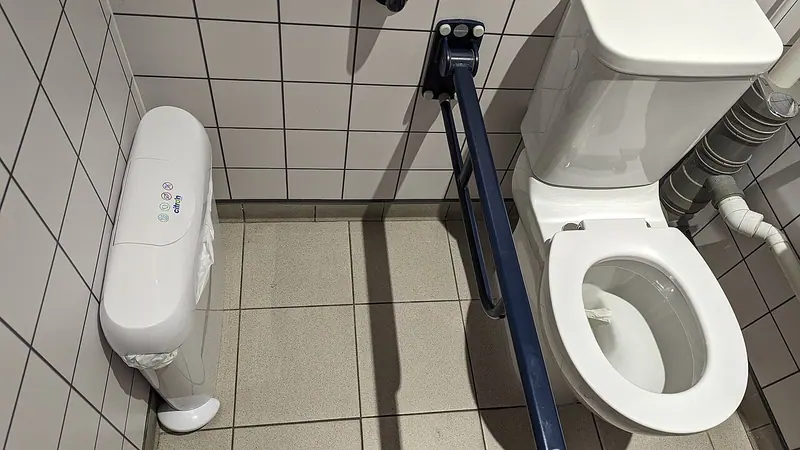
What does the view from above show?
Looking down, you can judge the gap between the rail and the pan. Too tight and hips catch; too wide and the rail is out of reach. The rail's position relative to the front of the seat decides whether it can be pushed on when standing. RNIB suggests rails that stand out from what is around them, which a dark rail may do against light fittings.4 Tiles underfoot get slippery when wet, so see bath mats and rugs for what not to put down. An occupational therapist can set the position for the person.
Do it yourself or get it fitted
What a household can do
- Push on a fold-up rail firmly when it is down, and check there is no movement at the wall.
- Try a frame in the room before buying; Independent Living Centres let you try equipment.1
- Keep the floor dry and the pan clear of loose mats.
Who to ask
- Occupational therapist through the council: chooses and positions the frame or rail, with a free needs assessment.2
- Professional fitter for any rail fixed to the wall where weight depends on it. In England, small adaptations such as grab rails can be provided free after assessment.1
- In Wales, the ENABLE scheme's small level includes grab rails.5
A short film from Oxfordshire County Council, 1 min 42 sec. Press play to load it from YouTube; until then, nothing is requested from there.
Also asked
Do you need a toilet frame as well as a raised seat?
Not always. A raised seat adds height; a frame adds arms to push on. Some people need only one, and a rail on the wall can replace the frame. An occupational therapist can see how the person sits and stands and say which combination helps. Oxfordshire County Council's film shows a seat and frame used together.1
Can a toilet frame be fitted without drilling?
Many frames are free-standing, so they stand on the floor beside or around the toilet and need no wall fixing. Wall-mounted rails do need fixings, and where weight depends on them a professional should fit them. Read the maker's instructions for how the frame is held in place.
Sources
- Age UK: Factsheet 42, Disability equipment and home adaptations (March 2026) England
- NHS: Household gadgets and equipment to make life easier England
- HM Government: Approved Document M, volume 1 (2015 with 2016 amendments) England, new homes
- RNIB: Practical adaptations for independent living
- Welsh Government: ENABLE, support for living independently Wales