Toilet height and raised seats
A raised toilet seat adds height to the toilet so sitting down and standing up take less effort. How much height suits depends on the person's body and the room, so an occupational therapist measures rather than guesses. Age UK lists raised toilet seats, toilet frames and commodes as standard equipment.1
Updated , by Bathroom Safety in Pictures
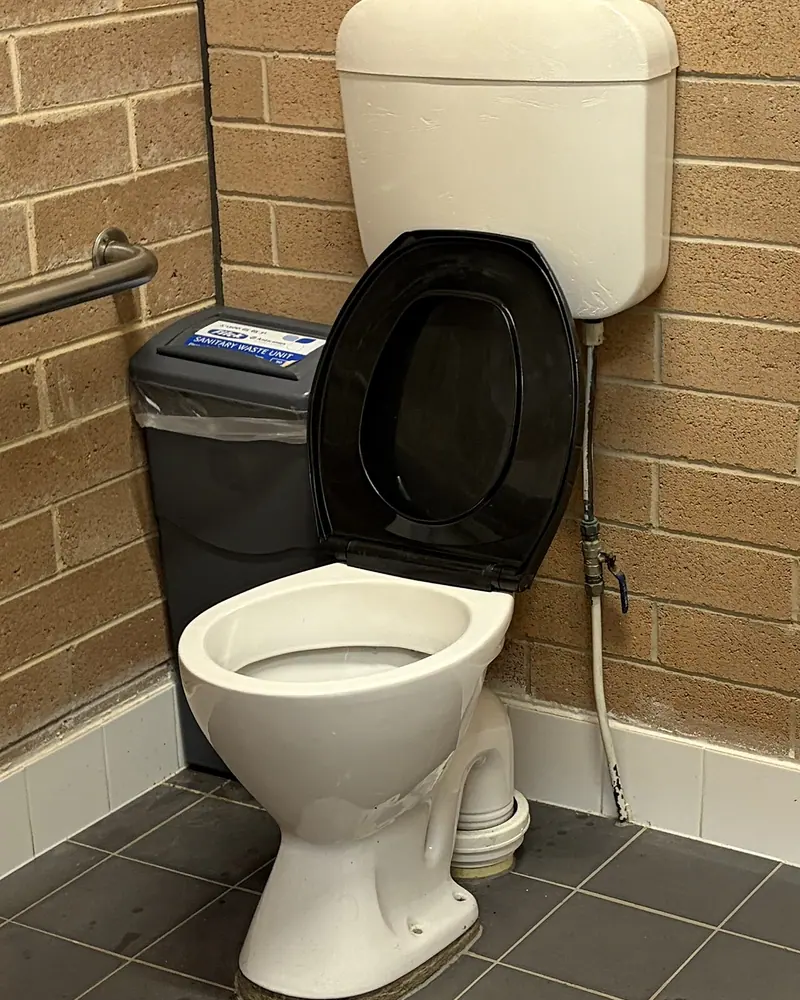
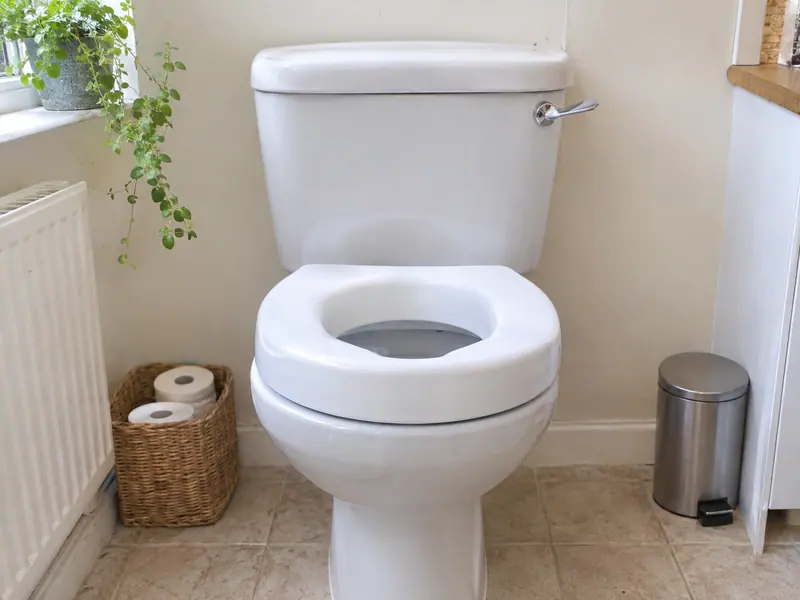
Does a raised seat clamp on securely?
A raised seat fits onto the toilet bowl and is held by its own fixings, so the grip is only as good as the fit. Before anyone relies on it, have a steady adult press on it by hand and sit on it. It should not shift sideways or tip. Then let the user try it with someone beside them. Tighten as the maker says, and no more, then check again after the first week and from time to time. Too high a seat leaves feet dangling, which is a question for the occupational therapist. Shropshire Community Health NHS Trust's installation film below shows the fitting and the checks to repeat.
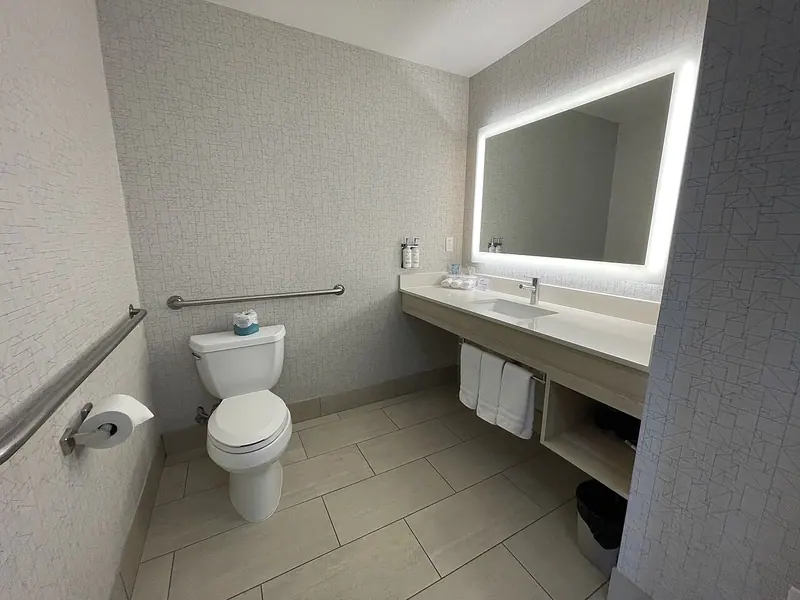
Do rails do more than a higher seat?
Not always, but they do a different job. A higher seat shortens the distance to stand. A rail gives a hand something to push or pull on. Many people use both. Rails need a wall that can take a person's weight; English guidance for new homes built to the accessible category asks for WC walls strong enough for rails and seats, but existing homes are not covered, so the wall behind needs checking.4 Where weight depends on the fixing, a professional should fit it. See wall fixings.
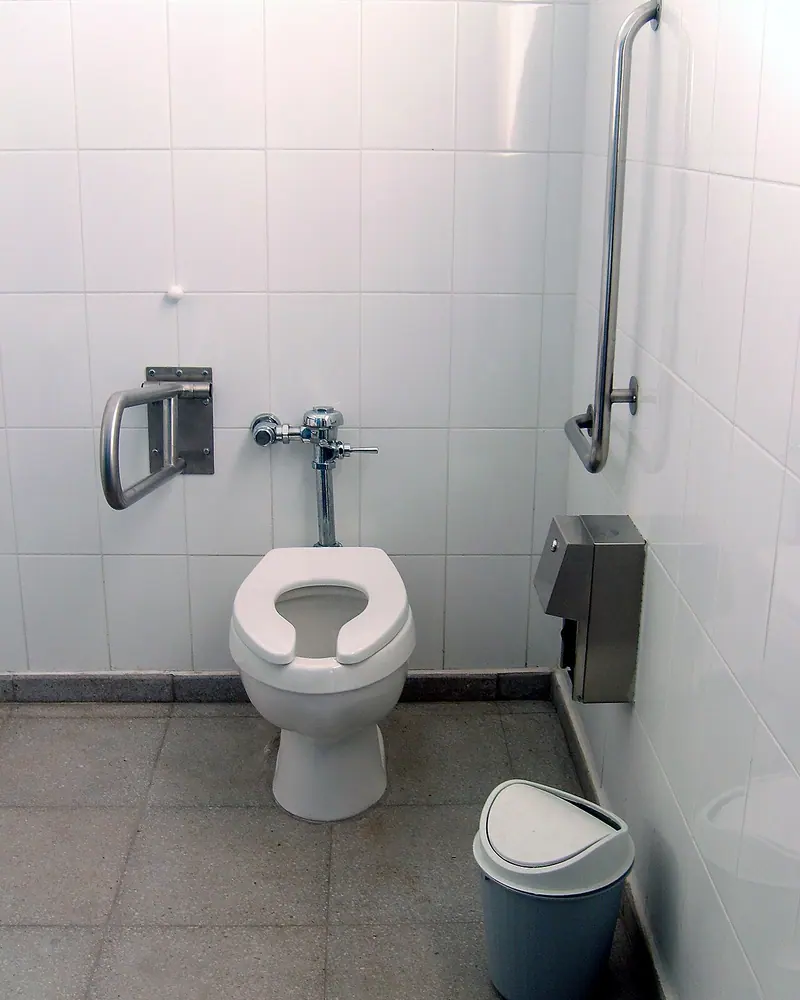
What does a tall vertical rail give?
A vertical rail lets someone stand up hand over hand, pulling upwards rather than pushing sideways, so it suits people whose arms are stronger than their legs. Where it sits matters: too far forward or back and the person has to lean to reach it. The position depends on the person's height, reach and which side is stronger, which is why it is the occupational therapist's call. In this setting the rail is fixed to the wall at the side of the pan, which is what to compare with your own room.
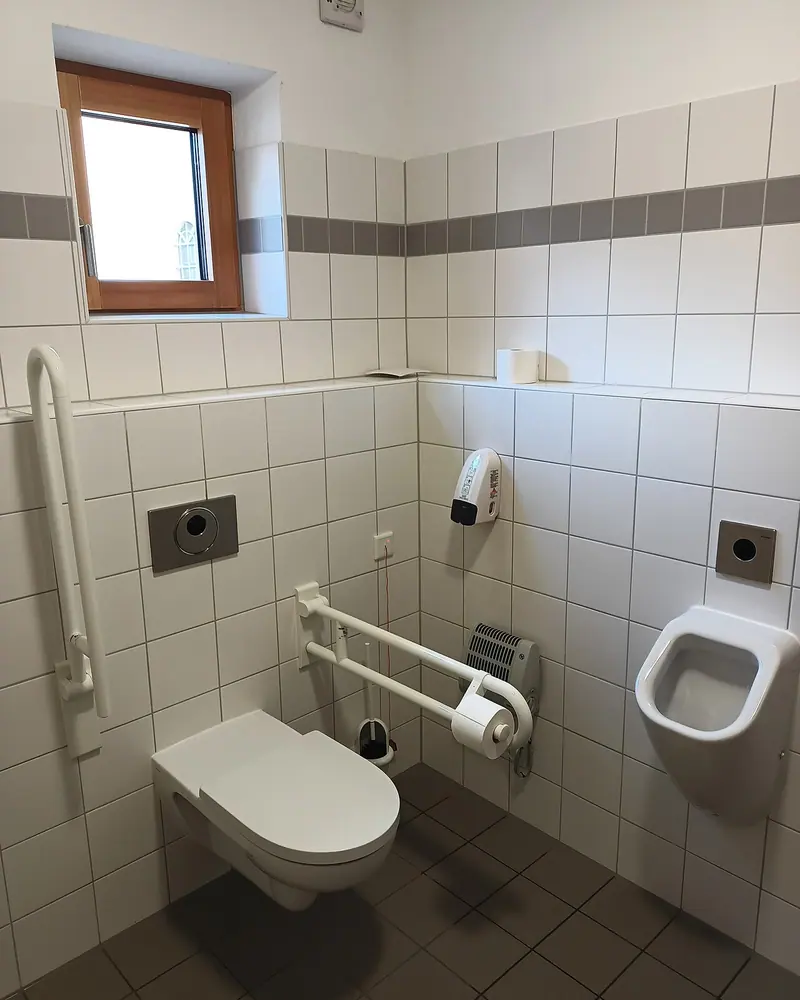
Can the toilet itself be set higher?
A wall-hung pan hangs from a frame inside the wall, so its height is chosen when it is installed, not set by the floor. Changing it is a job for a competent plumber, and a raised seat is usually the smaller job. Notice that the pale rails sit against pale tiles: RNIB suggests rails that stand out from their background for people with sight loss.3 Fold-up rails also clear the space beside the pan when not in use, which helps if someone has to help from the side.
| Aid | What it does | First check |
|---|---|---|
| Raised toilet seat | Adds height to the existing toilet | No sideways movement when sitting and standing |
| Toilet frame | Gives fixed arms to push on | Stable on the floor, with arms at the right height for the person |
| Wall rail | Gives something to pull on from the wall | Strength of the wall; professional fitting where weight depends on it |
| Commode | An alternative seat away from the toilet | Whether an occupational therapist advises it for this person |
Do it yourself or get it fitted
What a household can check
- Have a steady adult check the seat first, then let the user try it with someone beside them, before leaving it in use.
- Check the fit again after a week, then now and then.
- Keep the floor dry and the route to the toilet clear and lit.
- Choose a seat that contrasts with the bowl if sight is poor.3
Who to ask
- Occupational therapist through council social services: measures the person and chooses the aid; in England, equipment and small adaptations are free if assessed as needed.2
- Competent plumber for a wall-hung pan or any change to the toilet itself.
- Professional fitter for wall rails where weight depends on them.
Seeing how toilet fittings go together
To see how a seat and its fixings are made, toilet parts at PlumbingSupplyAndMore, an American business under the same owners as this site, give a US comparison; US parts differ from UK ones and shipping here isn't promised. Follow the raised seat maker's own fitting instructions.
A short film from Shropshire Community Health NHS Trust, 2 min 7 sec. Press play to load it from YouTube; until then, nothing is requested from there.
Also asked
How high should a toilet be for an older person?
There is no single right height, because it depends on the person's legs, hips and how they stand up. The test is whether they can sit and rise comfortably with feet flat on the floor. An occupational therapist can measure and recommend a raised seat or other aid.1
Do raised toilet seats clamp on securely?
They are designed to, but only if fitted to the bowl as the maker describes. Have a steady adult check it by hand and by sitting on it before anyone relies on it, and check it again over time. A seat that moves is a fall waiting to happen; refit or replace it. See also toilet frames and rails.