Getting in and out of the bath
Getting out of the bath is easier when the aid matches the difficulty: a bath board to sit across the rim, a bath seat to lower onto, or a firmly fixed rail to hold. In England, the NHS lists a rail for getting out of the bath as free if a council assessment finds you need it.1
Updated , by Bathroom Safety in Pictures
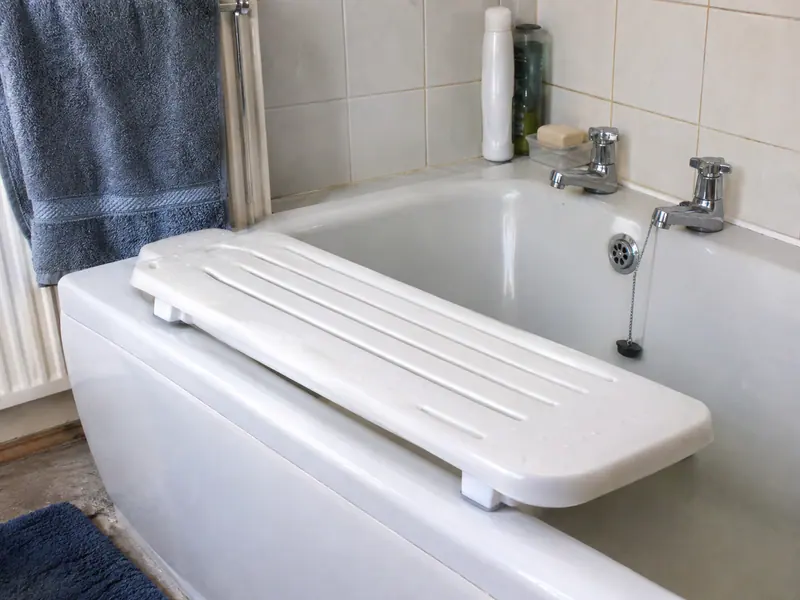
How does a bath board help?
A board bridges the bath, so the move becomes sit down, then swing the legs over, instead of lifting one foot high on a wet floor.3 Check three things. The board must rest firmly on both rims with no rocking. It must suit the width of the bath, and the maker's weight limit must cover the person. And the person must be able to get from the board to the bath floor, or stay on it and wash with a hand shower. Oxfordshire County Council's film below shows the sit, shuffle and lift sequence.
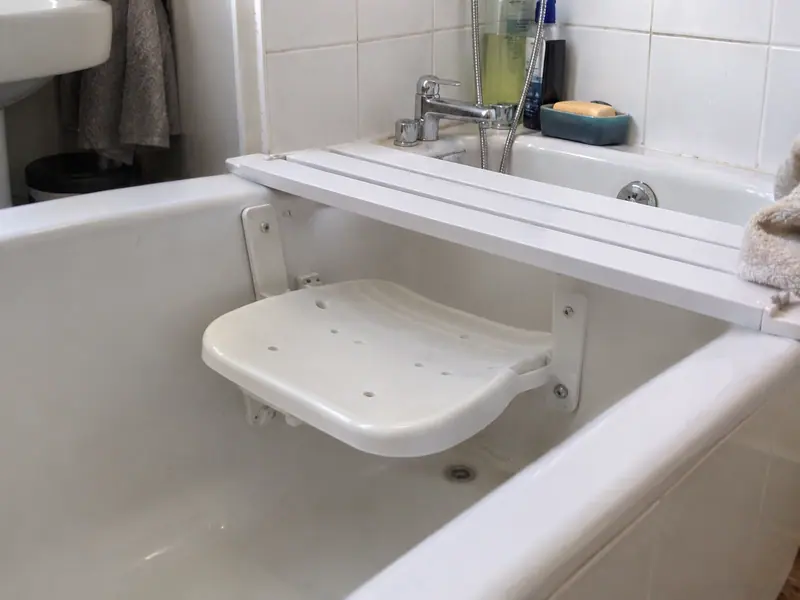
Where does a bath seat sit?
A bath seat lets a person sit in the water without lowering all the way to the bath floor. The picture shows a board above it, which is how the two are often used together: sit on the board, move across, lower onto the seat. Check that the brackets grip the rim without slipping, that the seat suits the person's size, and, above all, that they can stand up from it again. If standing is the hard part, a bath lift or a shower may suit better.
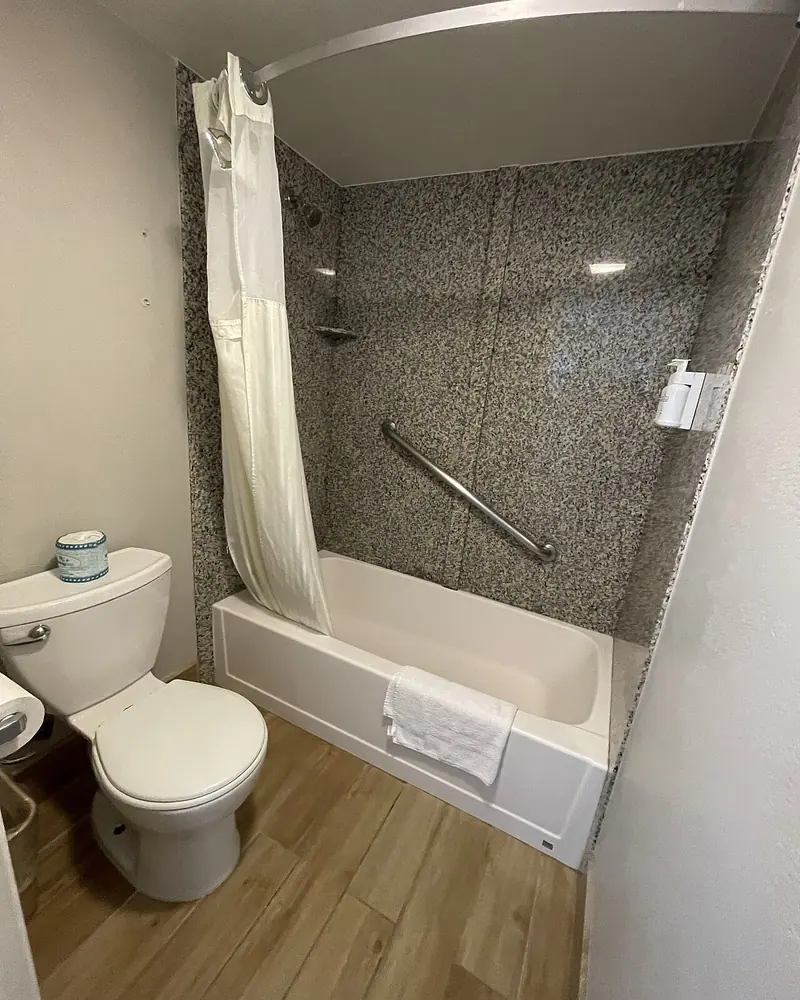
Can you pull on a curtain rail?
Balance goes suddenly, and a rail at hand is the thing people grab. The curved rail overhead is there to carry a curtain, and the angled bar on the wall is the grab rail. Nothing in a photograph shows whether a rail will take a person's weight. Treat curtain rails and curtains as things not to hold. A rail meant to be held is fixed into the wall where it can take the load, and where someone's weight depends on it, a professional should fit it. See where grab rails go and wall fixings.
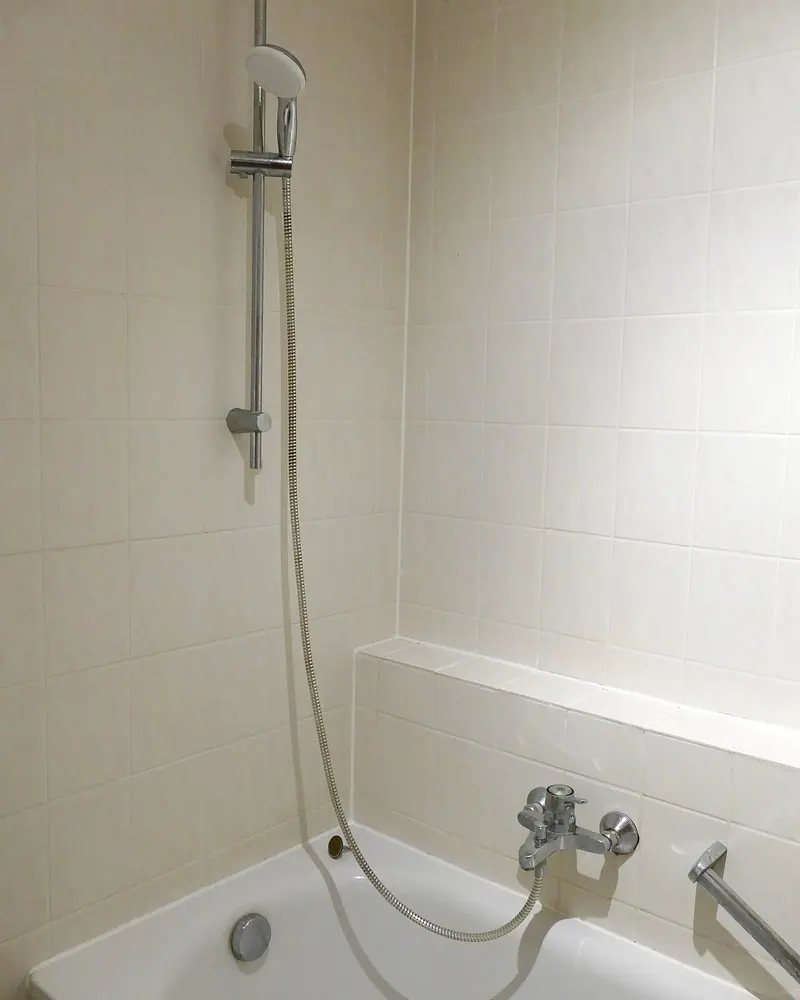
Why use a hand shower on a sliding rail?
A hand shower on a sliding rail lets a person wash seated, at a height they choose, instead of standing under a fixed head. That suits a board or seat, where reaching up is awkward. Check that the rail slides smoothly and locks in place, that the hose reaches without leaning, and that the mixer is easy to operate with a weak grip. Test the water with your hand before anyone sits down. A valve at the outlet is the lasting protection; see scalds and temperatures.
Someone who has fallen in the bath and may have hurt their head, back, neck or hip, or cannot get up, needs 999. For pain or feeling unwell after a fall, ring NHS 111 (in Northern Ireland, your GP or the GP out of hours service4).2
Do it yourself or get it fitted
What a household can do
- Press down on a bath board before use and check it does not rock on the rims.
- Read the maker's instructions for bath width and weight limits before buying.
- Try before paying: some equipment can be hired, and Independent Living Centres let you try it.13
- Put a non-slip mat on the bath floor, as the NHS suggests.2 See bath mats and rugs.
A short film from Oxfordshire County Council, 2 min 3 sec. Press play to load it from YouTube; until then, nothing is requested from there.
Also asked
What is the best aid to getting out of a bath?
There is no single best one; it depends on whether the trouble is stepping over, lowering down or standing up. A board helps with the step, a seat with lowering, and a rail or lift with standing. An occupational therapist can watch the person and say which. The NHS says assessment is free.1
What is the best way for seniors to get out of a bathtub?
Many people start seated, with something firm to hold, rather than pushing up from the bath floor: a board or seat plus a properly fixed rail. If getting out is already difficult, ask the GP or council for an occupational therapy assessment before it becomes a fall.23